
Nutrition Tips for Healthy Aging

Good nutrition is important at any age, but it becomes especially important as you get older. Eating a balanced, nourishing diet helps keep your body strong, supports healthy aging, and can reduce the risk of chronic conditions. With a few simple adjustments, you can stay energized and feel your best.

As you age, your nutrition needs naturally shift. Your body may require higher amounts of certain nutrients (like vitamin B12, calcium, and vitamin D), but it may be harder to get them. This could be for many reasons. You might feel less hungry, have problems chewing, or find meal planning less enjoyable, especially if you live alone.

The good news: with a little planning, you can get the most nutrition from the foods you eat. The suggestions below can help. If you need more support, talk to your doctor. They may recommend meeting with a dietitian who can help you create a plan that works for you.

How can older adults use good nutrition to stay healthy?

Build a balanced foundation:

  • Eat a variety of foods to get a wide range of nutrients.  
  • Take a daily multivitamin with about 100% of the daily value (DV) for key vitamins and minerals (unless your doctor advises otherwise). 
  • Eat plenty of fruit and a variety of vegetables. Pick fresh, frozen, or no-salt canned options. 
  • Choose foods high in vitamin B12, such as fortified cereal, dairy, meat, poultry, fish, and eggs. 
  • Get enough calcium and vitamin D from foods like dairy, tofu, fortified orange juice, and leafy greens. 
  • Include protein every day from lean meats, fish, poultry, eggs, cheese, beans, nuts, and seeds. 
  • Aim to make at least half of your grain intake whole grains, including 100% whole wheat bread, whole grain cereals, and brown rice.

If constipation is a concern:

  • Eat high-fiber foods such as fruit, vegetables, whole grains, and cooked dried beans. 
  • Drink plenty of fluids (If you have kidney, heart, or liver disease and have to limit fluids, consult with your doctor before increasing the amount of fluids you drink). 
  • Ask your doctor if a stool softener may help. 

If chewing is uncomfortable:

  • Choose canned or cooked fruits and vegetables.  
  • Chop meat, use shredded meat, or add sauces and gravy to soften texture.  
  • Try soft protein foods like cottage cheese, eggs, peanut butter, or cooked beans. 

If grocery shopping feels challenging:

  • Consider grocery delivery services. 
  • Contact volunteer organizations for assistance. 
  • Ask family or neighbors for help.

If cooking has become more difficult:

  • Consider taking a cooking class, if you’re able 
  • Use a microwave for simple meals like frozen entrees or prepared foods. 
  • Join group meal programs through senior centers. 
  • Try meal delivery services such as Meals on Wheels. 

If your appetite has decreased:

  • Eat smaller meals more often. Try 4- 5 small meals a day instead of 1-2 large ones. 
  • Eat with friends, family, or in group meal programs to make mealtime more enjoyable.  
  • Ask your doctor if medications could affect your appetite or taste. 
  • Use herbs and spices to add flavor. 
  • Seek support if you think you may be depressed, as this can affect appetite and daily activities.

With a few simple strategies, you can nourish your body, support your well-being, and enjoy a vibrant, healthy life at any age.
 
Looking for simple, healthy meal ideas? Visit our Cooking & Nutrition Hub for recipes, guides, and more. 
The Importance of Preventive Care

Don’t wait until you’re sick to see your doctor. Preventive care isn’t just about avoiding illness—it’s about building a foundation for lifelong health.

What is Preventive Care?

Typically, you visit the doctor when you’re sick or something just doesn’t feel quite right. While you should always seek help in those instances, preventive care means taking proactive steps—like regular check-ups, screenings, and immunizations—to protect your health before problems arise.

These visits support early detection and give you and your doctor the opportunity to work together toward your personal health and wellness goals. During a preventive care appointment, your doctor will determine which tests or screenings are appropriate based on your age, gender, health status, and family history.

What’s Typically Covered?

Physical Exams

During a physical exam, your doctor will observe, listen, and gently examine your body to help identify symptoms, assess underlying conditions, and determine if further testing is needed. You’ll also have the chance to discuss any concerns, review your medical history, and review current medications.

Immunizations

Immunizations (or vaccinations) are one of the most effective ways to protect yourself from infectious diseases. They help your body build antibodies that recognize and fight illness if you’re exposed later.

Common immunizations include flu and tetanus shots, the measles, mumps, and rubella (MMR) vaccine, and hepatitis A and B vaccines.

Screenings

Member Moment

Meet Ginger
“It’s very hard to look your kids in the eye and tell them that you have cancer. When they told me I was cancer free, I felt like I could breathe for the first time. I had great insurance, and I know our members do too, so I hope this is encouraging them to get their yearly checkups.” – Ginger, Member since 2013

Watch Ginger’s full member moment here.

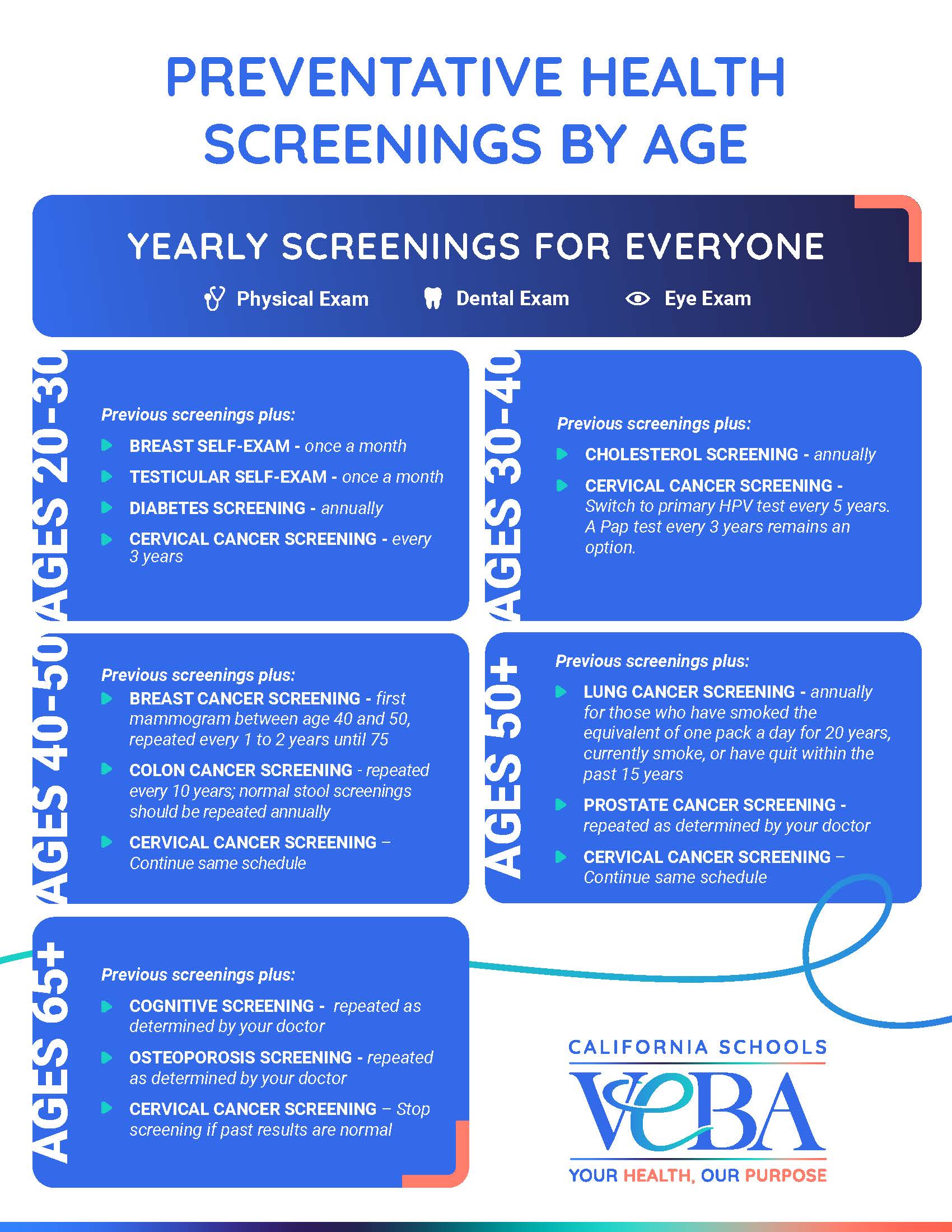
Screening tests help detect certain diseases before symptoms appear. Early diagnosis often leads to better outcomes and can prevent or delay complications. Use the infographic below to see which screenings may be recommended for your age group.

Preventative Health Screenings by Age, CalVEBA Infographic

Disclaimer:

This is a general guide for average-risk individuals. Higher risk may require more frequent screening. Consult with your health care provider.

Appointment Scheduling Tips

Preventive care appointments are usually covered at no cost with in-network providers. Check your plan documents to confirm coverage and costs.

Make the most of your doctor’s appointments by being well-prepared and organized using our Appointment Ready: Your Doctor’s Visit Prep Guide.

Here are some tips to help you get started:

Before Your Appointment:

  • Make a List: Bring a list of medications and jot down questions or concerns.
  • Bring Your Insurance Card: Download and save to your mobile wallet for easy access.

During Your Appointment:

  • Arrive Early: Arrive 10-15 minutes early to complete any paperwork. 
  • Dress Comfortably: Wear a shirt or loose-fitting sleeves for your blood pressure check. 
  • Use Your List: Review your list with your doctor. 
  • Speak Your Mind: Your time and health are valuable! 

After Your Appointment:

  • Follow Through: Take prescribed medications as directed and schedule any recommended follow-ups or screening. 
  • Speak Up: Report new symptoms or concerns promptly.  
  • Get a Second Opinion: If you’re unsure about a diagnosis or treatment plan, CalVEBA members can access second opinions from world-renowned specialists at no cost through our partnership with Teladoc Medical Experts. 

Preventive care can help you stay ahead of health issues and maintain overall well-being.

Download our Appointment Ready: Your Doctor’s Visit Prep Guide today and start planning for your next preventive care visit!


Thank you to our content partners at Sharp HealthCare and Healthwise.

Need help to schedule an appointment or have questions about your medical coverage? Contact the California Schools VEBA Advocacy Team here or call 888-276-0250.

Consejos de nutrición saludables para personas mayores

Una buena nutrición es importante a cualquier edad. Pero es especialmente importante para las personas mayores. Alimentarse en forma saludable ayuda a su cuerpo a mantenerse fuerte. Y puede ayudar a reducir su riesgo de enfermedades.

Con el paso de los años, sus necesidades de nutrición cambian. Su organismo necesita más de ciertos nutrientes. Estos incluyen vitamina B12, calcio y vitamina D. Pero puede ser más difícil para usted obtener estos y otros nutrientes importantes. Esto podría ser por muchos motivos. Es posible que no tenga tanta hambre como solía tener. O podría tener problemas con los dientes o la boca que pueden darle dificultades para masticar. O tal vez no disfrute planear y preparar comidas, especialmente si vive solo.

Ahora que necesita obtener todos sus nutrientes de menos cantidad de comida, es importante que planifique lo que come. Las sugerencias a continuación pueden ayudarle a conseguir la nutrición que necesita. Si todavía necesita ayuda, hable con su médico. Tal vez le recomiende que colabore con un dietista.

¿Cómo puede usar una persona mayor una buena nutrición para mantenerse sana?

Para mantenerse saludable

  • Coma alimentos variados. Mientras mayor sea la variedad de alimentos que coma, más vitaminas, minerales y otros nutrientes obtiene.
  • Tome un multivitamínico todos los días. Elija uno con aproximadamente el 100% del valor diario (VD) de vitaminas y minerales. No tome más del 100% del valor diario de ninguna vitamina o mineral, a menos que su médico se lo indique. Hable con su médico si no está seguro de qué multivitamínico es el adecuado para usted.
  • Coma muchas frutas y verduras. Las verduras y las frutas frescas, congeladas o enlatadas, sin agregado de sal y con sus propios jugos o almíbar con poca azúcar, son buenas opciones.
  • Incluya en su dieta alimentos que sean ricos en vitamina B12. Un desayuno que incluya cereales enriquecidos, leche y otros productos lácteos sin grasa o bajos en grasa, carne, aves, pescado y huevos son buenas opciones.
  • Obtenga suficiente calcio y vitamina D. Las buenas opciones incluyen leche, queso y yogur descremados y semidescremados. Otras buenas opciones son tofu, jugo de naranja con calcio agregado, y algunas verduras de hoja, como la col berza y la col rizada. Si no consume productos lácteos, hable con su médico acerca de suplementos de calcio y de vitamina D.
  • Coma alimentos con proteínas todos los días. Las buenas opciones incluyen carnes magras, pescado, carne de ave, huevos y queso. Otras buenas opciones son frijoles (habichuelas) cocidos, mantequilla de cacahuate (maní) y frutos secos y semillas.
  • Asegúrese de que la mitad de los granos que consume sean granos integrales. Busque que el pan sea 100% trigo integral, y que los cereales, el arroz y los otros granos también sean integrales.

Si tiene estreñimiento

  • Coma alimentos ricos en fibra todos los días. Estos incluyen frutas, verduras, frijoles secos cocidos y granos integrales.
  • Beba mucho líquido. Si tiene una enfermedad renal, cardíaca o hepática y tiene que restringir los líquidos, hable con su médico antes de aumentar la cantidad de líquido que bebe.
  • Pregúntele a su médico si los ablandadores de heces pueden ayudarle a regularizar el intestino.

Si tiene problemas en la boca que le dificultan la masticación

  • Elija frutas y verduras enlatadas o cocidas. Estas suelen ser más blandas.
  • Corte la carne de res, de ave y el pescado en trozos o tiras. Agréguele a la carne salsa o jugo de la propia carne para que no se seque.
  • Escoja otros alimentos con proteínas que sean blandos. Estos incluyen el queso, la mantequilla de cacahuate, los frijoles cocidos, el queso requesón y los huevos.

Si tiene dificultades para hacer las compras

  • Pida en la tienda que le envíen a su casa los productos que compre.
  • Comuníquese con un centro de voluntarios y pida ayuda.
  • Pídale a un familiar o a un vecino que le ayude.

Si tiene dificultades para cocinar

  • Si puede, tome clases de cocina.
  • Use un horno de microondas para cocinar comidas preparadas en bandeja y otros alimentos congelados o preparados.
  • Participe en un programa grupal de comidas. Usted puede encontrar estos por medio de programas para la tercera edad.
  • Hágase enviar las comidas a su domicilio. Su comunidad puede ofrecer programas que entreguen comidas a domicilio, como “Meals on Wheels”.

Si no tiene mucho apetito

  • Trate de comer pequeñas cantidades de alimentos con más frecuencia. Por ejemplo, coma 4 o 5 comidas ligeras al día en lugar de 1 o 2 comidas grandes.
  • Coma con amigos y familiares. O participe de programas grupales de comidas ofrecidos por medio de programas voluntarios. Comer con otros puede ayudar con su apetito. Y le ayuda a tener más vida social.
  • Pregúntele a su médico si sus medicamentos podrían estar causándole problemas de apetito o con el sabor de los alimentos. Si es así, pregúntele si puede cambiar los medicamentos.
  • Agregue especias y hierbas para darles más sabor a las comidas.
  • Si piensa que está deprimido, pídale ayuda a su médico. La depresión puede afectarle el apetito. Y puede darle dificultades para hacer actividades diarias como hacer las compras y cocinar. El tratamiento puede ayudar.