
The Importance of Preventive Care

Don’t wait until you’re sick to see your doctor. Preventive care isn’t just about avoiding illness—it’s about building a foundation for lifelong health.

What is Preventive Care?

Typically, you visit the doctor when you’re sick or something just doesn’t feel quite right. While you should always seek help in those instances, preventive care means taking proactive steps—like regular check-ups, screenings, and immunizations—to protect your health before problems arise.

These visits support early detection and give you and your doctor the opportunity to work together toward your personal health and wellness goals. During a preventive care appointment, your doctor will determine which tests or screenings are appropriate based on your age, gender, health status, and family history.

What’s Typically Covered?

Physical Exams

During a physical exam, your doctor will observe, listen, and gently examine your body to help identify symptoms, assess underlying conditions, and determine if further testing is needed. You’ll also have the chance to discuss any concerns, review your medical history, and review current medications.

Immunizations

Immunizations (or vaccinations) are one of the most effective ways to protect yourself from infectious diseases. They help your body build antibodies that recognize and fight illness if you’re exposed later.

Common immunizations include flu and tetanus shots, the measles, mumps, and rubella (MMR) vaccine, and hepatitis A and B vaccines.

Screenings

Member Moment

Meet Ginger
“It’s very hard to look your kids in the eye and tell them that you have cancer. When they told me I was cancer free, I felt like I could breathe for the first time. I had great insurance, and I know our members do too, so I hope this is encouraging them to get their yearly checkups.” – Ginger, Member since 2013

Watch Ginger’s full member moment here.

Screening tests help detect certain diseases before symptoms appear. Early diagnosis often leads to better outcomes and can prevent or delay complications. Use the infographic below to see which screenings may be recommended for your age group.
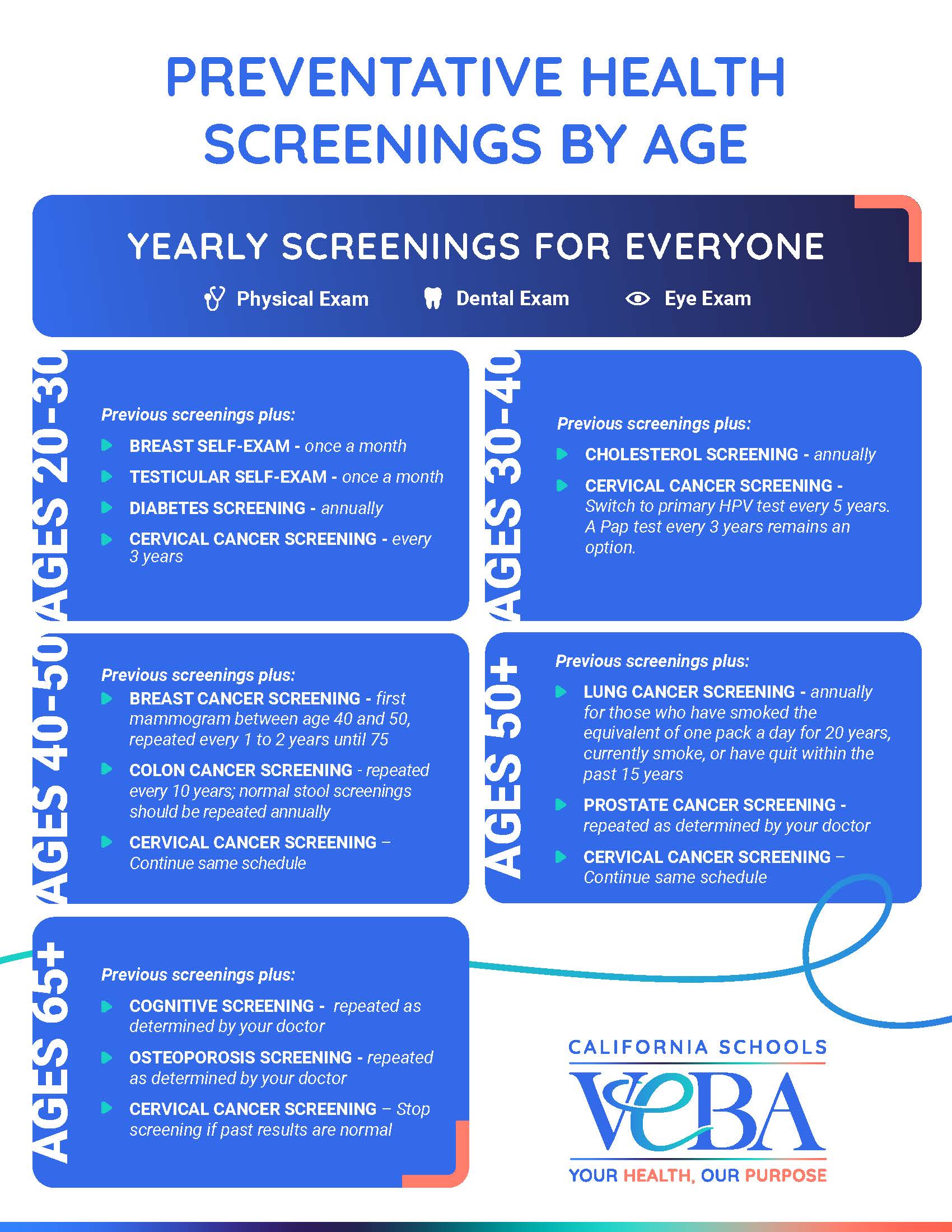
Preventative Health Screenings by Age, CalVEBA Infographic

Disclaimer:

This is a general guide for average-risk individuals. Higher risk may require more frequent screening. Consult with your health care provider.

Appointment Scheduling Tips

Preventive care appointments are usually covered at no cost with in-network providers. Check your plan documents to confirm coverage and costs.

Make the most of your doctor’s appointments by being well-prepared and organized using our Appointment Ready: Your Doctor’s Visit Prep Guide.

Here are some tips to help you get started:

Before Your Appointment:

  • Make a List: Bring a list of medications and jot down questions or concerns.
  • Bring Your Insurance Card: Download and save to your mobile wallet for easy access.

During Your Appointment:

  • Arrive Early: Arrive 10-15 minutes early to complete any paperwork. 
  • Dress Comfortably: Wear a shirt or loose-fitting sleeves for your blood pressure check. 
  • Use Your List: Review your list with your doctor. 
  • Speak Your Mind: Your time and health are valuable! 

After Your Appointment:

  • Follow Through: Take prescribed medications as directed and schedule any recommended follow-ups or screening. 
  • Speak Up: Report new symptoms or concerns promptly.  
  • Get a Second Opinion: If you’re unsure about a diagnosis or treatment plan, CalVEBA members can access second opinions from world-renowned specialists at no cost through our partnership with Teladoc Medical Experts. 

Preventive care can help you stay ahead of health issues and maintain overall well-being.

Download our Appointment Ready: Your Doctor’s Visit Prep Guide today and start planning for your next preventive care visit!


Thank you to our content partners at Sharp HealthCare and Healthwise.

Need help to schedule an appointment or have questions about your medical coverage? Contact the California Schools VEBA Advocacy Team here or call 888-276-0250.

Sleep and Your Mental Health

Dalai Lama

“Sleep is the best meditation.”

Getting a good night’s sleep isn’t just about feeling rested—it’s central to your mental and overall well-being. The National Sleep Foundation reports that over 90% of American adults with good sleep health experience minimal depressive symptoms.*

Healthy sleep enhances mood, regulates emotions, and improves concentration for better well-being. This post offers simple strategies to prioritize sleep so you can feel and function your best, starting tonight!

Getting your zzz’s

Why Sleep Matters

Even one night of poor sleep can reduce resilience and impair cognitive function. Quality sleep reduces stress and anxiety, improves focus, and increases empathy. If you have insomnia, the risks are even greater for developing serious mental health conditions. People experiencing sleep issues — including insomnia, hypersomnia (excessive sleepiness), and nightmares — have an increased risk of depression, suicidal ideations, and death by suicide.

Dreaming of Better Sleep?

Creating good sleep habits starts at home. Your daily routine, from the moment you wake up to what you eat and how you move, all contribute to better sleep.

Six Tips for Better Sleep

Take Control of Your Nights

1. Stick to a Schedule

Go to bed and wake up at the same time every day, even on weekends, to regulate your body’s internal clock (circadian rhythm).

2. Watch Your Intake

Steer clear of nicotine, caffeine, alcohol, and heavy meals close to bedtime.

3. Soak Up the Sun

Aim for 30 minutes of natural light in the morning to help set your sleep-wake cycle.

4. Stay Active

Exercise daily, but wrap up your workout a couple of hours before bed to allow your body to cool down and prepare for sleep.

5. Create Comfort

Keep your bedroom cool, dark, and quiet. Consider using a white noise machine or fan, use room-darkening-curtains, and maintain a temperature between 60 and 67 degrees.

6. Put Down the Devices

Reduce screen time at least one hour before bed. Studies show exposure to your phone’s blue light suppresses melatonin production (the hormone that regulates sleep).

Drift into Sleep: Meditation App & Classes

Apps like Calm and Headspace offer daily mindfulness and meditations to relax, release stress, and sleep better.

Check out our calendar and sign up for an upcoming meditation class at the VEBA Resource Center (VRC) or visit the on-demand video library for classes such as Yoga Nidra (Yoga for Sleep)

Sweet dreams! Here’s to better sleep, brighter days, and restful nights that support your mental health and enhance your well-being.

Bonus tip:

Wind down by bathing, reading, or listening to this 2-minute Simple Meditation.

*Source: National Sleep Foundation (2023, March 9). The Link Between Our Sleep Health and Mental Health. Sleep in America® Poll 2023. 

How to Quiet the Mind and Calm the Body 

In today’s fast-paced world, it can be easy to feel overwhelmed by constant distractions and a noisy mind. This mental clutter can lead to stress, anxiety, and even physical health issues.

Fortunately, mindfulness practices offer a powerful way to cultivate inner peace and improve overall well-being. The American Psychological Association highlights that mindfulness can significantly reduce stress, anxiety, and depression, aid in pain management and addiction recovery, and potentially boost the immune system.

Quiet Your Mind

Try these seven simple mindfulness practices to quiet your mind and calm your body:  

1. Stop To Rest

Notice what you see, hear, and feel in the moment you pause in stillness. Listen to this mindful moment meditation to soak in the beauty around you.

2. Relax with Your Breath

Take a deep breath and focus on your exhalation, feeling yourself letting go as you breathe out. Follow along with this 7-11 breathing practice.

3. Visual Awareness

Focus on something interesting or beautiful you see nearby and take a moment to notice its details. Follow along with this grounding meditation that engages your 5 senses.

4. Listen to Your Surroundings

Bring your attention to the sounds you hear and pause to listen carefully, focusing on each sound separately. Watch this guided meditation to tune into your surroundings and notice the sounds around you.

5. Check-In with Your Body

Bring your attention into your body and feel the sensations in each area. Release any tension or tightness and let relaxation spread. Watch this 10-minute guided chair yoga sequence to invigorate energy into the body.

6. Keep the Good Things in Mind

Imagine someone or something you love and feel the joy and serenity it brings to your life. Check out this journal prompt to help you reflect on moments of joy.

7. Focus on Gratitude

Think about someone or something you’re grateful for and reflect on how it enriches your life. Start your mornings with a virtual Gratitude Meditation class.

Calm Your Body

Incorporating these mindfulness practices into your daily routine can significantly enhance your ability to navigate life’s challenges with clarity and resilience. Embrace mindfulness and experience the transformative power of inner peace.

Thank you to our content partners at Sharp HealthCare.

California Schools VEBA (CalVEBA) Mindfulness Resources

Explore a variety of mindfulness classes, both virtual and in-person, by visiting our calendar. Access on-demand mindfulness and meditation videos anytime in our video library.

To watch more videos on mindfulness and ways to manage stress, check out our YouTube Channel.

What’s In and What’s Out When It Comes to Your Health

Your small, daily habits add up to larger lifestyle choices that influence your health. It’s important to take stock of your daily habits and evaluate where you have room to grow. We’ve compiled a “what’s in and out” list to help you think through areas where it’s common to struggle with unhealthy behaviors. Check out these simple yet effective ways to replace these habits with healthier alternatives.

In: Good sleep 
Out: Stress and sleep deprivation 

Sleep plays a pivotal role in so many aspects of our health, from keeping our minds strong to warding off illness and disease. Unfortunately, many people fail to get the sleep they need, and an estimated 50 to 70 million people in the U.S. have a sleep disorder. Adults should get between seven and nine hours of sleep each night — and the quality of that sleep is crucial. Here are three relaxation techniques to help you fall asleep! 

In: Pleasure Reading 
Out: Binge-watching and doom-scrolling 

In a sea of streaming video and ever-present screens, doom-scrolling and binge-watching are often the entertainment of choice above the more old-school option of reading a book. But research says reading can provide a healthy distraction from life’s day-to-day worries and pressures while also making us smarter, happier, and even more empathetic toward others. Audiobooks are an excellent way to read while engaging in physical activities like walking or exercising. There are free audiobook resources available, such as Librivox, OverDrive, and Audible‘s free trial, which offer a wide range of titles to choose from without any cost.

In: Homemade meals 
Out: Eating out and ordering in 

People are looking for fast and tasty foods to fit busy lifestyles. But whether you’re eating carryout or sit-down restaurant cuisine, researchers say you’ll consume about 200 more calories a day and more saturated fat, cholesterol, and sodium than if you made your meals. Cooking at home, however, helps you avoid these pitfalls and is an opportunity for creativity, togetherness, and cost-cutting. 

Looking to improve your cooking skills? Need recipe ideas that are not only healthy but also affordable and simple to make? The VEBA Resource Center offers free in-person and virtual cooking classes to learn how to cook meals from our extensive recipe library.  

In: Saying no 
Out: Always hustling 

Sometimes, your body, mind, or heart sends a message that it needs time off. It’s important to heed that call, especially if it’s coming from all three at once. Occasionally saying no to an invite, request or assignment is a true form of self-care, which can lead to reduced stress; improved mood, immunity, and self-esteem; and a variety of other physical, mental, and emotional health benefits. 

In: Sober curiosity 
Out: Regularly drinking 

According to the U.S. Department of Health and Human Services, drinking can take a serious toll on your body. Limiting how much you drink or taking a complete break from drinking, what some refer to as being “sober curious,” can help boost your immunity, limit your risk of disease, lead to weight loss, and improve your sleep, concentration, energy, performance, skin health, and even your relationships. 

In: Hygge 
Out: FOMO 

Everyone occasionally experiences FOMO, or the fear of missing out, but going to every social event can be exhausting and expensive and can lead to overindulgence in food and alcohol. Instead, consider enjoying more “hygge,” a concept originating in Denmark and Norway, which means to take time away from the daily rush to be together with people you care about — or even by yourself — to relax and enjoy life’s quieter pleasures.” 

California Schools VEBA’s Self-Regulation Toolkit is a great starting point with daily 5-minute activities that will help you use your time more mindfully!  

In: Digital detox 
Out: Endless screen time 

On average, Americans spend more than seven hours looking at a screen. And most use their smartphones for over three and a half hours every day — not counting when they’re talking to someone. All this screen time can have negative effects on your health, both physical and mental, which is why experts recommend no more than two hours of screen time per day. Here are some tips to regulate phone use more healthily. 

In: Authentic friendships 
Out: Accumulating social media “friends” 

Friendship is good for your health. When you’re with friends, your body releases the hormone oxytocin, which combats stress and creates calm. And the more time spent with friends, the less likely you are to develop health issues and dementia. But creating and sustaining friendships takes commitment far beyond “liking” the occasional post. One study found it takes hundreds of hours — all worth it — to become true friends. 

In: Movement every day 
Out: Overexercising 

The CDC recommends adults get at least two and a half hours of moderate-intensity activity each week. However, you don’t need to spend hours in the gym to meet this goal. Thirty minutes a day, just five days a week will do the trick. Pushing your limits can lead to poor performance and health problems, including overuse and stress injuries, too much weight loss, and decreased immune performance. 

VEBA members can sign up for live classes, in-person and virtually, available seven days a week! There’s also a video library of on-demand classes you can access anytime, anywhere. 

In: Water 
Out: Caffeine-laden energy drinks 

Water is an ideal choice for hydration. While some people prefer sports drinks over water because of the taste and added electrolytes, the standard sports drink contains 140 calories, 34 grams of added sugar, and 270 milligrams of sodium. Additionally, excess caffeine can be harmful, causing changes in heart rate, increased blood pressure, anxiety, sleep and digestive issues, headaches, and dehydration. 


Embracing changes like these will have a profound and positive impact on your overall well-being in the long term. Now, what’s on your list? If you’re unsure where to start, California Schools VEBA has developed a library of downloadable resources to equip you with the support you need to navigate your health and well-being journey. As they say, out with the old, in with the new!

Thank you to our content partners at Sharp HealthCare.

5 Tips for Managing Blood Pressure at Home

There’s a good reason why every doctor’s appointment starts with a blood pressure check: Blood pressure is an important indicator of heart health.

According to the American Heart Association, nearly half of American adults have high blood pressure, when the force of blood flowing through their blood vessels is consistently too high. When left untreated, high blood pressure can lead to heart attack, stroke, and other health concerns.

However, with proper treatment and management, you can control your blood pressure to help you live a long and healthy life. Here are five ways everyone, especially those with high blood pressure, can keep their blood pressure in check:

1. Monitor your blood pressure on a regular basis.

If you don’t have a blood pressure monitor at home, that’s okay! It’s important to schedule your routine check-ups with your physician or doctor in combination with these healthy heart lifestyle tips. If you do have a blood pressure monitor at home, you should check your numbers daily with these tips:

  • Be still. Avoid smoking, caffeine, or exercise 30 minutes before measuring. Take at least five to 10 minutes of quiet rest before measurements.
  • Sit correctly. Sit with your back straight on a chair, feet flat on the floor, legs uncrossed, and support your arm on a flat surface at heart level.
  • Roll up your sleeves. Always be sure to put the cuff on a bare arm and not over clothing.
  • Be consistent. Take your blood pressure reading at the same time every day.
  • Record your results. Track your numbers using a printable or online tracker.

Dr. Todd Hitchcock, a cardiologist from ScrippsClinic, shares additional tips and techniques for checking your own blood pressure.

2. Know your risk.

A normal blood pressure reading is less than 120/80. If your first reading is 140/90 or greater, do the following:

  • Take your blood pressure again, two to three more times. Write down and compare all the readings, and if you are concerned about your numbers, consult with your doctor.
  • If your blood pressure exceeds 180/120, wait five minutes and test again. If your readings are still unusually high, contact your doctor immediately. You could be experiencing a medical emergency.
  • If your blood pressure is higher than 180/120 and you are experiencing chest pain, shortness of breath, back pain, numbness, weakness, change in vision, or difficulty speaking, call 911 immediately.

3. Take your prescribed medications.

Always take blood pressure medicines as prescribed. Never skip a dose or abruptly stop taking medicines.

4. Form healthy habits.

Whether you’re dealing with high blood pressure or concerned about your heart health, embracing an active lifestyle and adopting a heart-healthy, well-balanced diet with minimal salt can make a significant difference. Try including nutrient-rich foods like fruits, vegetables, whole grains, and lean proteins such as skinless poultry and fish, along with nuts and legumes into your daily meals. Regular aerobic activity, such as walking, bicycling, or swimming, can also help lower your blood pressure and strengthen your heart.

5. Manage stress.

Did you know untreated stress can increase blood pressure? Taking steps to reduce your stress can improve your heart health. Some stress-reducing tips include meditating, listening to music, trying aromatherapy, and taking a nap.


For more self-care tips to help you manage stress, download our free self-care toolkit.

The VEBA Resource Center offers many free virtual and in-person classes, from cooking and meditation to cardio and yoga. Check out our calendar to sign up for an upcoming class.