
Eight Dimensions – Community
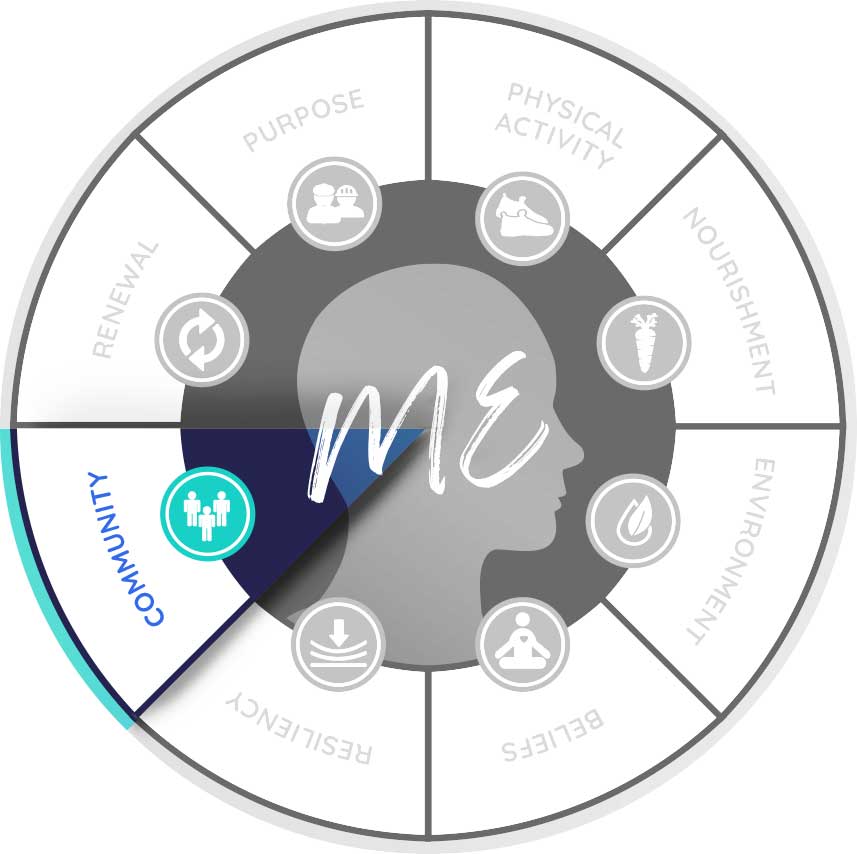
Eight Dimensions Chart focused on Community

Humans are incredibly social and have always lived in communities. Communities come in all shapes and sizes but there’s always that underlying layer of support and reliance. More and more research is now showing just how important having a community is to your health. 

You can think of your health as a garden. Nourishment like the food you eat and physical activity is the seeds, soil, and water. Community and the people around you are the sunlight your garden needs to grow and thrive.  

Community can look different for everyone. Many cultural and societal differences can impact how you create community and what role community plays in your life. What’s important is that you have people with whom you share similar values. People who lift you up and support you. 

Community comes in all shapes and sizes 

The world is a wide and diverse place. People find communities in many different forms and many have multiple layers of communities.  

When you think of community, you may just think of your neighbors or people you work with, but any group you form a connection and network of support with can be part of your community. 

You may also find community in: 

  • Your school or your children’s school 
  • Online forums and social media 
  • Special interest clubs 
  • Advocacy groups 
  • Cultural and ethnic centers organizations 
  • Places of worship 

That’s just the start of it. Any place that people go to gather, whether it’s online or in person is a place where you can start to form a community.

Community and your mental well-being

Community isn’t a term to just throw around or something that can be nice to have. It’s essential to your physical and mental health, as well as your overall well-being. 

Everyone wants to feel like they belong, that’s one of the many things that community provides for people. Having a sense of belonging doesn’t just “feel nice”, it’s also a protective factor that helps you feel safe in your environment. A sense of belonging can help people feel supported. This helps them better cope with the ups and downs of life. People who lack a sense of belonging are also at a higher risk of developing mental health conditions like depression and anxiety.  

There’s a scientific term called “co-regulation”. This refers to people’s ability to manage stress, regulate emotions, and calm themselves by regulating with another person. You see babies and small children doing this with their parents and caretakers, but adults need people they trust and can also co-regulate with. 

Life has its ups and downs, that’s inevitable. Community and having people around you give you the support you need when things get tough and people to celebrate with when things are going well. They’re both equally important and finding that in your community can help give you a sense of purpose and fulfillment. 

Community and longevity 

Having a community doesn’t just make life easier and more enjoyable, it also can make you live longer!  

You may have heard the term “blue zones” before. Blue zones are places where people typically live longer than the average life expectancy. Some known blue zones are Okinawa (Japan), Icaria (Greece), and Loma Linda, California.  

There doesn’t seem to be a genetic component to their longevity, but there are a lot of lifestyle similarities. People in blue zones tend to eat a 95% plant-based diet, have exercise built into their daily lives, and emphasize the importance of community. 

Most of these blue zones are tight-knit communities that have meals together, share resources, and generally spend much of their time with each other. Many of them are also religious which can offer an extra layer of support – although it is not necessary to experience the benefits of having a community.

How to find your community

Now that you understand the importance of community for your health and well-being, how do you find community? You might already have your family or certain people to rely on, but if you don’t feel like you truly have a sense of community with those around you, then you may want to take some action steps so that you can find that. 

Find new hobbies

Hobbies are one of the easiest ways to meet new people and form connections while trying something new or doing something you already enjoy. Starting a hobby doesn’t have to be about getting “good” at something, you can do it simply because you like it and it lets you connect with others who feel the same.  

These are just a few ideas of community-oriented hobbies you can try: 

  • Take an art class 
  • Join a hiking meet-up 
  • Find a parent group 
  • Join a networking group in your field 
  • Join a fitness studio 
  • Find a birdwatching group 
  • Start a book club 

Finding community over a hobby can be easier because you have common interests and something to bond for.  

Volunteer in your community

Another great way to find a meaningful community is by volunteering for a cause you believe in. Volunteering can support your physical and mental health and give you a sense of meaning and appreciation, which can help reduce stress. 

The neat thing about volunteering is that people come together from all different backgrounds to help make a difference in the world. This creates a special bond so you can practice your social skills with people you might not otherwise interact with. You can find volunteer opportunities with nonprofit organizations, hospitals, faith communities, and local community efforts.

Put yourself out there

Even if you go to new places where you’re likely to meet people, you still have to make an effort to connect with people. It can be nerve-wracking at first, especially if you are shy or this doesn’t come naturally to you. 

When meeting new people, ask them questions about themselves, find similarities you can bond over, and stay open-minded. You never know who you might connect with! Be gentle with yourself as you put yourself out there more and more, over time this will come more naturally. 

Deepen your relationships 

You might not need to meet new people to find a sense of community. Sometimes community comes from deepening the relationships that you already have.  

Think about the people in your life that you would like to have a deeper connection with. Can you ask them to do more meaningful activities together? Are there questions you can ask them so you can get to know them on a deeper level? You may also want to practice being vulnerable with them about something you’ve struggled with or you’re working on personally. 

People can surprise you, so stay open-minded. Fulfilling community comes from being able to create and nurture deeper relationships. 

Everyone deserves community 

Everyone deserves community just for being on this planet. A sense of belonging is one of the most important things you can do for your health, well-being, and longevity. 

It can take time to find “your people” or you might already have them but would like to deepen your relationship with them. Wherever you are in your journey to find community, remember how much you offer the world and how beautiful life is when you share it with those around you. 

References:   

  1. Is having a sense of belonging important?.                                      
  1. Conceptualizing Emotion Regulation and Coregulation as Family-Level Phenomena – PMC                              
  1. Helping people, changing lives: 3 health benefits of volunteering                                                                                                                                                                                                                                                                                                 

LGBTQ+ Health: What do you need to know about health screenings?

What screening tests you take depend on what body parts you have, your personal and family history, your age, and your sexual activity. Screening for certain cancers may depend if you take hormones. Talk to your doctor about what screenings you need.

Experts recommend cervical cancer screenings for anyone ages 21 to 65 who has a cervix. This may mean having a Pap test or a human papillomavirus (HPV) test, or both. How often you need these tests will depend on your age and health history. HPV can be passed among partners of any gender. And HPV increases your risk of getting cervical cancer.

Sexually transmitted infections (STIs) are a concern for everyone who is sexually active. If you give your doctor a full picture of your past and present sexual practices, it can help you know which STIs you might need to be tested for and when. You may also discuss options for safer sex.

Depression is more common in the LGBTQ+ community. So it’s a good idea to check in with your doctor if you’re feeling down. Treatment for depression can help people feel better each day. And it can help people take better care of themselves so that they lead the healthiest lives possible.

Your doctor can help you figure out what other screenings you may need. These may include screenings for cholesterol, diabetes, or certain cancers, like breast, prostate, and colorectal cancer.

Along with getting screenings, you and your doctor can also discuss ways to do more of the things that help keep you healthy in general. These include things like being active, eating healthy foods, and spending time with others.

Human Immunodeficiency Virus (HIV):

Human immunodeficiency virus, or HIV, is a virus that attacks your immune system. This makes it hard for your body to fight infection and disease. HIV is the virus that causes AIDS (acquired immunodeficiency syndrome). But having HIV does not mean that you have AIDS. Treatment of HIV may prevent or delay HIV from developing into AIDS.

HIV often causes flu-like symptoms soon after a person gets infected. These early symptoms go away in a few weeks. After that, you may not have signs of illness for many years. But as the virus multiplies in your body, symptoms reappear and then remain. Fatigue, weight loss, fever, night sweats, diarrhea, and other symptoms are common. If HIV is not treated and progresses to AIDS, your symptoms get worse and your body is less and less able to fight infections like pneumonia and tuberculosis.

You can get HIV testing done in most doctors’ offices, public health clinics, hospitals, and Planned Parenthood clinics. You can also buy a home HIV test kit in a drugstore or by mail order. If a home test is positive, you’ll need to see a doctor.

What increases your risk of HIV?

You’re at greater risk of getting infected with HIV if you:

  • Have unprotected vaginal, anal, or oral sex. (You don’t use condoms or don’t use them correctly).
  • Are a man who has sex with other men. (If you or your partner[s] don’t identify with the sex you were assigned at birth, talk to your doctor about your risk.)
  • Have more than one sex partner.
  • Have a high-risk partner. This is someone who has more than one sex partner, has HIV or another sexually transmitted infection (STI), or injects drugs.
  • Have (or recently had) an STI, such as syphilis or active herpes.
  • Inject drugs or steroids. This is especially true if you share needles, syringes, or other equipment used to inject drugs.

Being born to a mother who has HIV increases the risk of infection. Most children younger than 13 years who have HIV were infected before or during birth or during breastfeeding.

LGBTQ+ Health: Finding Support

Having a strong support network can help people live longer, more satisfying lives. Connecting with other LGBTQ+ people can provide a level of support and acceptance that can make you feel more connected and empowered.

Here are some ways you might find support.

  • Try sports or activity clubs organized for LGBTQ+ people.
  • Join a support group.
  • Visit places of worship that are LGBTQ+ friendly.
  • Find groups specific to LGBTQ+ people for quitting smoking, alcohol, or drugs.
  • Get professional counseling.
    • The websites www.samhsa.gov and www.glma.org can be great resources to find mental health services.
    • If you’re being emotionally, verbally, or physically abused, you can also call the National Domestic Violence Hotline at www.ndvh.org or 1-800-799-SAFE (1-800-799-7233). It’s a free hotline that’s available 24 hours every day in English and other languages.

If you’re not sure about reaching out in one of these ways, remember that lots of people have felt the same way. Sometimes, taking the first step is the hardest part.

Check out the VEBA Resource Center Community Resource Page for more local and national resources.

Salud en personas LGBTQ+

¿Qué es LGBTQ+?

LGBTQ+ es la abreviación de “Lesbiana, Gay, Bisexual, Transgénero, Queer o que se cuestiona”. El signo + significa todas las demás orientaciones sexuales e identidades de género que no son heterosexuales ni cisgénero (la identidad de género coincide con el sexo asignado al nacer).

Salud en personas LGBTQ+: ¿Qué necesita saber sobre pruebas de detección médica?

Las pruebas de detección médica que le realicen dependerán de las partes del cuerpo que tenga, sus antecedentes personales y familiares, su edad y su actividad sexual. Y las pruebas de detección de determinados cánceres pueden depender de si toma hormonas. Hable con el médico sobre qué pruebas de detección necesita.

Los expertos recomiendan pruebas de detección de cáncer de cuello uterino para todas las personas de 21 a 65 años que tienen cuello uterino. Esto podría significar hacerse una prueba de Papanicolaou o una prueba del virus del papiloma humano (VPH), o ambas. La frecuencia con la que necesita hacerse estas pruebas dependerá de su edad y antecedentes de salud. El VPH puede transmitirse entre parejas de cualquier género. Y el VPH aumenta el riesgo de que llegue a tener cáncer de cuello uterino.

Las infecciones de transmisión sexual (ITS) son una preocupación para todas las personas sexualmente activas. Si usted le da a su médico un panorama general de sus prácticas sexuales pasadas y actuales, esto puede ayudarle a saber de qué ITS podría tener que hacerse pruebas y en qué momento. También podría hablar de opciones para tener relaciones sexuales más seguras.

La depresión es más común en la comunidad LGBTQ+. Por lo tanto, es una buena idea que consulte con el médico si se siente desanimado. El tratamiento para la depresión puede ayudar a las personas a sentirse mejor cada día. Y puede ayudar a las personas a ocuparse mejor de sí mismas para que puedan llevar una vida lo más saludable posible.

Su médico puede ayudarle a determinar qué otras pruebas de detección podría necesitar. Estas pueden incluir pruebas de colesterol, pruebas de detección de la diabetes o de ciertos tipos de cáncer, como el cáncer de seno (mama), próstata y colorrectal.

Además de hacerse pruebas de detección, también puede hablar con su médico sobre cómo hacer más de las cosas que le ayudan a mantenerse saludable en general. Estas incluyen cosas como hacer actividad, comer alimentos saludables y pasar tiempo con otras personas.

VIH: Generalidades

El virus de la inmunodeficiencia humana, o VIH, es un virus que ataca a su sistema inmunitario. Esto dificulta que su organismo combata infecciones y enfermedades. El VIH es el virus que causa el SIDA (síndrome de inmunodeficiencia adquirida). Pero tener VIH no significa tener SIDA. El tratamiento del VIH podría prevenir o retrasar que el VIH se convierta en SIDA.

El VIH suele causar síntomas parecidos a la gripe poco después de que la persona se contagia. Estos síntomas iniciales desaparecen en pocas semanas. Después de eso, podría no tener señales de la enfermedad durante muchos años. Pero conforme se multiplica el virus en el cuerpo, los síntomas reaparecen y entonces permanecen. La fatiga, la pérdida de peso, la fiebre, los sudores nocturnos, la diarrea y otros síntomas son comunes. Si no se trata el VIH y avanza hacia el SIDA, los síntomas empeoran y el cuerpo cada vez es menos capaz de combatir infecciones como la neumonía y la tuberculosis.

Puede hacerse la prueba del VIH en la mayoría de los consultorios médicos, clínicas de salud públicas, hospitales y clínicas de Planned Parenthood. También puede comprar un kit de prueba de VIH para el hogar en una farmacia o por correo. Si una prueba casera es positiva, deberá ver a un médico.

¿Qué aumenta su riesgo de VIH?

Usted tiene un riesgo más elevado de infectarse con VIH si usted:

  • Tiene relaciones sexuales vaginales, anales u orales sin protección. (No usa condones o no los usa correctamente).
  • Es un hombre (o se le asignó sexo masculino al momento de nacer) que tiene relaciones sexuales con otros hombres (o personas a quienes se les asignó sexo masculino al nacer).
  • Tiene más de una pareja sexual.
  • Tiene una pareja de alto riesgo. Esta es alguien que tiene más de una pareja sexual, tiene VIH u otra infección de transmisión sexual (STI, por sus siglas en inglés) o se inyecta drogas.
  • Tiene (o ha tenido recientemente) una STI, como sífilis o herpes activo.
  • Se inyecta drogas o esteroides. Esto es especialmente cierto si comparte agujas, jeringas u otros equipos para inyectarse drogas.

Haber nacido de una madre que tiene VIH aumenta el riesgo de infección. La mayoría de los niños menores de 13 años que tienen VIH contrajeron la infección antes o en el momento del parto o durante la lactancia.

Salud en personas LGBTQ+: Cómo encontrar apoyo

Contar con una fuerte red de apoyo puede ayudar a las personas a vivir una vida más satisfactoria y prolongada. Relacionarse con otras personas LGBTQ+ puede brindarle un nivel de apoyo y aceptación que puede hacer que se sienta más conectado y fortalecido.

Estas son algunas de las posibles maneras de encontrar apoyo.

  • Pruebe clubes de deportes o actividades organizados para personas LGBTQ+.
  • Únase a un grupo de apoyo.
  • Visite lugares de culto donde las personas LGBTQ+ sean bien recibidas.
  • Encuentre grupos específicos para personas LGBTQ+ para dejar de fumar, beber alcohol o consumir drogas.
  • Consiga asesoría profesional.
    • Los sitios web www.samhsa.gov y www.glma.org pueden ser excelentes recursos para encontrar servicios de salud mental.
    • Está sufriendo abuso emocional, verbal o físico, también puede contactar a la línea nacional directa contra la violencia doméstica (National Domestic Violence Hotline) en www.ndvh.org o al 1-800-799-SAFE (1-800-799-7233). Es una línea directa gratuita que está disponible las 24 horas todos los días en inglés y otros idiomas.

Si duda en comunicarse de una de estas maneras, recuerde que muchas personas se han sentido igual que usted. A veces, dar el primer paso es la parte más difícil.

Consulte la página de recursos comunitarios del VEBA Resource Center para obtener más recursos locales y nacionales.