The Power of Prevention: Reduce Your Risk for Common Cancers
The National Cancer Institute estimated that in 2025, roughly 2 million people were diagnosed with cancer in the United States. Based on this research, breast, lung, prostate, and colorectal cancers account for almost 50% of all new cancer cases in the US.
With cancer affecting so many people each year, adopting preventive measures has become more important than ever. By focusing on lifestyle modifications and early detection, you and your loved ones can significantly reduce your chances of developing cancer and live long, healthy lives.
Learn about prevention, screenings, and lifestyle tips that can help protect you and your loved ones against these common cancers.
Skin Cancer
Did you know: Skin cancer is the most common type of cancer. It often appears on areas of the body exposed to the sun, such as the head, face, neck, back, chest, or shoulders.
Prevention and Screenings:
Examining your skin for signs of skin cancer
- Perform regular self-examinations, paying attention to changes in moles, skin growths, color, shape, size, and healing patterns after injury.
- Schedule an appointment with your doctor or dermatologist if you notice the following melanoma warning signs:
- Changes to moles or skin lesions
- Suspicious skin growths
- Schedule regular skin examinations with your doctor to enhance the early detection and treatment of skin cancer, including melanoma.
Lifestyle Tips:
How can you care for yourself to prevent skin cancer?
- Safeguard against UV rays:
- Limit sun exposure between 10 am and 4 pm when UV rays are strongest.
- Wear protective clothing like wide-brimmed hats, long sleeves, and pants outdoors.
- Choose sunglasses that block UV rays.
- Ensure comprehensive sun protection:
- Apply broad-spectrum SPF 30 or higher sunscreen daily, even on cloudy days.
- Reapply sunscreen if you are in the sun for more than a few hours.
- Use lip balm or cream with SPF to shield your lips from sunburn.
- Apply broad-spectrum SPF 30 or higher sunscreen daily, even on cloudy days.
- Avoid artificial tanning:
- Steer clear of tanning booths or sunlamps to minimize skin damage and cancer risk.
For more skin protection tips, read this blog.
Colon Cancer
Did you know: The American Cancer Society estimates that over 152,000 people in the U.S. will be diagnosed with colorectal cancer in 2026. However, the number of people diagnosed has steadily declined since the mid-1980s due to increased screening and changing lifestyles.
Prevention and Screenings:
Your risk for colorectal cancer gets higher as you get older. Experts recommend people at average risk with no family predispositions start screening at age 45. People with a higher risk, such as those with a strong family history of colon cancer, should be tested earlier. Talk with your doctor about your risk and when to start and stop screening.
Screening tests that may find colon cancer early include:
- Stool tests like the fecal immunochemical test or the guaiac fecal occult blood test.
- Sigmoidoscopy, which checks the lower part of your colon
- Colonoscopy, which checks the entire colon
Important note: Early-stage colon cancer usually doesn’t cause any symptoms. Symptoms occur later, when the cancer may be harder to treat. If you experience symptoms like blood in your stool, belly or rectal pain, or a change in your bowel habits, contact your doctor immediately.
Lifestyle Tips:
Here are things you can do to help prevent colon cancer:
- Maintain a Healthy Lifestyle: Maintain a healthy weight by consuming a balanced diet rich in whole grains, fruits, vegetables, poultry, and fish while limiting intake of red meat, refined grains, sweets, and moderate alcohol consumption to reduce the risk of colon cancer.
- Stay Active: Engage in regular physical activity to promote overall health and lower the likelihood of colon cancer
- Avoid Tobacco: Quit smoking to significantly decrease your chance of developing colon cancer and improve overall health.
Lung Cancer
Did you know: According to the Lung Cancer Research Foundation, about 20% of lung cancer diagnoses occur in people who have never smoked, which is why awareness and screening recommendations are important for many adults.
Prevention and Screenings:
According to the American Cancer Society, people who currently smoke or formerly smoked are at higher risk for lung cancer. The American Cancer Society recommends yearly lung cancer screening with a low-dose CT scan (LDCT) for some of these people.
- How is lung cancer screening done?
- Lung cancer screening is done with a low-dose CT (computed tomography) scan, a type of imaging test that uses X-rays to take detailed pictures of the lungs. Screening is typically done in medical centers experienced in finding and treating lung cancer.
- Some symptoms of lung cancer include:
- Persistent cough, possibly with blood or bloody mucus.
- Chest, shoulder, or back pain that worsens with deep breathing.
- New onset wheezing, shortness of breath, or hoarseness.
- General symptoms like swelling in the neck and face, difficulty swallowing, weight loss, fatigue, weakness, and recurring respiratory infections.
- In some cases, lung cancer can spread to other parts of the body, which may cause additional symptoms. For example, if it spreads to the spine or bones, it may cause pain in the back or other bones or cause weakness in the arms or legs. If it spreads to the brain, it may cause seizures, headaches, or vision changes.
Lifestyle Tips:
- How can you help lower your risk for lung cancer?
- Most lung cancers are caused by smoking. If you use tobacco, you can help lower your risk of lung cancer by quitting.
- Avoid working in jobs exposed to asbestos, arsenic, chromium, cadmium, or secondhand smoke.
- Check the radon level in your home. If the level is high, lowering it can reduce your risk.
- Don’t have chest X-rays you don’t need.
- Other risk factors include exposure to:
- Radiation
- Air pollution
- Diesel exhaust
Breast Cancer
Did you know: According to the American Cancer Society, the average risk of a woman in the United States developing breast cancer sometime in her life is about 13% and the median age at the time of breast cancer diagnosis is 62.
Prevention and Screenings:
Breast cancer is sometimes found after symptoms appear, but many women with breast cancer have no symptoms – which is why regular breast cancer screening is so important. Here are the steps you should take to help reduce your risk:
- Get familiar with the look and feel of your breasts: At the very least, you should do a self-exam monthly to feel for any lumps or soreness and look for any changes in appearance. If you notice a change or have any concerns, schedule an exam with your doctor.
- Regular breast exams by your doctor or nurse: This can be done during your annual physical.
- Get regular mammograms: You should get your first mammogram between ages 40 and 50, with repeated screenings every one to two years until age 75. However, depending on your family history and risk, your doctor may suggest getting exams more often. Consult your doctor on when you should start getting mammograms and how frequently.
To learn more about breast cancer prevention, read this blog.
Lifestyle Tips:
While there is no sure way to prevent breast cancer, the American Cancer Society recommends these lifestyle habits that might reduce the risk of developing breast cancer.
- Avoid or limit alcohol: Drinking even small amounts of alcohol is linked with an increased risk of breast cancer in women. Alcohol can raise estrogen levels in the body, which may explain some of the increased risk. Avoiding or cutting back on alcohol may be an important way for many women to lower their risk of breast cancer.
- Be physically active: Evidence is growing that regular physical activity reduces breast cancer risk, especially in women past menopause. Many studies have shown that moderate to vigorous physical activity is linked with lower breast cancer risk, so it’s important to get regular physical activity.
Prostate Cancer
Did you know: According to the American Cancer Society, about six in 10 prostate cancers are diagnosed in men who are 65 or older, and it is rare in men under 40. The average age of men when they are first diagnosed is about 67.
Prevention and Screenings:
Prostate cancer can often be found early by testing for prostate-specific antigen (PSA) levels in a man’s blood. Another way to find prostate cancer is the digital rectal exam (DRE). For a DRE, the doctor puts a gloved, lubricated finger into the rectum to feel the prostate gland.
You and your doctor should decide whether and when you should be screened for prostate cancer. There are many factors to consider, including your age, health, and family history. For example, you might feel it’s more important to be screened if prostate cancer runs in your family.
Lifestyle Tips:
While there is no sure way to prevent prostate cancer, the American Cancer Society recommends these lifestyle habits that might reduce the risk of developing prostate cancer.
- Get to and stay at a healthy weight: Some studies have found that men with excess body weight have a higher risk of developing advanced prostate cancer or prostate cancer that is more likely to be fatal.
- Follow a healthy eating pattern: Your diet should include a variety of colorful fruits and vegetables and whole grains, and avoid or limit red and processed meats, sugar-sweetened beverages, and highly processed foods.
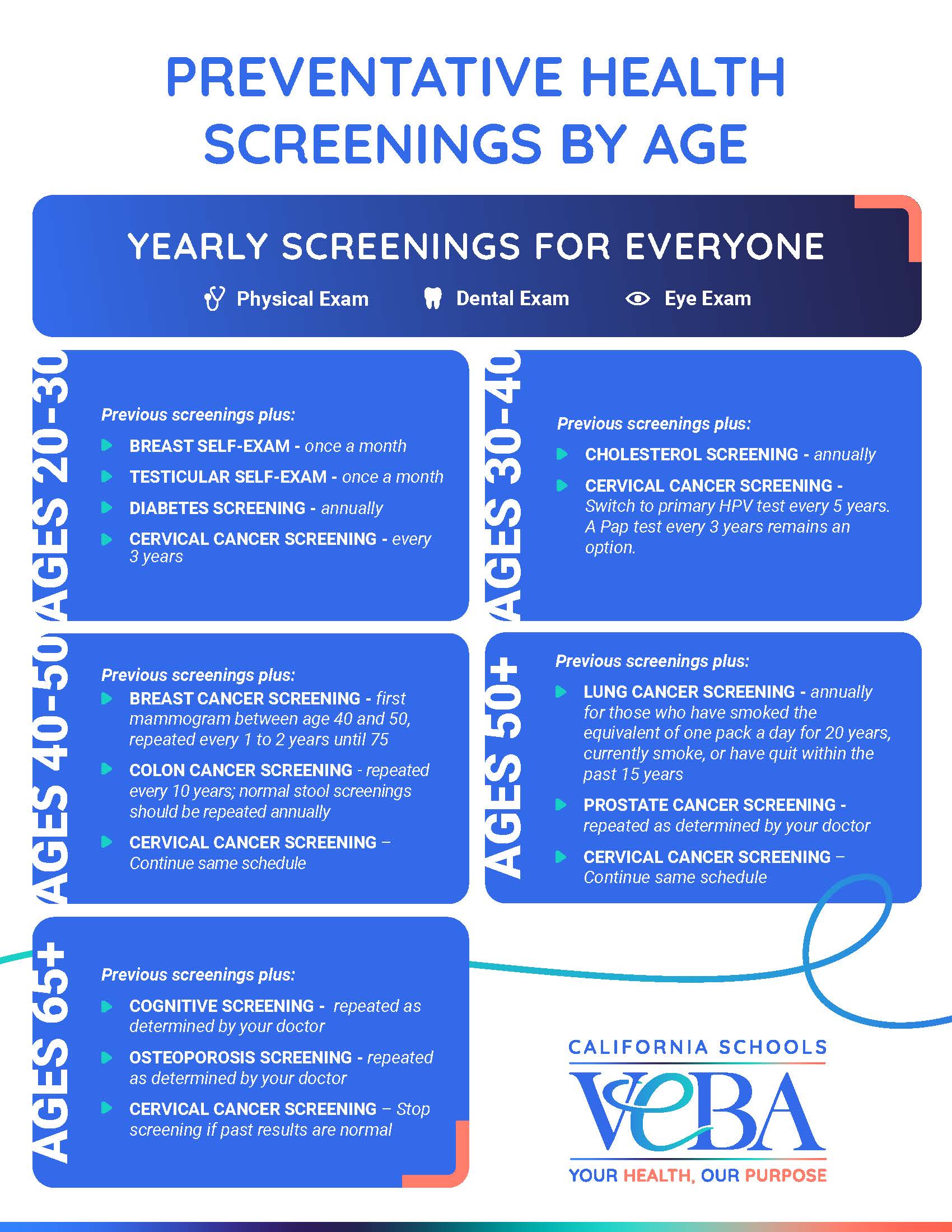
Don’t delay. Schedule your routine screenings and take proactive steps towards preventing cancer, as prevention truly is the best medicine. Download this infographic to see what other screenings you may need based on your age, and for appointment tips to get the most out of your visit. For more lifestyle tips that help with cancer prevention, read this blog.
Have you received a diagnosis or treatment plan and want to get a second opinion? As part of our CalVEBA medical plans, members can get a free expert second opinion through our partnership with Teladoc Medical Experts. This is a no-cost service that provides you with access to world-renowned doctors and specialists so you can have confidence before making major medical decisions.
Learn more at Teladoc.com/Medical-Experts or call 800-835-2362