
The Power of Prevention: Reduce Your Risk for Common Cancers

The National Cancer Institute estimated that in 2025, roughly 2 million people were diagnosed with cancer in the United States. Based on this research, breast, lung, prostate, and colorectal cancers account for almost 50% of all new cancer cases in the US.

With cancer affecting so many people each year, adopting preventive measures has become more important than ever. By focusing on lifestyle modifications and early detection, you and your loved ones can significantly reduce your chances of developing cancer and live long, healthy lives.

Learn about prevention, screenings, and lifestyle tips that can help protect you and your loved ones against these common cancers.

Skin Cancer

Did you know: Skin cancer is the most common type of cancer. It often appears on areas of the body exposed to the sun, such as the head, face, neck, back, chest, or shoulders.

Colon Cancer

Did you know: The American Cancer Society estimates that over 152,000 people in the U.S. will be diagnosed with colorectal cancer in 2026. However, the number of people diagnosed has steadily declined since the mid-1980s due to increased screening and changing lifestyles.

Lung Cancer

Did you know: According to the Lung Cancer Research Foundation, about 20% of lung cancer diagnoses occur in people who have never smoked, which is why awareness and screening recommendations are important for many adults.

Breast Cancer

Did you know: According to the American Cancer Society, the average risk of a woman in the United States developing breast cancer sometime in her life is about 13% and the median age at the time of breast cancer diagnosis is 62.

Prostate Cancer

Did you know: According to the American Cancer Society, about six in 10 prostate cancers are diagnosed in men who are 65 or older, and it is rare in men under 40. The average age of men when they are first diagnosed is about 67.


Don’t delay. Schedule your routine screenings and take proactive steps towards preventing cancer, as prevention truly is the best medicine. Download this infographic to see what other screenings you may need based on your age, and for appointment tips to get the most out of your visit. For more lifestyle tips that help with cancer prevention, read this blog.

Have you received a diagnosis or treatment plan and want to get a second opinion? As part of our CalVEBA medical plans, members can get a free expert second opinion through our partnership with Teladoc Medical Experts. This is a no-cost service that provides you with access to world-renowned doctors and specialists so you can have confidence before making major medical decisions.

Learn more at Teladoc.com/Medical-Experts or call 800-835-2362
The Importance of Preventive Care

Don’t wait until you’re sick to see your doctor. Preventive care isn’t just about avoiding illness—it’s about building a foundation for lifelong health.

What is Preventive Care?

Typically, you visit the doctor when you’re sick or something just doesn’t feel quite right. While you should always seek help in those instances, preventive care means taking proactive steps—like regular check-ups, screenings, and immunizations—to protect your health before problems arise.

These visits support early detection and give you and your doctor the opportunity to work together toward your personal health and wellness goals. During a preventive care appointment, your doctor will determine which tests or screenings are appropriate based on your age, gender, health status, and family history.

What’s Typically Covered?

Physical Exams

During a physical exam, your doctor will observe, listen, and gently examine your body to help identify symptoms, assess underlying conditions, and determine if further testing is needed. You’ll also have the chance to discuss any concerns, review your medical history, and review current medications.

Immunizations

Immunizations (or vaccinations) are one of the most effective ways to protect yourself from infectious diseases. They help your body build antibodies that recognize and fight illness if you’re exposed later.

Common immunizations include flu and tetanus shots, the measles, mumps, and rubella (MMR) vaccine, and hepatitis A and B vaccines.

Screenings

Member Moment

Meet Ginger
“It’s very hard to look your kids in the eye and tell them that you have cancer. When they told me I was cancer free, I felt like I could breathe for the first time. I had great insurance, and I know our members do too, so I hope this is encouraging them to get their yearly checkups.” – Ginger, Member since 2013

Watch Ginger’s full member moment here.

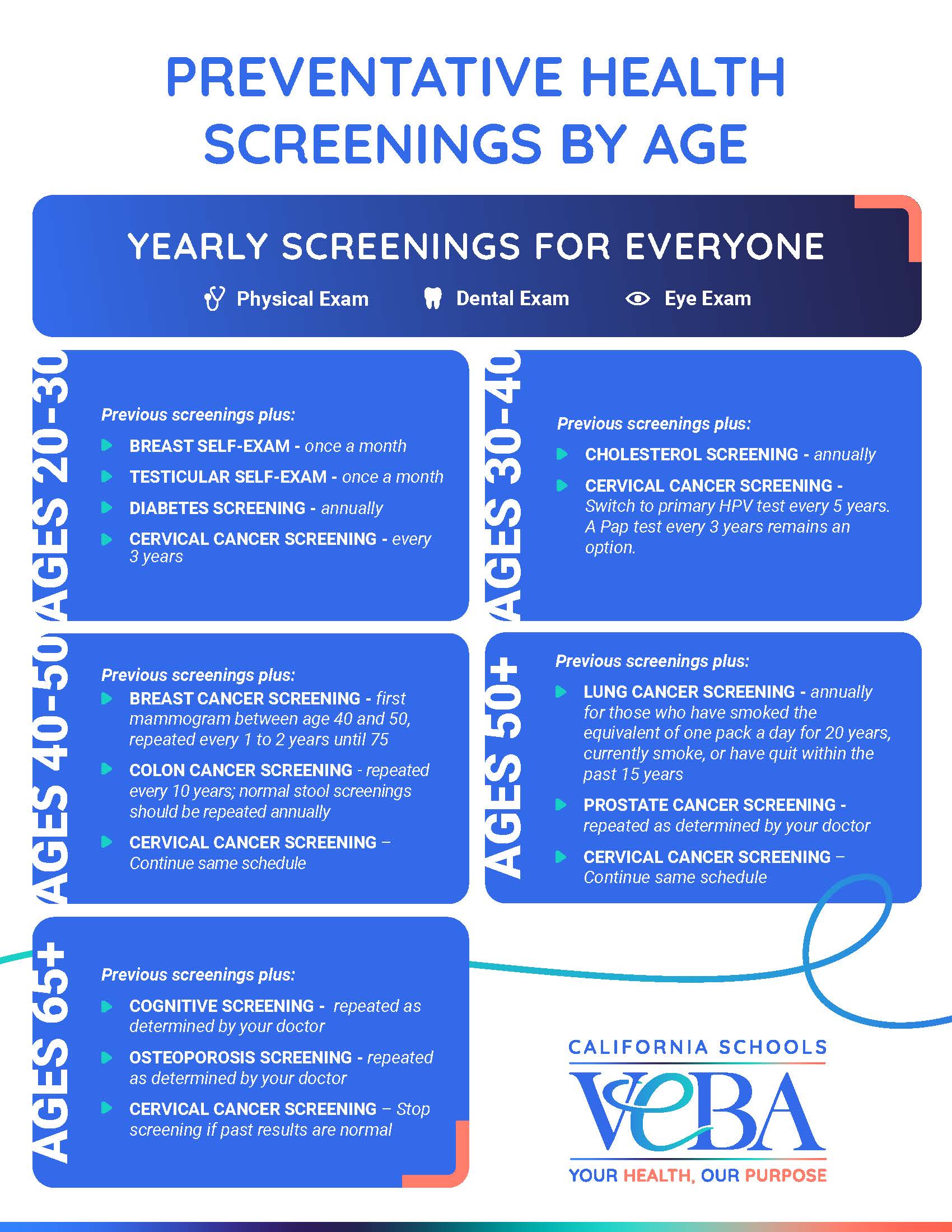
Screening tests help detect certain diseases before symptoms appear. Early diagnosis often leads to better outcomes and can prevent or delay complications. Use the infographic below to see which screenings may be recommended for your age group.

Preventative Health Screenings by Age, CalVEBA Infographic

Disclaimer:

This is a general guide for average-risk individuals. Higher risk may require more frequent screening. Consult with your health care provider.

Appointment Scheduling Tips

Preventive care appointments are usually covered at no cost with in-network providers. Check your plan documents to confirm coverage and costs.

Make the most of your doctor’s appointments by being well-prepared and organized using our Appointment Ready: Your Doctor’s Visit Prep Guide.

Here are some tips to help you get started:

Before Your Appointment:

  • Make a List: Bring a list of medications and jot down questions or concerns.
  • Bring Your Insurance Card: Download and save to your mobile wallet for easy access.

During Your Appointment:

  • Arrive Early: Arrive 10-15 minutes early to complete any paperwork. 
  • Dress Comfortably: Wear a shirt or loose-fitting sleeves for your blood pressure check. 
  • Use Your List: Review your list with your doctor. 
  • Speak Your Mind: Your time and health are valuable! 

After Your Appointment:

  • Follow Through: Take prescribed medications as directed and schedule any recommended follow-ups or screening. 
  • Speak Up: Report new symptoms or concerns promptly.  
  • Get a Second Opinion: If you’re unsure about a diagnosis or treatment plan, CalVEBA members can access second opinions from world-renowned specialists at no cost through our partnership with Teladoc Medical Experts. 

Preventive care can help you stay ahead of health issues and maintain overall well-being.

Download our Appointment Ready: Your Doctor’s Visit Prep Guide today and start planning for your next preventive care visit!


Thank you to our content partners at Sharp HealthCare and Healthwise.

Need help to schedule an appointment or have questions about your medical coverage? Contact the California Schools VEBA Advocacy Team here or call 888-276-0250.

Simplifying Health Insurance: Exploring Options

Health insurance can be a complex and confusing topic, but understanding the different options available to you is crucial for making informed decisions about your health care. In this blog post, we will explore some common terms and concepts related to health insurance. 

Insurance Plans 

Accessing Care

Health Care Systems 

Simplifying Health Insurance: Understanding Documents

Health care documents contain a vast amount of information, from medical records to billing statements, and can often be overwhelming or confusing to understand. That’s why we’re breaking down these common health care documents to help you understand what they mean. 

Simplifying Health Insurance: Common Terms 

Navigating the world of health care can be complex, especially when faced with unfamiliar terms. If you find yourself wondering where to start or how these terms apply to you, begin by gaining a clear understanding of health insurance terminology. This will help you make informed decisions about your health care and ensure you are well-prepared for any medical expenses that may arise. 

What’s In and What’s Out When It Comes to Your Health

Your small, daily habits add up to larger lifestyle choices that influence your health. It’s important to take stock of your daily habits and evaluate where you have room to grow. We’ve compiled a “what’s in and out” list to help you think through areas where it’s common to struggle with unhealthy behaviors. Check out these simple yet effective ways to replace these habits with healthier alternatives.

In: Good sleep 
Out: Stress and sleep deprivation 

Sleep plays a pivotal role in so many aspects of our health, from keeping our minds strong to warding off illness and disease. Unfortunately, many people fail to get the sleep they need, and an estimated 50 to 70 million people in the U.S. have a sleep disorder. Adults should get between seven and nine hours of sleep each night — and the quality of that sleep is crucial. Here are three relaxation techniques to help you fall asleep! 

In: Pleasure Reading 
Out: Binge-watching and doom-scrolling 

In a sea of streaming video and ever-present screens, doom-scrolling and binge-watching are often the entertainment of choice above the more old-school option of reading a book. But research says reading can provide a healthy distraction from life’s day-to-day worries and pressures while also making us smarter, happier, and even more empathetic toward others. Audiobooks are an excellent way to read while engaging in physical activities like walking or exercising. There are free audiobook resources available, such as Librivox, OverDrive, and Audible‘s free trial, which offer a wide range of titles to choose from without any cost.

In: Homemade meals 
Out: Eating out and ordering in 

People are looking for fast and tasty foods to fit busy lifestyles. But whether you’re eating carryout or sit-down restaurant cuisine, researchers say you’ll consume about 200 more calories a day and more saturated fat, cholesterol, and sodium than if you made your meals. Cooking at home, however, helps you avoid these pitfalls and is an opportunity for creativity, togetherness, and cost-cutting. 

Looking to improve your cooking skills? Need recipe ideas that are not only healthy but also affordable and simple to make? The VEBA Resource Center offers free in-person and virtual cooking classes to learn how to cook meals from our extensive recipe library.  

In: Saying no 
Out: Always hustling 

Sometimes, your body, mind, or heart sends a message that it needs time off. It’s important to heed that call, especially if it’s coming from all three at once. Occasionally saying no to an invite, request or assignment is a true form of self-care, which can lead to reduced stress; improved mood, immunity, and self-esteem; and a variety of other physical, mental, and emotional health benefits. 

In: Sober curiosity 
Out: Regularly drinking 

According to the U.S. Department of Health and Human Services, drinking can take a serious toll on your body. Limiting how much you drink or taking a complete break from drinking, what some refer to as being “sober curious,” can help boost your immunity, limit your risk of disease, lead to weight loss, and improve your sleep, concentration, energy, performance, skin health, and even your relationships. 

In: Hygge 
Out: FOMO 

Everyone occasionally experiences FOMO, or the fear of missing out, but going to every social event can be exhausting and expensive and can lead to overindulgence in food and alcohol. Instead, consider enjoying more “hygge,” a concept originating in Denmark and Norway, which means to take time away from the daily rush to be together with people you care about — or even by yourself — to relax and enjoy life’s quieter pleasures.” 

California Schools VEBA’s Self-Regulation Toolkit is a great starting point with daily 5-minute activities that will help you use your time more mindfully!  

In: Digital detox 
Out: Endless screen time 

On average, Americans spend more than seven hours looking at a screen. And most use their smartphones for over three and a half hours every day — not counting when they’re talking to someone. All this screen time can have negative effects on your health, both physical and mental, which is why experts recommend no more than two hours of screen time per day. Here are some tips to regulate phone use more healthily. 

In: Authentic friendships 
Out: Accumulating social media “friends” 

Friendship is good for your health. When you’re with friends, your body releases the hormone oxytocin, which combats stress and creates calm. And the more time spent with friends, the less likely you are to develop health issues and dementia. But creating and sustaining friendships takes commitment far beyond “liking” the occasional post. One study found it takes hundreds of hours — all worth it — to become true friends. 

In: Movement every day 
Out: Overexercising 

The CDC recommends adults get at least two and a half hours of moderate-intensity activity each week. However, you don’t need to spend hours in the gym to meet this goal. Thirty minutes a day, just five days a week will do the trick. Pushing your limits can lead to poor performance and health problems, including overuse and stress injuries, too much weight loss, and decreased immune performance. 

VEBA members can sign up for live classes, in-person and virtually, available seven days a week! There’s also a video library of on-demand classes you can access anytime, anywhere. 

In: Water 
Out: Caffeine-laden energy drinks 

Water is an ideal choice for hydration. While some people prefer sports drinks over water because of the taste and added electrolytes, the standard sports drink contains 140 calories, 34 grams of added sugar, and 270 milligrams of sodium. Additionally, excess caffeine can be harmful, causing changes in heart rate, increased blood pressure, anxiety, sleep and digestive issues, headaches, and dehydration. 


Embracing changes like these will have a profound and positive impact on your overall well-being in the long term. Now, what’s on your list? If you’re unsure where to start, California Schools VEBA has developed a library of downloadable resources to equip you with the support you need to navigate your health and well-being journey. As they say, out with the old, in with the new!

Thank you to our content partners at Sharp HealthCare.

8 Ways to Strengthen Your Pelvic Floor 

You don’t think twice about working out to keep your arms, legs, abs, or glutes in good shape, but what about your pelvic floor? Although you can’t see your pelvic floor muscles like the muscles in other parts of your body, keeping them strong and healthy is important. 

The pelvic floor is a bowl-shaped structure containing a group of muscles that support the bladder and bowel. The pelvic floor also plays a role in sexual function. 

Sometimes, pelvic floor muscles become weakened because of pregnancy, obesity, or previous surgeries. This can cause a range of conditions, from loss of bladder or bowel control to organ prolapse — when one or more of the pelvic organs drop or press into or out of the vagina. And although issues occur more often with women as they age, it’s not necessarily a normal part of aging. 

Luckily, simple lifestyle tips help keep your pelvic floor strong and healthy.

1. Practice Pilates or yoga. 

These activities, along with other core-strengthening exercises, strengthen your pelvic floor muscles and have been shown to help some women with urinary incontinence. 

Incorporate Pilates or yoga into your weekly routine with free classes through the VEBA Resource Center (VRC). Join virtually from the comfort of your home or alongside fellow members at a VRC location for motivation and fun.

2. Maintain a healthy body weight. 

A healthy body weight reduces excess pressure on your pelvic floor muscles and organs. It can also reduce the risk of chronic diseases, such as diabetes and high blood pressure, which may also play a role in pelvic floor disorders, such as urinary incontinence.  

3. Do Kegel exercises. 

Kegels are a simple exercise that can help strengthen your pelvic floor muscles. To start: 

  • Make sure your bladder is empty. 
  • Using the muscles you’d use to stop urine midstream, tighten and hold the muscles for 10 seconds. 
  • Release and relax for the same amount of time. 
  • Repeat tightening, holding, and releasing for up to 10 repetitions. 

4. Don’t hold your urine. 

It’s normal to be able to hold your urine for two to three hours. However, holding it for longer periods could lead to urinary issues later in life and increase your risk of urinary tract infections. 

5. Don’t sit for long periods on the toilet straining or pushing. 

This can lead to unhealthy bowel movements and urination behaviors. It also increases your risk of organ prolapse because of the pressure it places on the pelvic floor organs and muscles. If you’re experiencing constipation, increase fiber in your diet or take a fiber supplement to soften the stool. 

6. Learn proper lifting techniques and avoid repetitive or heavy lifting. 

Lifting heavy objects can be a risk factor for pelvic floor disorders because it puts pressure on the pelvic muscles. If you must lift something heavy, maintain a good lifting posture and ask for help when needed. 

7. Cut back on caffeine, chocolate, citrus, alcohol, and carbonated drinks. 

These beverages can irritate the bladder and cause urinary frequency, urgency, and incontinence. Caffeine and alcohol are also both diuretics, which cause the body to create more urine and irritate the bladder. 

8. Don’t drink too much water. 

This may seem counterintuitive, but some people believe excessive water drinking is healthy. While staying hydrated is important, drinking too much water can lead to urinary issues, such as frequent urination, urinary urgency, and urinary incontinence.  

When to see a doctor.

Reach out to your primary care physician if you are experiencing symptoms such as:

  • Chronic pelvic pain
  • Pain during intercourse or when urinating or having a bowel movement
  • Inability to hold in urine or bowel movements (also known as incontinence)
  • Feeling pressure or fullness in your lower belly
  • Chronic constipation

Learn more ways to improve your pelvic floor health from Andrew Martinez, Owner of Built Well for Birth.

Thank you to our content partners at Sharp HealthCare and Healthwise.

The Surprising Link Between Your Microbiome and Mental Health

From Optum

Your gut has its own ecosystem of microbes that play a big part in how you feel. Learn how your microbiome influences your brain and how you can help keep both in balance.

If you’re hearing more about the gut-brain connection these days, there’s a good reason: It turns out that the health of your gastrointestinal (GI) tract — also known as your gut microbiome — can directly affect your brain chemistry and mood. 

The state of your microbiome can even increase or decrease your risk of depression and anxiety. The good news: By improving your gut health, you can often boost your mental health, too. 

It might seem odd that your gut would hold such power over your mental state, but anyone who’s felt butterflies before a speech or had a nervous stomach after a sudden shock knows there is a connection. 

For several decades, researchers have been exploring the mind-gut relationship, and they’ve discovered several connections. People with GI disorders, for example, have an increased risk of depression and anxiety. Even if you don’t have digestive issues, an unhealthy gut can lower your mood. 

Here’s what’s going on between your gut and brain and how to get things in balance so you feel better — physically and emotionally. 

How the gut-brain connection works 

Your gut is home to a microbial environment called the microbiome. “It’s an entire ecosystem of bacteria, viruses and other microorganisms that we rely on for survival,” says Andrea Nazarenko, PhD. She’s a psychologist in Lexington, South Carolina, and the author of When Food Hurts. “These bacteria play a major role in almost all aspects of human physiology, mental processes included.” 

In simple terms, the gut bacteria communicate with the brain and vice versa. The gut is so important to bodily processes that it’s considered the “second brain” and functions somewhat independently of the brain itself, Nazarenko says. 

The gut microbiome is command central for several essential roles: 

  • It defends against infections. 
  • It digests nutrients that are otherwise indigestible. 
  • It regulates the creation of new blood vessels. 

How does all this interplay affect your mental health? The gut makes neurotransmitters. Neurotransmitters are chemical messengers that are sent and received by a type of brain cell (neurons). And they help regulate all sorts of things, from movement to motivation to emotions. 

“Many people think of depression and anxiety as a chemical imbalance in the brain. But these chemicals are created in the gut, not the brain,” Nazarenko says. In fact, more than 30 different neurotransmitters and nearly 90% of the body’s serotonin, the feel-good hormone, come from your gut. 

Bottom line? “The imbalance of neurotransmitters may not be in your brain but in your gut,” Dr. Nazarenko says. 

Mental health conditions linked to the gut microbiome 

An imbalance of bacteria in the microbiome can have serious consequences when it comes to GI health and mental health. In fact, researchers have discovered that people with certain digestive disorders have a higher risk of depression and anxiety. 

“People with digestive disorders such as inflammatory bowel disease (IBD) — Crohn’s disease and ulcerative colitis — are at a greater risk of mental health conditions,” says Nazarenko. “These comorbidities [conditions that exist at the same time] of depression and anxiety aren’t just secondary to the diagnosis of IBD. They can actually be independent predictors of the severity of the digestive symptoms, meaning they can make matters worse.” 

In addition to depression and anxiety, there are several mental disorders that have been linked to changes and imbalances in the microbiome and digestive conditions: 

Researchers are still figuring out the nature of the relationship between the microbiome and each of these mental health conditions, as well as what else might be involved, such as genetics or environmental factors. 

Simple strategies to improve your microbiome and your mental health 

If you think you’re suffering from a mental health condition, the first step is to talk to your provider and seek help from a therapist. 

But you can also work on getting your gut microbiome healthier. “Healing the gut can address the root causes of the mental disorder,” she says. The 2 main ways to do this: through dietary changes and with probiotic supplements. 

Although medication is required to control or suppress symptoms of certain conditions, easy lifestyle strategies can potentially improve a condition or help prevent mental health issues in the future. 

3 food-mood strategies 

Every meal or snack offers a chance to support your mental health. Here are 3 ways to use food to boost your mood. 

1. Tap the power of plants and the Mediterranean diet 

One of the best plant-based diets to follow: the Mediterranean diet. It has the most evidence for promoting a healthy gut and playing a role in mental health, Nazarenko says. 

Focus on adding fruits and vegetables, whole grains, and nuts and seeds to your diet. You can even take it a step further by concentrating on plant foods that promote GABA, the neurotransmitter that many anxiety medications work on, she adds. (Check out these sneaky signs of anxiety.) These foods include: 

  • Almonds 
  • Bananas 
  • Broccoli
  • Brown rice 
  • Green tea 
  • Lentils 
  • Oats 
  • Oranges 
  • Spinach 
  • Walnuts 
  • Whole grains 

2. Eat foods that contain probiotics 

Probiotics are live microorganisms that benefit your gut, and they’re found in fermented foods such as: 

  • Kimchi
  • Sauerkraut 
  • Tempeh 
  • Yogurt 

3. Eat foods that contain prebiotics 

Prebiotics are plant fibers that serve as food to grow good bacteria in your gut, says Jyothi Rao, MD. She’s the medical director at the Shakthi Health and Wellness Center in Mount Airy and Elkridge, Maryland. She’s also the coauthor of Body on Fire. Prebiotic foods include: 

  • Cabbage 
  • Chicory 
  • Garlic 
  • Jerusalem artichokes 
  • Onions 

Probiotic supplements for mental health 

While the goal is to get probiotics mostly through your diet, supplements are also useful, says Dr. Rao. There are hundreds of probiotic supplements on store shelves, with all sorts of different strains in them. “While many of the probiotics are for general health, they can also be targeted to a specific condition,” says Dr. Rao. 

For instance, a strain called L. rhamnosus has been shown to possibly reduce anxiety, Dr. Nazarenko says. And a small study in the journal Nutrition found that 3 probiotic strains — Lactobacillus acidophilus, Lactobacillus casei and Bifidobacterium bifidum — helped reduce symptoms of depression. Other research has linked several strains, including lactobacillus and bifidobacterium, to improvements in mental health. 

Of course, not all supplements are reliable. Two that score well in independent reviews include Culturelle and Nature’s Bounty. 

Dr. Rao doesn’t think taking probiotic supplements substitutes for eating a diverse, plant-based diet. But if you do use them regularly, she recommends changing the probiotic supplement every 3 months to promote diversity in the bacteria colonies in your gut. 

While diet and supplements provide a good foundation for improving gut health, that’s not all you can do. Nazarenko works with clients virtually in a guided self-help program about following a gut-healthy lifestyle. That lifestyle includes exercise, nurturing positive relationships, working on maintaining a positive mindset and learning healthy ways to manage stress. 


As a VEBA member, you have access to Optum Dedicated Onsite Consultants. This Optum partnership allows you to receive assistance quickly for a variety of issues — from stress and relationship issues to communication strategies and beyond. This is a no-cost service to VEBA beneficiaries only.  

Appointments are available:  

  • In-person at the VRC – Kearny Mesa location  
  • Virtually by phone or video consultation  

To schedule a consultation, click here.  

Through Optum, you and your dependents can also schedule consultations through Emotional Wellbeing Solutions. Please note: you may experience longer wait times with this option. To schedule an appointment through Optum directly, call 888-625-4809 or visit liveandworkwell.com (Access Code: VEBA). 

Making Lifestyle Changes to Help Prevent Cancer

According to the World Health Organization, between 30–50% of all cancer cases are preventable. Certain unhealthy daily behaviors can increase our risk of developing cancer. Major lifestyle changes may not happen overnight, but working toward healthier habits can significantly reduce the likelihood of cancer. Practices like making time each day for physical activity, choosing healthier food options, and prioritizing regular checkups and screenings can all contribute to cancer prevention.

Here are some steps you can take that may help prevent cancer and pave the way for a long and healthy life:

Quit smoking.

When you quit smoking, you lower your risk of many types of cancer. These include cancers of the lung, bladder, kidneys, pancreas, cervix, mouth, esophagus, and throat.

Make healthy food choices.
Your diet should include:

  • Plenty of vegetables, fruits, beans, other legumes, fish, poultry, and whole grains.
  • Less red meat (such as beef, lamb, and pork).
  • Less processed meat (like bacon, hot dogs, sausage, and some deli meats).
  • Less food made from refined grains.
  • Less sweets and added sugars.

Find inspiration from our recipe library!

Maintain a healthy weight.
Being very overweight increases the risk of some forms of cancer. People whose extra body fat sits in the waist area may be at higher risk than people whose extra fat is in their hips or thighs.

Stay active.
Being active every day may prevent several cancers. And regular activity can help you get to and stay at a healthy weight. Being active and getting enough sleep may work together to lower cancer risk even more than activity alone, especially for women.

You can join free movement classes, in-person or virtually, on our class calendar! Or visit our video library for on-demand classes to take whenever and wherever you wish!

Protect your skin.
Most skin cancer is caused by too much sun. To protect yourself from damaging UV rays:

  • Seek shade from 10 a.m. to 4 p.m.
  • Cover up outdoors with a wide-brimmed hat and tightly woven clothing.
  • Apply broad-spectrum sunscreen on any exposed skin, even when it’s cloudy. Use SPF 30 or higher. Reapply if you’re in the sun for more than a few hours.
  • Wear UV-blocking sunglasses.
  • Avoid tanning booths and sunlamps.

Be wise with alcohol.
Drinking alcohol may increase your risk of some types of cancer. Any amount of alcohol may increase that risk. If you drink alcohol, try to limit the amount you drink.

Practice safer sex.
Safer sex includes using condoms and talking to every potential sex partner about their sexual history. Practicing safer sex helps prevent HPV, a sexually transmitted infection that can cause cervical cancer.

Get regular checkups and screenings.
Your doctor can schedule regular screenings for various types of cancer, such as mammograms for breast cancer and stool tests for colon cancer. Most screenings and checkups are to find cancer early, when it’s easier to treat and may even be curable.

Read this blog and download a free infographic for screening recommendations based on age.

Consider vaccinations.
Females ages nine to 26 can get the HPV vaccine to protect against the virus that can cause cervical cancer. Males ages nine through 26 may also get the HPV vaccine, which may prevent anal cancer and oral cancer. If you are age 27 to 45 and have not been vaccinated for HPV, ask your doctor if getting the vaccine is right for you.

Avoid toxins at work and at home.
Stay away from harmful chemicals and other things that can increase your chances of getting cancer. These things include asbestos, benzene, radon, and polluted drinking water. Take care when you use cleaning products, paints, solvents, and pesticides.


Making healthier life choices and sticking to them can be challenging, but you don’t have to do it alone. At the VEBA Resource Center, our Care Navigators are here to support and guide you toward becoming your best self. Together, you’ll create a tailored health plan for you based on your unique story, values, and experiences.

Start Your Personalized Wellness Journey

5 Tips for Managing Blood Pressure at Home

There’s a good reason why every doctor’s appointment starts with a blood pressure check: Blood pressure is an important indicator of heart health.

According to the American Heart Association, nearly half of American adults have high blood pressure, when the force of blood flowing through their blood vessels is consistently too high. When left untreated, high blood pressure can lead to heart attack, stroke, and other health concerns.

However, with proper treatment and management, you can control your blood pressure to help you live a long and healthy life. Here are five ways everyone, especially those with high blood pressure, can keep their blood pressure in check:

1. Monitor your blood pressure on a regular basis.

If you don’t have a blood pressure monitor at home, that’s okay! It’s important to schedule your routine check-ups with your physician or doctor in combination with these healthy heart lifestyle tips. If you do have a blood pressure monitor at home, you should check your numbers daily with these tips:

  • Be still. Avoid smoking, caffeine, or exercise 30 minutes before measuring. Take at least five to 10 minutes of quiet rest before measurements.
  • Sit correctly. Sit with your back straight on a chair, feet flat on the floor, legs uncrossed, and support your arm on a flat surface at heart level.
  • Roll up your sleeves. Always be sure to put the cuff on a bare arm and not over clothing.
  • Be consistent. Take your blood pressure reading at the same time every day.
  • Record your results. Track your numbers using a printable or online tracker.

Dr. Todd Hitchcock, a cardiologist from ScrippsClinic, shares additional tips and techniques for checking your own blood pressure.

2. Know your risk.

A normal blood pressure reading is less than 120/80. If your first reading is 140/90 or greater, do the following:

  • Take your blood pressure again, two to three more times. Write down and compare all the readings, and if you are concerned about your numbers, consult with your doctor.
  • If your blood pressure exceeds 180/120, wait five minutes and test again. If your readings are still unusually high, contact your doctor immediately. You could be experiencing a medical emergency.
  • If your blood pressure is higher than 180/120 and you are experiencing chest pain, shortness of breath, back pain, numbness, weakness, change in vision, or difficulty speaking, call 911 immediately.

3. Take your prescribed medications.

Always take blood pressure medicines as prescribed. Never skip a dose or abruptly stop taking medicines.

4. Form healthy habits.

Whether you’re dealing with high blood pressure or concerned about your heart health, embracing an active lifestyle and adopting a heart-healthy, well-balanced diet with minimal salt can make a significant difference. Try including nutrient-rich foods like fruits, vegetables, whole grains, and lean proteins such as skinless poultry and fish, along with nuts and legumes into your daily meals. Regular aerobic activity, such as walking, bicycling, or swimming, can also help lower your blood pressure and strengthen your heart.

5. Manage stress.

Did you know untreated stress can increase blood pressure? Taking steps to reduce your stress can improve your heart health. Some stress-reducing tips include meditating, listening to music, trying aromatherapy, and taking a nap.


For more self-care tips to help you manage stress, download our free self-care toolkit.

The VEBA Resource Center offers many free virtual and in-person classes, from cooking and meditation to cardio and yoga. Check out our calendar to sign up for an upcoming class.