Five Tips to Support Your Mental Health During the Holiday Season 

The holidays can be a time of togetherness, joy, and fun. It can also be a time of stress, loneliness, and anxiety that can take a significant toll on your mental health. If you find yourself stressed before or during this time of year, you’re not alone.

A recent ​American Heart Association (AHA) survey​ found that most people take weeks to de-stress after the holidays. Almost all respondents reported that they regretted not making time to rest or enjoy the season. Knowing the challenges during this time of year, you can proactively put in guardrails to protect your mental health. Let’s review some tools and skills that can help.

1. Set Realistic Expectations

From dishes to events to outfits to gifts, there are a lot of expectations for this time of year. Often, we set unachievable goals and, therefore, set ourselves up for the disappointment that comes when those goals are not met.

It’s important to step back and ask if our expectations for ourselves and others are too high. Recipes may not turn out as they looked on Pinterest, children may not use their manners when grandparents are over, your house may not be immaculate, and you may be late to an event.

If you expect perfection, even small hiccups can feel like disasters. Setting realistic expectations is a game changer. It helps ease anticipation, reduces stress, and creates space to enjoy the season.

If you’re feeling pressure to meet every expectation, remember that CalVEBA offers mental health support to help you navigate life’s challenges. Learn more here.

2. Draw and Hold Boundaries – It’s Ok to Say No

Putting in place frameworks for what is ok and not ok for you is an essential to-do over the holidays. Boundaries help us maintain who we are, stop others from taking advantage of us, invigorate our relationships, give us space to respectfully speak our minds, and open us to empathize with others. Healthy boundaries over the holidays could look like​ this​:

  • Not answering emails or work calls after hours or on your scheduled time off.
  • Saying no to invites when you want a quiet night at home.
  • Expressing discomfort to a relative who wants to talk about politics.
  • Politely asking others to respect your physical personal space. 

When our boundaries aren’t respected, we often feel unsettled. Many people ignore that discomfort to avoid conflict. This year, challenge yourself to let others manage their own reactions. Respectfully expressing and maintaining your boundaries is essential to your mental well-being.

3. Balance Your Schedule

Calendars fill up quickly during the holidays — often overflowing. It may seem impossible to manage and curate your schedule. More than half of the people surveyed in the AHA study reported that they had trouble making time for healthy eating, exercising, and getting adequate sleep this time of year. But finding balance in your day and week can keep you on your holiday schedule while ​keeping​ your stress in check.  

As you make a list of must-dos, be sure to include nutritious meals, exercise, sleep needs, and decompression time. Draw healthy boundaries around your time, knowing that you must show up for yourself before you can for others over the holidays. Block time on your calendar for self-care. Treat it like any other important commitment. You may not be able to make a 60-minute yoga class, but stretching at home for 15 minutes can be just as impactful. Five minutes of peace alone — wherever you can find it — can make a huge difference in your day.

Try CalVEBA’s virtual yoga, nutrition, and movement classes from wherever you are to help you recharge on your own schedule. Get started here.

4. Practice Mindfulness Regularly

Stress can sneak up on us. It might start with a few quick breaths and a clenched jaw, then escalate quickly. Tuning into your body throughout the day is an important step in managing your stress over the holidays. Meditation, yoga, journaling, ​and ​walking​​ are ​all ​great ways to cultivate awareness of what’s going on with you. From that knowledge, you can practice breathing techniques, use a self-soothe kit, or other coping techniques to regulate yourself. Then, you can start to address what’s causing the stress.  

5. Lean on Support

Help can be asking a coworker to assist with a project, a parent to watch your child for a few hours, or a friend to pick something up for you when they’re running errands. It can also be asking for someone to listen to you as you talk through something, company as you go for a walk, or someone simply holding space with you. Over the holidays this year, look to your family, friends, and coworkers for support and don’t forget to check in on others as well. Checking in with others can be a meaningful way to connect and support each other. You can also lean on the Resource Center. We offer programs and resources to help you live your healthiest life. 

Looking for More Support?

The holidays can be a time of joy but also stress and anxiety. Prioritizing your mental health is essential to navigating this season with resilience.

As a CalVEBA member, you have access to:

  • Mental health care through CalVEBA and your medical plan
  • Virtual wellness classes including yoga, fitness, and meditation
  • Self-care toolkits focused on mental well-being, nutrition, and on-demand videos

Visit calveba.org/Resources/ to explore programs that support your total well-being. 
Five Steps for Building Healthy Boundaries: Your Guide to Balance & Better Relationships

“I feel stressed when my family expects me to attend every event, when I need personal time.”

“I’m always working late because I’m asked to take on extra tasks outside of my role.”

“I feel exhausted when I attend too many social events.”

Do any of the statements above sound familiar?

If so, you’re not alone! Many people struggle with balancing personal, professional, and social boundaries. This post will help you identify, set, and maintain healthy boundaries to improve your overall well-being.

Step 1: Awareness: Know your Boundaries

Personal boundaries are limits we set in relationships to maintain health and well-being through clear communication, self-awareness, and assertiveness. Feelings of discomfort, stress, or resentment are a sign that you need to set clearer boundaries, whether due to others overstepping or your own overcommitment.

Step 2: Clarity: What Boundary Setting Sounds Like

Be clear about your needs. Preserving your peace is power. You’re allowed to say “no.” Try writing out a few boundaries using clear, assertive language that communicates your needs without blaming or shaming others. Having these ready will help when situations arise.

Examples: 

“I’m not available at that time.”
“Please don’t do that.”
“Thank you for inviting me, but I need some time for myself.”
“That doesn’t work for me.”
“Not at this time.”
“I’m not comfortable with this.”

Step 3: Communicate: What to Do and Say

Communicate your boundaries clearly and confidently. Consider who you need to talk to, the best time and method, and how to express your boundary kindly and firmly.

Example: “I’ve decided that I need to focus on my personal well-being, so I won’t be able to attend every family event this year. I hope you understand and support my decision.“

Tips to Try

Use confident body language

Face the person, make eye contact, and use a steady, appropriate volume and tone of voice

Be respectful

Be firm but avoid yelling, put-downs, or the silent treatment.

Plan Ahead

Before a difficult discussion, know what you want to say and how to say it.

Compromise

Consider the other person’s needs when appropriate. While not always necessary, compromise is part of healthy relationships.

Step 4: Stick to Your Boundaries

Uphold your boundaries with these strategies: 

Check in with yourself
Periodically ask: “Am I honoring my own boundaries? 

Be Consistent
Maintain boundaries, allowing rare and intentional exceptions. 

Be prepared for pushback
Have a plan for handling resistance without giving in 

Questions for maintaining health boundaries 
What will I do if someone challenges or violates my boundary? 
How can I remind myself that it’s okay to set boundaries for my own well-being? 
What support do I need from others to maintain my boundaries? 

Step 5: Reflect & Revise

Reflect on how your boundaries are working and whether they need modification.  

Is this boundary still serving me? 
Have I noticed positive changes since setting this boundary? 
Do I need to communicate any new or updated boundaries?

Remember 

Boundaries protect your emotional well-being and help you navigate relationships and obligations with clarity and confidence. Be kind to yourself as you practice setting and maintaining them.

Looking for additional guidance on boundaries?

Consider Care Navigation

Meet with a Care Navigator (virtual or in person) to develop a personalized plan for a healthy mind, body, and spirit. Your plan will be uniquely crafted to reflect your personal story, values, and experiences. By collaborating with your Care Navigator, you’ll create a customized strategy to help you become the best version of yourself.

Schedule an Appointment

Sleep and Your Mental Health

Dalai Lama

“Sleep is the best meditation.”

Getting a good night’s sleep isn’t just about feeling rested—it’s central to your mental and overall well-being. The National Sleep Foundation reports that over 90% of American adults with good sleep health experience minimal depressive symptoms.*

Healthy sleep enhances mood, regulates emotions, and improves concentration for better well-being. This post offers simple strategies to prioritize sleep so you can feel and function your best, starting tonight!

Getting your zzz’s

Why Sleep Matters

Even one night of poor sleep can reduce resilience and impair cognitive function. Quality sleep reduces stress and anxiety, improves focus, and increases empathy. If you have insomnia, the risks are even greater for developing serious mental health conditions. People experiencing sleep issues — including insomnia, hypersomnia (excessive sleepiness), and nightmares — have an increased risk of depression, suicidal ideations, and death by suicide.

Dreaming of Better Sleep?

Creating good sleep habits starts at home. Your daily routine, from the moment you wake up to what you eat and how you move, all contribute to better sleep.

Six Tips for Better Sleep

Take Control of Your Nights

1. Stick to a Schedule

Go to bed and wake up at the same time every day, even on weekends, to regulate your body’s internal clock (circadian rhythm).

2. Watch Your Intake

Steer clear of nicotine, caffeine, alcohol, and heavy meals close to bedtime.

3. Soak Up the Sun

Aim for 30 minutes of natural light in the morning to help set your sleep-wake cycle.

4. Stay Active

Exercise daily, but wrap up your workout a couple of hours before bed to allow your body to cool down and prepare for sleep.

5. Create Comfort

Keep your bedroom cool, dark, and quiet. Consider using a white noise machine or fan, use room-darkening-curtains, and maintain a temperature between 60 and 67 degrees.

6. Put Down the Devices

Reduce screen time at least one hour before bed. Studies show exposure to your phone’s blue light suppresses melatonin production (the hormone that regulates sleep).

Drift into Sleep: Meditation App & Classes

Apps like Calm and Headspace offer daily mindfulness and meditations to relax, release stress, and sleep better.

Check out our calendar and sign up for an upcoming meditation class at the VEBA Resource Center (VRC) or visit the on-demand video library for classes such as Yoga Nidra (Yoga for Sleep)

Sweet dreams! Here’s to better sleep, brighter days, and restful nights that support your mental health and enhance your well-being.

Bonus tip:

Wind down by bathing, reading, or listening to this 2-minute Simple Meditation.

*Source: National Sleep Foundation (2023, March 9). The Link Between Our Sleep Health and Mental Health. Sleep in America® Poll 2023. 

Easy Acupressure Techniques for Stress Management

Peter G. Hanson, M.D.

“Stress is simply the adaptation of our bodies and minds to change.”

Whether it’s the daily pressures of work, personal challenges, or simply the fast-paced nature of modern life, stress can take a toll on our well-being. Fortunately, there are simple, effective ways to find relief and restore balance. This blog will guide you through easy acupressure and self-massage techniques you can use on-the-go to manage stress and cultivate a sense of calm whenever needed.

Techniques & Benefits

These techniques combine the benefits of acupressure and self-massage to calm your nervous system, release tension, and manage stress effectively.

Hand Pressure Point for Tired, Achy Hands

  • Benefits: Relieves hand fatigue and pain.
  • Location: Web of muscle between the thumb and index finger.
  • Technique: Press your thumb and index finger into the web of the muscle between the thumb and index finger of the other hand. Press and wiggle through the muscle tissue toward the edge of skin. Repeat as desired.  

Yin Tang Acupressure (Third Eye Point)

  • Benefits: Calms the mind and reduces anxiety.
  • Location: The point between your eyebrows.
  • Technique: Gently apply pressure with your index finger for 1-2 minutes, focusing on deep, slow breaths. 

Heart 7 Acupressure (Shenmen)

  • Benefits: Soothes the mind and alleviates anxiety.
  • Location: On the wrist crease, aligned with your little finger.
  • Technique: Apply firm, steady pressure with your thumb for 1-2 minutes. 

Pericardium 6 Acupressure (Neiguan)

  • Benefits: Reduces anxiety and nausea.
  • Location: On the inner forearm, about three finger-widths below the wrist crease, between the two tendons.
  • Technique: Apply gentle, circular pressure with your thumb for 1-2 minutes. 

Neck Relief for Headaches and Soreness

  • Benefits: Relieves headaches and neck tension.
  • Location: Base of the skull where it meets the spine.
  • Technique: Take the palm of your hand and center it at the back of the head. With medium pressure, squeeze and grasp the back of the neck by drawing the fingers toward the center. Release and repeat 4 times with the right hand, then 4 times with the left hand. 

Temple Massage for Tension Headaches and Tired Eyes:

  • Benefits: Alleviates tension headaches and eye strain.
  • Location: Temples, just beside the eyes.
  • Technique: Place your index and middle fingertips at the temple. With light pressure, make 6 to 8 clockwise circular movements, then 6 to 8 counterclockwise circular movements. Repeat as desired.

Essential Oils and Aromatherapy

The use of essential oils and aromatherapy can also help amplify some of these techniques.

Key Essential Oils & Benefits:

  • Lavender: Promotes relaxation, reduces anxiety  
  • Chamomile: Calms the nervous system, promotes relaxation  
  • Bergamot: Reduces anxiety, uplifts mood  
  • Ylang Ylang: Reduces anxiety, promotes relaxation  

Usage: Diffuse, inhale directly, or apply diluted to the skin 

Thank you to our content partners at Sharp HealthCare. 

Need Additional Well-Being Support?

While acupressure and self-massage techniques can be powerful tools for stress management, sometimes we need additional support. California Schools VEBA (CalVEBA) offers a range of resources to help you navigate life’s challenges and daily stress.

Optum Wellbeing Solutions (EWS)

  • 24/7 Support: For immediate assistance with stress, relationship conflicts, work-life balance, communication strategies, and more, contact Optum EWS.  
  • Dedicated Workplace Support Consultants: CalVEBA members and their dependents (18+) in California can access no-cost counseling visits virtually or in-person at the VEBA Resource Centers (Kearny Mesa and Carlsbad).  
    • Available: Monday – Friday, 10 am – 7 pm.
    • To Book: Visit https://bit.ly/optumvrc, create an account, enter the verification code, and select “Onsite service” to choose your appointment type (in-person, video, or telephone). 

Therapy Resources:

  • California Schools VEBA (CalVEBA) Therapy:
    • Short-term mental health support is available. Schedule a consultation with a CalVEBA Care Navigator—a critical care and holistic Registered Nurse. 
    • To schedule a Care Navigation appointment, call 619-398-4220 or book an appointment here. The Care Navigator will assist you with scheduling your therapy appointment and connect you with the resources you need for long-term support and care. 
  • Health Plan Network Therapists:
    • Kaiser Members: For mental health care, call Kaiser Permanente directly.  
      • Call: 833-579-4848 (8 am – 5:30 pm, Monday – Friday). 
    • UnitedHealthcare Members: Sign in to your member account or call the number on your member ID card. For more information regarding wellness resources visit.

Questions about your mental health benefits or need help finding an in-network provider? Contact the California Schools VEBA Advocacy Team for assistance with benefits eligibility, enrollment questions, or finding a therapist within your network.

Thank you to our content partners at Sharp HealthCare.

How to Quiet the Mind and Calm the Body 

In today’s fast-paced world, it can be easy to feel overwhelmed by constant distractions and a noisy mind. This mental clutter can lead to stress, anxiety, and even physical health issues.

Fortunately, mindfulness practices offer a powerful way to cultivate inner peace and improve overall well-being. The American Psychological Association highlights that mindfulness can significantly reduce stress, anxiety, and depression, aid in pain management and addiction recovery, and potentially boost the immune system.

Quiet Your Mind

Try these seven simple mindfulness practices to quiet your mind and calm your body:  

1. Stop To Rest

Notice what you see, hear, and feel in the moment you pause in stillness. Listen to this mindful moment meditation to soak in the beauty around you.

2. Relax with Your Breath

Take a deep breath and focus on your exhalation, feeling yourself letting go as you breathe out. Follow along with this 7-11 breathing practice.

3. Visual Awareness

Focus on something interesting or beautiful you see nearby and take a moment to notice its details. Follow along with this grounding meditation that engages your 5 senses.

4. Listen to Your Surroundings

Bring your attention to the sounds you hear and pause to listen carefully, focusing on each sound separately. Watch this guided meditation to tune into your surroundings and notice the sounds around you.

5. Check-In with Your Body

Bring your attention into your body and feel the sensations in each area. Release any tension or tightness and let relaxation spread. Watch this 10-minute guided chair yoga sequence to invigorate energy into the body.

6. Keep the Good Things in Mind

Imagine someone or something you love and feel the joy and serenity it brings to your life. Check out this journal prompt to help you reflect on moments of joy.

7. Focus on Gratitude

Think about someone or something you’re grateful for and reflect on how it enriches your life. Start your mornings with a virtual Gratitude Meditation class.

Calm Your Body

Incorporating these mindfulness practices into your daily routine can significantly enhance your ability to navigate life’s challenges with clarity and resilience. Embrace mindfulness and experience the transformative power of inner peace.

Thank you to our content partners at Sharp HealthCare.

California Schools VEBA (CalVEBA) Mindfulness Resources

Explore a variety of mindfulness classes, both virtual and in-person, by visiting our calendar. Access on-demand mindfulness and meditation videos anytime in our video library.

To watch more videos on mindfulness and ways to manage stress, check out our YouTube Channel.

Invest in Your Future Self: Proactive Mental Wellness Strategies

I am strong and resilient, capable of overcoming any challenge.

Yes, you are, and we are here to help! 

Mental well-being matters. We all experience stress, but you don’t have to feel overwhelmed. This post provides practical strategies and resources to help you proactively manage your mental wellness and build resilience for a happier, healthier future. 

The Power of Proactive Mental Wellness 

According to data from the Centers for Disease Control and Prevention, 12.5% of adults 18 and over experience regular feelings of worry, nervousness, or anxiety. 

When you’re stressed, your energy, emotions, and behaviors can feel off balance or scattered, leading to a state of dysregulation. Self-regulation, a cornerstone of mental well-being, lays the foundation for healthy behaviors and relationships. Self-regulation can help alleviate these symptoms, as well as help improve your sleep, self-esteem, relationships, and reduce your risk of medical issues like heart disease and high blood pressure. 

Ignoring your mental well-being can negatively impact your health, relationships, and overall quality of life. Being proactive, on the other hand, equips you to navigate challenges, build stronger relationships, and live a more fulfilling life. It’s all about investing in your future self. 

Let’s explore easy things you can do to re-regulate your brain, which in turn will help improve your mental health and well-being. 

Your Mental Well-being Toolkit: 5 Minutes to a Calmer You 

Ready to take charge? Even small steps can make a big difference. Our Mental Well-being Toolkit offers practical tools you can use in just five minutes a day to regulate your emotions and manage stress: 

  • Daily Self-Regulation Calendar: Filled with daily ideas to help you cultivate mental wellness. We’ve included a blank one so you can personalize your own.  
  • Affirmation List: Positive affirmations to boost self-confidence and maintain a positive mindset.  
  • Journal Prompts: Thought-provoking prompts to guide your self-reflection and integrate self-regulation into your routine.  
Download your free Mental Well-being Toolkit today!

Strategies for Stress Management & Mindfulness

Stress can disrupt your balance, affecting your energy, emotions, and behaviors. Self-regulation is key to navigating these challenges. Here are some additional strategies: 

Investing in Your Well-being

Mental and physical health are interconnected, which is why it’s so important to get your recommended screenings and health care visits. Screenings can vary by age, so we’ve put together an Infographic to help you keep track of what you need done and when. In addition, use the Doctor’s Visit Prep Guide to make the most of your appointment with your health care provider.

  • Yearly Screenings for All Ages: Stay on top of your health screenings with regular check-ins. Download Infographic. 
  • Doctor’s Visit Prep Guide: Be prepared before, during and after your visit with this helpful guide. Download the Prep Guide.

Professional Support: We’re Here to Help 

Feeling overwhelmed and looking for someone to talk to? We have programs to provide you with caring support and guidance for everything from how to handle emotional challenges to setting and achieving balanced goals aligned with your strengths, values, and identity. These resources are available to California Schools VEBA (CalVEBA) members and their dependents (aged 18+).

  • Optum Emotional Wellbeing Solutions (EWS): Available 24/7, experienced guides offer strategies and confidential support at no cost to you. Receive assistance (via phone or virtual appointments) for issues like stress management for you and your dependents. Call 888-625-4809 or visit www.liveandworkwell.com to get started. 
  • Whole Health Coaching: Get help identifying goals, strengths, and values to create a tailored health and wellness plan just for you. For more information on this six-session program, visit: Whole Health Coaching.

Explore More Resources

  • Classes: From meditation to sound healing, find classes to help you relax and refocus.  
  • Mental Health Blog: Practical strategies and insights for supporting your mental well-being. 
  • Videos: Guided meditations and self-regulation activities.  
  • Book & App Recommendations: Explore our curated list of resources for relaxation, stress management, and focus.

Whole Health Coaching

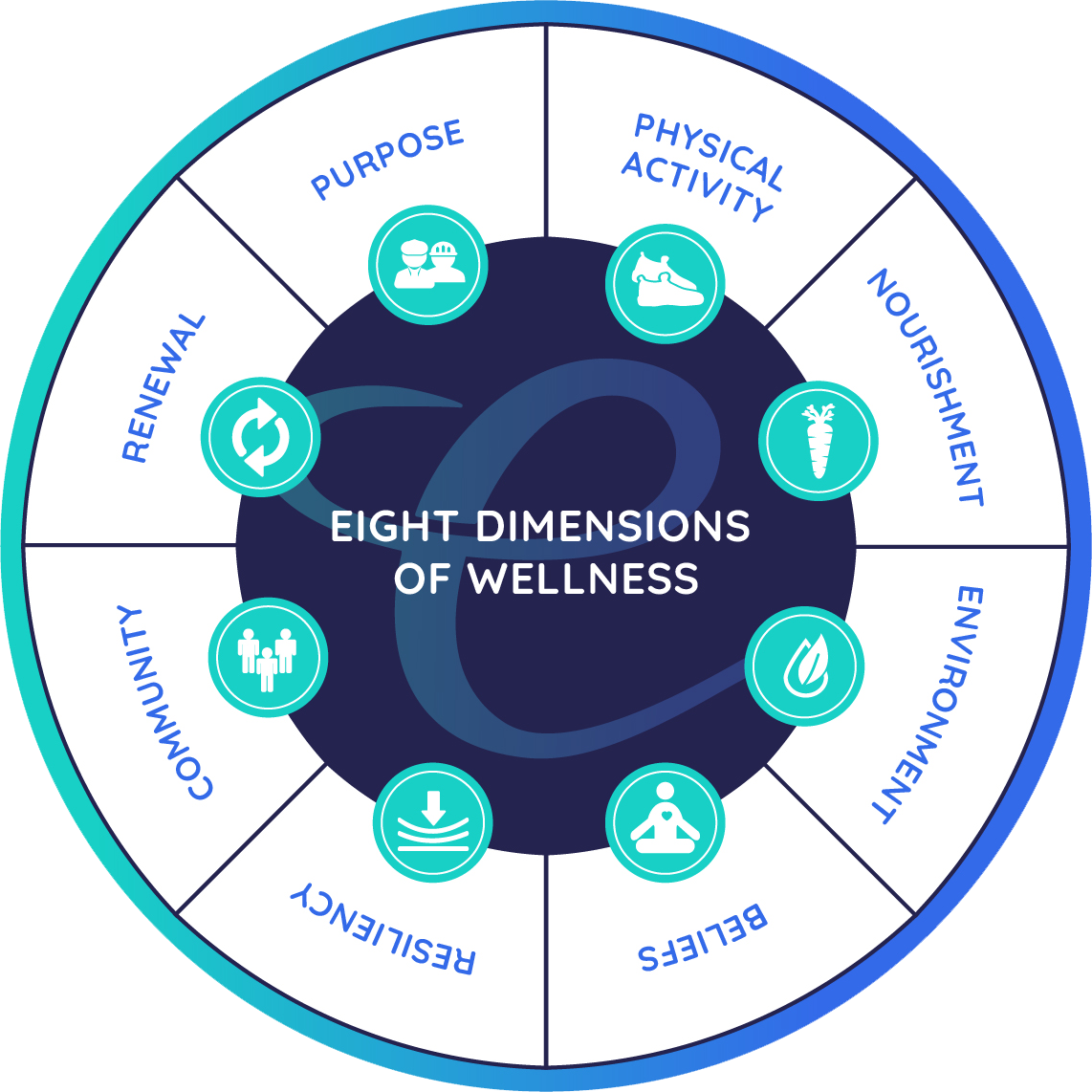
Eight Dimensions of Wellness and Community Full Chart

Whether you’re hoping to prevent or help treat chronic diseases, want more energy, or simply want to enjoy your life more, taking care of your mind and body is the key.

Taking care of your health is essential for feeling better in your body. Although it can take time to make life-changing habits, know that every small step counts. But it makes a world of difference when you have the right tools.

Between physical activity, nutrition, and other self-care tools, there can be a lot of trial and error in finding which tools are right for you. Luckily, you don’t have to do it all alone. Endless resources are available to help you learn how to better care for yourself.

Working with a health coach is an invaluable resource for taking control of your health. These trained professionals help you create an individualized plan to achieve your health and wellness goals and live up to your full potential.

Are you wondering if a Whole Health Coach is right for you? Keep reading to learn more about the process and the many benefits of working with one.

What is a Whole Health Coach?

So what exactly is a Whole Health Coach? A Whole Health Coach will hold your hand through this journey. Just like a sports coach, a Whole Health Coach is there to cheer you on while giving you actionable advice so you can achieve your goals and live up to your full potential.  

At the beginning of the program, you’ll have a consultation to review your health history. After this initial review, you’ll be connected with a coach to get started, At the end of the program, you’ll meet again to review your progress.

This individualized process sets you up for success as you learn new self-care strategies. Working with a Whole Health Coach also gives you access to professional care to further support your health journey. 

Benefits of working with a coach 

Working with a Whole Health Coach may seem daunting or intimidating but they’re there to support you. These professionals will help you practice mindful awareness as you adopt new habits and transform your health from the inside out. 

There are endless benefits to working with a Whole Health Coach. These benefits are just the tip of the iceberg: 

Achieve your goals 

What goals, health or otherwise, do you want to achieve? What does living to your full potential mean to you? Working with a Whole Health Coach gives you the guidance, insight, and tangible action steps to reach those goals.

These are just a few of the goals you could work towards:  

  • Prevent chronic disease through lifestyle changes 
  • Learn how to manage stress and overwhelm 
  • Combat chronic fatigue and exhaustion 
  • Feel good enough to further your career 
  • Have more time and energy to do the things you love 

You are capable of so much, but sometimes you need a little extra support to get to the next level. A Whole Health Coach will help you evaluate your personal strengths and use those to create a plan that helps you unleash your true potential. 

Accountability

One of the hardest things about caring for your health is figuring out where to start. You might have an idea of what changes you’d like to make but get overwhelmed with options. Or when you start a new wellness practice, you start strong but quickly stop. 

That’s what a Whole Health Coach is for. Most people need outside support and guidance to truly make a change in their lives. Your coach is there to give you personalized advice and to hold you accountable.  

A Whole Health Coach is someone that you can rely on as you go through your transformation. Your coach will help you build momentum and push you to keep going because it’s what’s best for you. They’re there to back you up so you can finally put yourself first.

Get personalized advice

There is a lot of information on health and wellness available. But what works for someone on social media won’t necessarily work for you. You are an individual with unique strengths, challenges, and goals. Your health journey will reflect that.  

Have you tried other wellness tools in the past that didn’t stick? It’s likely because you were missing a key piece. An effective health plan is one that’s personalized for you. You will connect with your Whole Health Coach to create a plan made just for you. 

You can think of this as your “personalized path to wellness”. Your coach is there to give you unobjective advice to help you reach your goals in a way that works for you.

The health coaching process

When you work with a Whole Health Coach, you’ll go through a specific process. Working together, you’ll create a plan covering your physical well-being, emotional and mental well-being, and daily life. You’ll also identify your current priorities and develop a comprehensive plan to help you achieve your goals. 

This is what the process looks like: 

  1. Program Consultation: You’ll start with a 30-minute consultation that includes a personal health inventory review and biometrics screening. This will help them gauge where you’re at and what you need to do to reach your goals.  
  1. Coaching Session 1: This is your first session with your Whole Health Coach. In this 55-minute session, you’ll work together to develop a personalized whole health plan. 
  1. Coaching sessions 2-6: You’ll continue to work with your Whole Health Coach in your next 5 sessions. During these sessions, you’ll have guided strategy discussions to help you adapt throughout the process. 

Is a Whole Health Coach right for you?

Working with a Whole Health Coach is a huge step that can make a massive difference in your life. How do you know if this process is right for you?

These are a few signs that working with a Whole Health Coach is right for you: 

  • You have a specific health goal you want to reach or a health challenge that you would like to change.  
  • You know having a professional partner will help you be more successful so you can reach your goals. 
  • You are ready to commit to making a change in your life. 

You can feel better and actualize your wellness vision. It will take work, but you can do it with the right support system. Take the first steps towards a happier, healthier you. Learn more about the Whole Health Coaching program. 

Eight Dimensions – Purpose 

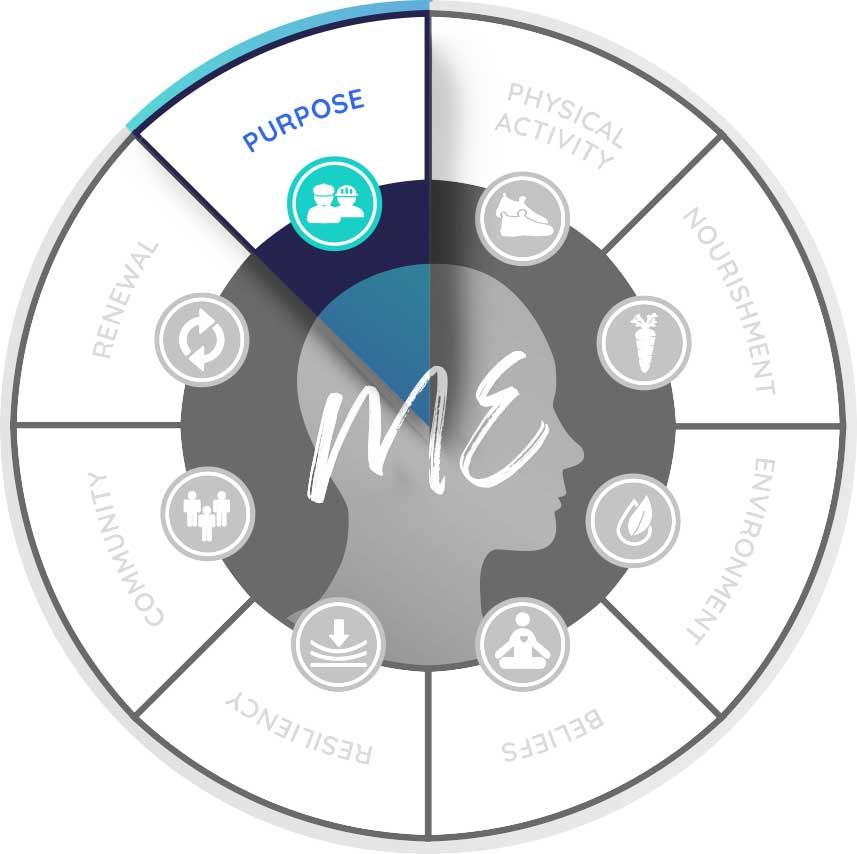
Eight Dimensions Chart focused on Purpose

Many people see health as only physical, but health is so much more than that.

A key indicator of someone’s overall well-being is a sense of purpose. It can even impact your mental and physical health.

Growing research has shown that having a sense of purpose in life can help reduce the risk of developing chronic conditions and even premature mortality. Finding purpose in your everyday life is essential to living a happier, healthier life.

It can seem difficult if it’s not something you already have, but anyone can find a sense of purpose with some self-reflection and actionable steps.

What is purpose?

Your life purpose is the reason that you get up in the morning. When you have a sense of purpose, your life has meaning, you have direction, and you can start to build your life around that purpose.  

Having a sense of purpose gives you fulfillment and satisfaction, no matter where it stems from. Purpose can often be connected to someone’s work or career, but not always. 

One of the most beautiful things about purpose is that it’s different for everyone and you get to decide what gives you purpose, not anyone else. Having a sense of purpose isn’t just important for life satisfaction, it’s also important for your overall health. People may find their purpose through different avenues, but it’s something that anyone and everyone can do. 

Purpose and mental health

Your mental health is one of the main components of your overall health. Finding purpose can greatly impact your mental health for the better. 

It’s normal to occasionally feel overwhelmed or anxious, especially with everything you have on your plate. But constant stress can wreak havoc on your mental and physical health. Connecting with your sense of purpose gives you an anchor to keep uncomfortable feelings at bay. 

Researchers have found that people with a sense of purpose had significantly lower levels of depression and anxiety. Life purpose may also help people develop greater resilience after experiencing a negative event. This has been found across different ages, educational levels, ethnicities, and demographics. 

When you have purpose, you have something that motivates you outside of needing to check things off of a to-do list. Purpose can transform life from mundane to meaningful. Focusing on purpose helps you to cultivate positive emotions which help support your overall health and well-being.   

Purpose and physical health 

It’s not just your mental health, purpose also affects your physical health. The reduced stress levels help support your mental and physical health. Reducing your stress levels through things that bring you purpose can help reduce the risk of many health problems like high blood pressure, heart disease, stroke, obesity, and diabetes. 

That’s not to say that finding purpose will completely heal underlying health issues or that you can’t have purpose if you don’t feel “healthy”. Purpose is for everyone and anyone can find it, no matter the state of their physical health.  

Researchers have also found that people with a sense of purpose are more likely to make healthier life choices that help support their physical health. They discovered that people with a sense of purpose were more likely to stay physically active, have better quality sleep, and are less likely to smoke cigarettes or have heavy alcohol use. All of these lifestyle choices tie back to better physical health outcomes.  

How to find purpose

It’s common to believe that purpose has to be this formal calling you’re constantly striving for, but that’s not always true. Purpose can be found in the little moments in life. These “little moments” add up over time to create an overarching sense of purpose in your daily life. 

The more you practice things that bring you fulfillment and feel meaningful, the easier it will be to find a sense of purpose.  

Reflect on what matters to you

One of the biggest ways to discover your purpose is to reflect on what matters most. What is most valuable to you in life?  

Take a moment and think about what “lights you up.” Some of the most common values people hold are around: 

  • Personal connections – family, friends, partners 
  • Giving back or supporting a cause that holds meaning to you 
  • Joy and fun: reflect on the last time you felt joy. The source of that joy may be connected to something that gives you purpose 

Some people may find purpose in traveling the world while others may find it in tending to the garden in their backyard. Remembering what fulfills you is a shortcut to finding your purpose. 

Purpose in everyday life 

It’s easy to fall into a rut when you’re just going about your daily life. Between work, chores, and errands, sometimes it’s difficult to remember your purpose in life. 

Purpose doesn’t have to be a big goal or something outside yourself that you’re constantly striving for. Purpose can also be found in the little moments of your everyday life.  

These are some ways to remember your purpose in your daily life: 

  • Practice moments of gratitude 
  • Focus on connecting with yourself and those around you 
  • Take one small step each day that feels in line with your purpose 

It can be discouraging to “find your purpose” if it’s a new concept, but remember each little moment counts.  

Find hobbies 

Hobbies are something that you do just for the sake of doing something. You don’t need to make a career out of it or feel like you constantly need to achieve something or advance. 

Hobbies help bring you a sense of purpose by finding joy and activating parts of yourself that you might not otherwise. Sometimes this means being creative or doing physical activities that don’t just focus on exercise.

These are just a few of the many hobbies that can help bring you purpose:

  • Join an adult sports team 
  • Learn to play an instrument 
  • Practice a visual art like painting 
  • Volunteering for a cause you care about 

Many hobbies can also help connect you with a community where you can find a deeper purpose.

Fostering meaningful connections

Humans are incredibly social creatures and often serve as mirrors for one another. Taking time to foster and nurture your social connections is essential to finding purpose in your life. 

Any type of connection can be meaningful, that can include: 

  • Family members 
  • Friends and “chosen family” 
  • Coworkers 
  • Your spouse or partner 
  • Random connections 

It helps to think about who is already in your life and how you can actively connect with them on a deeper level. You can start by sending a random message to tell someone you’re thinking about them when they pop into your head or by organizing group meals or activities. 

Purpose and well-being 

There is no one right way to find your purpose and know that it will look different for everyone. Purpose is not a destination, instead, it’s a continuous journey of finding what makes life meaningful to you. 

Finding a sense of purpose is key to helping support your physical and mental health. You can start by finding purpose in your everyday life, picking up a new hobby, and connecting with community. 

If you would like a better understanding of your purpose, reflect on what’s meaningful to you and what action steps you can take to help you feel connected to your purpose. Purpose is an integral part of your wellbeing, you can find yours too! 

References:

  1. Sense of Purpose in Life and Five Health Behaviors in Older Adults – PMC  
  1. The relationship between purpose in life and depression and anxiety: A meta‐analysis – Boreham – 2023 – Journal of Clinical Psychology – Wiley Online Library  
  1. ​​Stress symptoms: Effects on your body and behavior – Mayo Clinic  
  1. Sense of Purpose in Life and Five Health Behaviors in Older Adults – PMC  

Eight Dimensions – Community

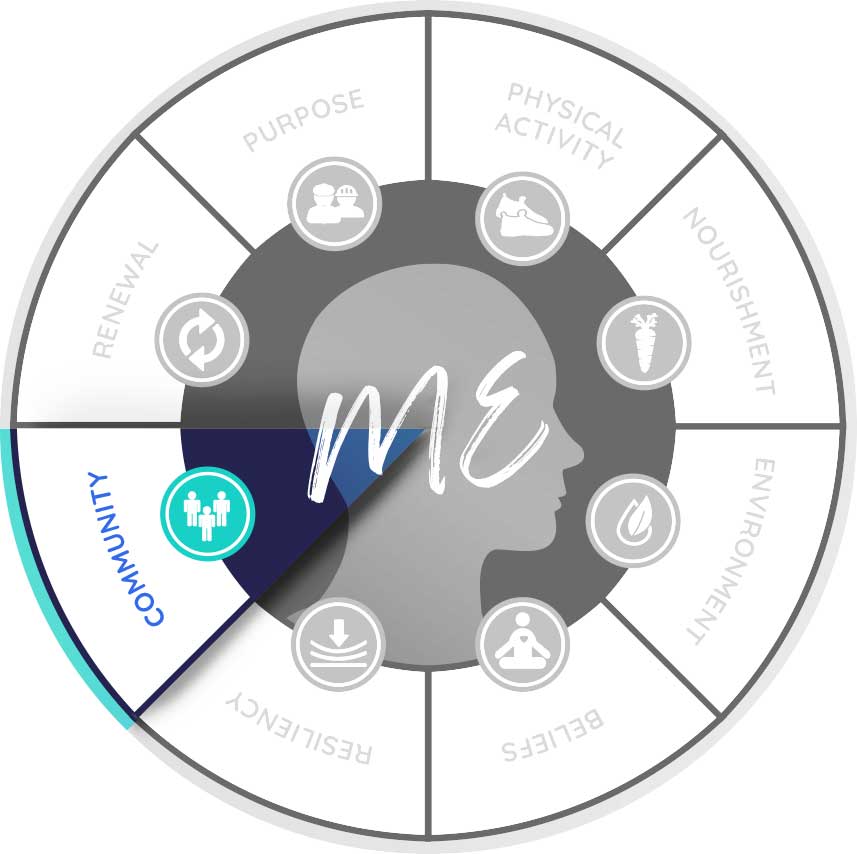
Eight Dimensions Chart focused on Community

Humans are incredibly social and have always lived in communities. Communities come in all shapes and sizes but there’s always that underlying layer of support and reliance. More and more research is now showing just how important having a community is to your health. 

You can think of your health as a garden. Nourishment like the food you eat and physical activity is the seeds, soil, and water. Community and the people around you are the sunlight your garden needs to grow and thrive.  

Community can look different for everyone. Many cultural and societal differences can impact how you create community and what role community plays in your life. What’s important is that you have people with whom you share similar values. People who lift you up and support you. 

Community comes in all shapes and sizes 

The world is a wide and diverse place. People find communities in many different forms and many have multiple layers of communities.  

When you think of community, you may just think of your neighbors or people you work with, but any group you form a connection and network of support with can be part of your community. 

You may also find community in: 

  • Your school or your children’s school 
  • Online forums and social media 
  • Special interest clubs 
  • Advocacy groups 
  • Cultural and ethnic centers organizations 
  • Places of worship 

That’s just the start of it. Any place that people go to gather, whether it’s online or in person is a place where you can start to form a community.

Community and your mental well-being

Community isn’t a term to just throw around or something that can be nice to have. It’s essential to your physical and mental health, as well as your overall well-being. 

Everyone wants to feel like they belong, that’s one of the many things that community provides for people. Having a sense of belonging doesn’t just “feel nice”, it’s also a protective factor that helps you feel safe in your environment. A sense of belonging can help people feel supported. This helps them better cope with the ups and downs of life. People who lack a sense of belonging are also at a higher risk of developing mental health conditions like depression and anxiety.  

There’s a scientific term called “co-regulation”. This refers to people’s ability to manage stress, regulate emotions, and calm themselves by regulating with another person. You see babies and small children doing this with their parents and caretakers, but adults need people they trust and can also co-regulate with. 

Life has its ups and downs, that’s inevitable. Community and having people around you give you the support you need when things get tough and people to celebrate with when things are going well. They’re both equally important and finding that in your community can help give you a sense of purpose and fulfillment. 

Community and longevity 

Having a community doesn’t just make life easier and more enjoyable, it also can make you live longer!  

You may have heard the term “blue zones” before. Blue zones are places where people typically live longer than the average life expectancy. Some known blue zones are Okinawa (Japan), Icaria (Greece), and Loma Linda, California.  

There doesn’t seem to be a genetic component to their longevity, but there are a lot of lifestyle similarities. People in blue zones tend to eat a 95% plant-based diet, have exercise built into their daily lives, and emphasize the importance of community. 

Most of these blue zones are tight-knit communities that have meals together, share resources, and generally spend much of their time with each other. Many of them are also religious which can offer an extra layer of support – although it is not necessary to experience the benefits of having a community.

How to find your community

Now that you understand the importance of community for your health and well-being, how do you find community? You might already have your family or certain people to rely on, but if you don’t feel like you truly have a sense of community with those around you, then you may want to take some action steps so that you can find that. 

Find new hobbies

Hobbies are one of the easiest ways to meet new people and form connections while trying something new or doing something you already enjoy. Starting a hobby doesn’t have to be about getting “good” at something, you can do it simply because you like it and it lets you connect with others who feel the same.  

These are just a few ideas of community-oriented hobbies you can try: 

  • Take an art class 
  • Join a hiking meet-up 
  • Find a parent group 
  • Join a networking group in your field 
  • Join a fitness studio 
  • Find a birdwatching group 
  • Start a book club 

Finding community over a hobby can be easier because you have common interests and something to bond for.  

Volunteer in your community

Another great way to find a meaningful community is by volunteering for a cause you believe in. Volunteering can support your physical and mental health and give you a sense of meaning and appreciation, which can help reduce stress. 

The neat thing about volunteering is that people come together from all different backgrounds to help make a difference in the world. This creates a special bond so you can practice your social skills with people you might not otherwise interact with. You can find volunteer opportunities with nonprofit organizations, hospitals, faith communities, and local community efforts.

Put yourself out there

Even if you go to new places where you’re likely to meet people, you still have to make an effort to connect with people. It can be nerve-wracking at first, especially if you are shy or this doesn’t come naturally to you. 

When meeting new people, ask them questions about themselves, find similarities you can bond over, and stay open-minded. You never know who you might connect with! Be gentle with yourself as you put yourself out there more and more, over time this will come more naturally. 

Deepen your relationships 

You might not need to meet new people to find a sense of community. Sometimes community comes from deepening the relationships that you already have.  

Think about the people in your life that you would like to have a deeper connection with. Can you ask them to do more meaningful activities together? Are there questions you can ask them so you can get to know them on a deeper level? You may also want to practice being vulnerable with them about something you’ve struggled with or you’re working on personally. 

People can surprise you, so stay open-minded. Fulfilling community comes from being able to create and nurture deeper relationships. 

Everyone deserves community 

Everyone deserves community just for being on this planet. A sense of belonging is one of the most important things you can do for your health, well-being, and longevity. 

It can take time to find “your people” or you might already have them but would like to deepen your relationship with them. Wherever you are in your journey to find community, remember how much you offer the world and how beautiful life is when you share it with those around you. 

References:   

  1. Is having a sense of belonging important?.                                      
  1. Conceptualizing Emotion Regulation and Coregulation as Family-Level Phenomena – PMC                              
  1. Helping people, changing lives: 3 health benefits of volunteering                                                                                                                                                                                                                                                                                                 

Eight Dimensions – Resiliency 

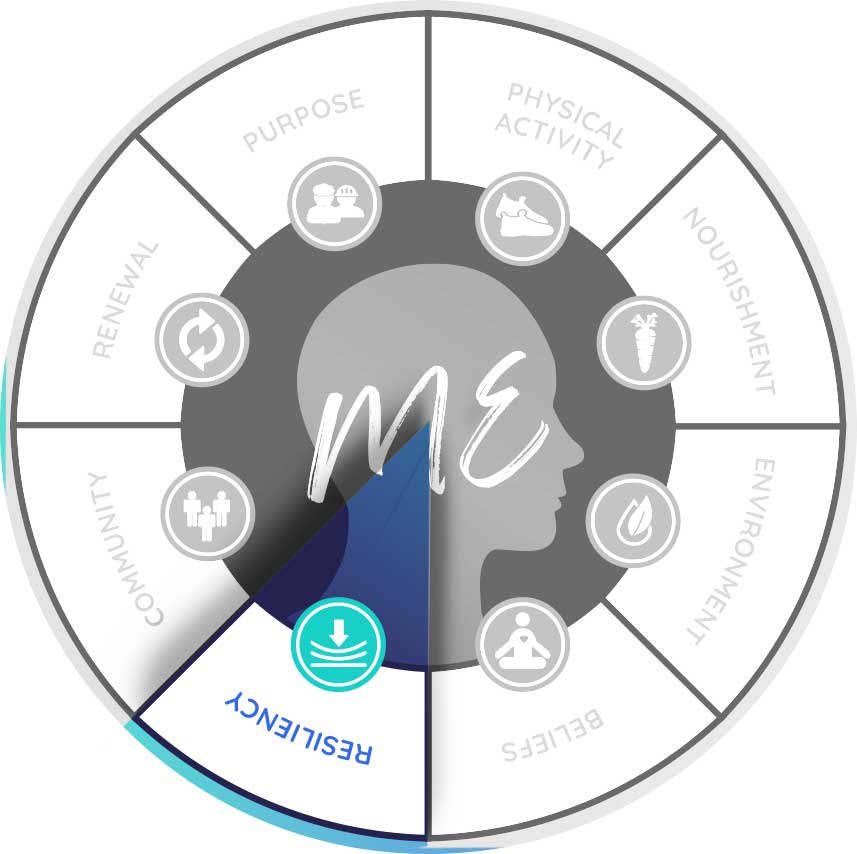
Eight Dimensions Chart focused on Resiliency

Everyone goes through tough times in life, that’s part of being human. Your ability to make it through these tough times is your resilience.  

Different people face different types of challenges and adversities. Certain groups of people like those in marginalized communities or who have different socioeconomic backgrounds may face more challenges and adversities from the outside world.  

While everyone faces different challenges, every individual has the potential to increase their resilience and their overall well-being.

What is resilience? 

Resilience is someone’s ability to adapt to stressors or “bounce back” after a difficult situation. Life has its ups and downs, everyone will face some types of stress and crises.  

Having resilience allows you to maintain your psychological well-being despite what happens and know what tools you need to overcome difficult situations.  

When you learn to cultivate more resilience, you feel more grounded and can confidently overcome life’s challenges, both big and small. Resilience plays a large role in your overall health and ability to live a balanced life.

Types of resilience

When you think of resilience, you may think of huge life challenges like losing a job, experiencing a loss in your family, or dealing with health challenges. It’s important to have resilience in these situations, but resilience also shows up in your daily life.  

Think about a day when you’ve had frustrating things or challenges arise. You might not have gotten enough sleep, are running late to work or school, or disagree with someone. These things happen, it’s part of life, but having the skills, tools, and perspective to bounce back and not have these hiccups ruin your day or week is important. 

Resiliency is a daily practice, but it all adds up. The more you develop resilience in your daily life, the easier it will be to have it when something big happens.  

Resilience and psychological health

Resilience and psychological health have a direct connection. Developing resilience can help support your psychological health and vice versa, having positive mental and psychological health can help you have more resilience.   

Often more resilient people have learned how to manage their stress. This can happen as you get older and learn new skills, as well as by being proactive about developing these skills over time.  

Being resilient doesn’t mean you don’t get stressed, but when you do you manage that stress. This includes coping mechanisms like if you’re irritated with someone taking some time to yourself to calm down versus reacting and saying something that you regret. Positive coping mechanisms help you regulate your emotions to handle obstacles better when they arise.  

Being adaptable is also a sign of resilience. When things don’t go as planned, can you adapt to the changes without feeling dysregulated? Can you problem-solve to find different solutions to situations that arise? These are all ways your psychological health can increase your resilience.  

Resilience and physical health 

Resilience may also help support your physical health. Stress is one of the biggest risk factors for many chronic health concerns like cardiovascular diseases, high blood pressure, obesity, and diabetes.  

When you can better navigate stress thanks to resilience your mind and body can adapt better. It can also decrease your risk of developing or worsening stress-related health conditions. Stress can also impact your immune system, impacting your body’s ability to fight viruses and infections. 

Developing resilience can also increase your overall quality of life. One aspect of resilience is your ability to see the bigger picture, maintain a positive perspective, and stay optimistic. Research has even found a link between being and having a longer lifespan!

How to increase resilience

Some people may be born with more resilience than others, but it is a learned skill. Anyone can learn new tools and techniques to help increase their resiliency to better deal with the hurdles they face in life.

Here are some of the top ways you can help build resilience: 

Find your support system 

No matter how resilient you are, everyone needs a support system around them to help make life easier to navigate. Your support system may include your family, friends, coworkers, or anyone else you can lean on for emotional support and advice.  

You can help build your support system by thinking about the people you trust most, reaching out to them when you need it, as well as offering support to them when they need it. 

Practice self-compassion

Everyone makes mistakes, but that doesn’t make you a bad person. Understanding your role in a situation can help you take personal responsibility for your actions and reactions and give compassion to yourself and those around you.  

Self-compassion is important in situations where you may have made a mistake and in situations where you may be facing adversity that was not your fault. Balancing personal responsibility and self-compassion helps you build resilience in uncomfortable or difficult situations. 

Physical activity

A surprising way you can increase your resilience is by engaging in physical activity. Physical activity helps regulate stress levels so you can be less reactive in stressful situations. 

It can also help you in another way. Challenging yourself, even by exercising or trying a new type of physical activity, helps build resilience in other areas of your life. 

Take action

It’s normal to feel “stuck” when triggered or faced with a challenge. Overcoming this feeling of being stuck or overwhelmed and instead taking action can help you become more resilient. 

Practicing solving problems, even in difficult moments, shows your brain that you can take action when you need to. It shows you have the skills and abilities to face and overcome challenges. 

Mental health support

If you have faced challenges or adversities that have affected your mental health, know that it’s not your fault. These challenges can affect your mental health and may affect your resiliency or belief in yourself. 

Getting mental health support can help get you to a place where you feel better equipped to deal with life’s challenges. A mental health practitioner or coach can help give you the tools you need to become more resilient and support your mental health. 

Practice self-care 

Being resilient isn’t just about being tough and taking action when needed. It’s also about nurturing yourself and practicing self-care when you need it. 

Self-care includes getting enough sleep, journaling, spending time with loved ones, and doing other things you enjoy. It can help to have a list of tools you turn to when you need help regulating your emotions. You can put simple tasks on this list like walking or taking a few deep breaths. Being able to regulate your emotions is an important part of self-care. 

Resilience for your well-being

You might not be able to change what life throws at you, but you can change how you react. Resilience is a key part of your overall well-being. Building resilience can help you better navigate life and the obstacles that come with it.  

Remember that no one is perfect, everyone gets overwhelmed or feels frustrated sometimes. But the more you practice resilience, the easier it will be to bounce back in the most difficult moments. 

References: 

  1. What is Resilience?  
  1. Chronic stress puts your health at risk – Mayo Clinic  
  1. How Does Stress Affect the Immune System? – UMMS Health  
  1. Optimism linked to longevity and well-being in two recent studies | National Institute on Aging