
The Power of Prevention: Reduce Your Risk for Common Cancers

The National Cancer Institute estimated that in 2025, roughly 2 million people were diagnosed with cancer in the United States. Based on this research, breast, lung, prostate, and colorectal cancers account for almost 50% of all new cancer cases in the US.

With cancer affecting so many people each year, adopting preventive measures has become more important than ever. By focusing on lifestyle modifications and early detection, you and your loved ones can significantly reduce your chances of developing cancer and live long, healthy lives.

Learn about prevention, screenings, and lifestyle tips that can help protect you and your loved ones against these common cancers.

Skin Cancer

Did you know: Skin cancer is the most common type of cancer. It often appears on areas of the body exposed to the sun, such as the head, face, neck, back, chest, or shoulders.

Colon Cancer

Did you know: The American Cancer Society estimates that over 152,000 people in the U.S. will be diagnosed with colorectal cancer in 2026. However, the number of people diagnosed has steadily declined since the mid-1980s due to increased screening and changing lifestyles.

Lung Cancer

Did you know: According to the Lung Cancer Research Foundation, about 20% of lung cancer diagnoses occur in people who have never smoked, which is why awareness and screening recommendations are important for many adults.

Breast Cancer

Did you know: According to the American Cancer Society, the average risk of a woman in the United States developing breast cancer sometime in her life is about 13% and the median age at the time of breast cancer diagnosis is 62.

Prostate Cancer

Did you know: According to the American Cancer Society, about six in 10 prostate cancers are diagnosed in men who are 65 or older, and it is rare in men under 40. The average age of men when they are first diagnosed is about 67.


Don’t delay. Schedule your routine screenings and take proactive steps towards preventing cancer, as prevention truly is the best medicine. Download this infographic to see what other screenings you may need based on your age, and for appointment tips to get the most out of your visit. For more lifestyle tips that help with cancer prevention, read this blog.

Have you received a diagnosis or treatment plan and want to get a second opinion? As part of our CalVEBA medical plans, members can get a free expert second opinion through our partnership with Teladoc Medical Experts. This is a no-cost service that provides you with access to world-renowned doctors and specialists so you can have confidence before making major medical decisions.

Learn more at Teladoc.com/Medical-Experts or call 800-835-2362
Fertility After 35: Your Questions, Answered

It’s natural to wonder how age affects fertility. If you’re in your mid-30s or older and thinking about pregnancy, you may have questions about your chances of conceiving. While fertility does change over time, many people can still become pregnant after 35. Understanding how fertility shifts with age can help you feel more informed, prepared, and supported as you plan your next steps.

How does age affect fertility?

Age affects fertility differently in men and women. Fertility varies from person to person, and your genetics, health history, and lifestyle also play an important role. Here’s what typically happens.

Fertility in men

Changes tend to be gradual. Sperm quality and quantity begin to decrease around age 40. However, many men are still able to contribute to pregnancy later in life.

Fertility in women

Fertility usually peaks in the 20s and begins to decline in the early 30s. After 35, the decline becomes more noticeable. Typical monthly chances of conception are:

  • At age 30: about a 20% chance each month 
  • At age 35: about a 15% chance each month 
  • At age 40: about a 5% chance each month

These numbers can be helpful for context, but everyone’s fertility journey is unique.

What healthy habits support fertility after 35?

There are several steps you can take to support your reproductive health and prepare your body for pregnancy. These habits are beneficial whether you’re just beginning to plan or actively trying to conceive.

  1. Visit your primary care provider to ensure you are healthy enough to conceive and carry a pregnancy. 
  2. Stay current with routine screenings, preconception labs, and vaccinations. 
  3. Maintain a weight range that supports your overall health. 
  4. Take a prenatal vitamin with folic acid. 
  5. Avoid nicotine and cannabis. 
  6. Limit caffeine to under 200 milligrams per day. 
  7. Limit alcohol if you are trying to conceive.

These habits support your overall health and may improve your chances of becoming pregnant.

Can you increase your chances of getting pregnant after 35?

Tracking your menstrual cycle and timing intercourse during your fertile window can help. The fertile window includes the days leading up to ovulation and the day of ovulation itself.

If you’re trying to conceive through intercourse:

  • Aim to have intercourse one to two days before ovulation and on the day of ovulation. 
  • Many couples choose to have intercourse two to three times per week after a period ends to stay within the fertile window without added stress. 

If you are not using intercourse to conceive, options include:

  • At-home insemination 
  • Intrauterine insemination (IUI) 
  • In vitro fertilization (IVF) 
  • Using donor sperm 
  • Egg or embryo donation

Your doctor can help you understand which options might be right for you based on your personal goals and medical history.

When should you seek support if you’re having difficult conceiving?

If you’re over 35 and have been trying to conceive for at least six months, schedule an appointment with your doctor for an evaluation.

Here are recommended timelines:

  • Ages 35 to 39: seek evaluation after six months of trying 
  • Ages 40 to 42: seek evaluation after three months   
  • Ages 42 to 45 or older: talk with a doctor before trying to conceive to discuss your goals and understand your options

Early evaluation can help identify potential challenges and give you clearer next steps on your path to pregnancy.

Thank you to our partners at Sharp HealthCare and Kindbody.

Navigating Hormonal Transitions and Low Testosterone

As men get older, their bodies naturally change, and hormones are part of that story. Just like women experience menopause, some men go through “andropause,” a gradual shift in testosterone that can affect energy, mood, and overall well-being.

Testosterone, the primary sex hormone in males, is known for causing physical changes during puberty. Many are not aware that it can also affect sex drive, mood, muscle mass, and bone density.

Testosterone levels tend to drop in all men as they age. In fact, according to research, about four out of 10 men over age 45 have low testosterone, or “low T.”*

Here’s what you, and the people who love you, should know about this common condition:

What causes low T?

Many things can contribute to low testosterone, such as:

  • Certain medicines 
  • Aging. It’s normal for testosterone to decrease as you age 
  • Injury to the testicles, or surgery or radiation treatment in the groin area 
  • Long-term medical conditions, such as high blood pressure, diabetes, kidney or liver disease, coronary artery disease, or obesity 
  • Problems related to the pituitary gland or hypothalamus 
  • Low testosterone can also be present at birth 

A blood test is usually done to find out if you have low testosterone. If your doctor thinks low testosterone could be related to another medical problem, other tests may be done.

Because testosterone naturally decreases with age, your doctor can help determine whether low testosterone may be contributing to the changes you’re feeling.

What are the symptoms of low T?

Symptoms may include decreased libido, erectile dysfunction, and low energy. Other symptoms may include depressed mood, loss of muscle mass and body hair, increased body fat, weakened bones, breast discomfort, and hot flashes.

Everyone experiences these changes differently, so if something feels “off,” it’s always worth having a conversation with your doctor.

Is low T preventable?

While you can’t fully prevent age-related hormonal shifts, healthy daily habits can support more stable testosterone levels. This includes things like a heart-healthy diet, exercise, not smoking, and blood pressure monitoring.

How is low T treated?

There are many available options for testosterone replacement, including topical gels and patches, injections, and long-acting testosterone supplements. Testosterone supplements may increase PSA (prostate-specific antigen) levels, which may cause additional prostate-related symptoms in men with an enlarged prostate. Testosterone replacement can also lower sperm count, so it should not be used when trying to conceive.

By talking openly with your doctor, you can work together to create a personalized treatment plan that supports hormonal balance and improves your quality of life.  

*Rehagen, T. (2024, May 21). Keep Testosterone in Balance. WebMD. When and how to balance low T.  


Thank you to our content partners at Sharp HealthCare and Healthwise.

The Importance of Preventive Care

Don’t wait until you’re sick to see your doctor. Preventive care isn’t just about avoiding illness—it’s about building a foundation for lifelong health.

What is Preventive Care?

Typically, you visit the doctor when you’re sick or something just doesn’t feel quite right. While you should always seek help in those instances, preventive care means taking proactive steps—like regular check-ups, screenings, and immunizations—to protect your health before problems arise.

These visits support early detection and give you and your doctor the opportunity to work together toward your personal health and wellness goals. During a preventive care appointment, your doctor will determine which tests or screenings are appropriate based on your age, gender, health status, and family history.

What’s Typically Covered?

Physical Exams

During a physical exam, your doctor will observe, listen, and gently examine your body to help identify symptoms, assess underlying conditions, and determine if further testing is needed. You’ll also have the chance to discuss any concerns, review your medical history, and review current medications.

Immunizations

Immunizations (or vaccinations) are one of the most effective ways to protect yourself from infectious diseases. They help your body build antibodies that recognize and fight illness if you’re exposed later.

Common immunizations include flu and tetanus shots, the measles, mumps, and rubella (MMR) vaccine, and hepatitis A and B vaccines.

Screenings

Member Moment

Meet Ginger
“It’s very hard to look your kids in the eye and tell them that you have cancer. When they told me I was cancer free, I felt like I could breathe for the first time. I had great insurance, and I know our members do too, so I hope this is encouraging them to get their yearly checkups.” – Ginger, Member since 2013

Watch Ginger’s full member moment here.

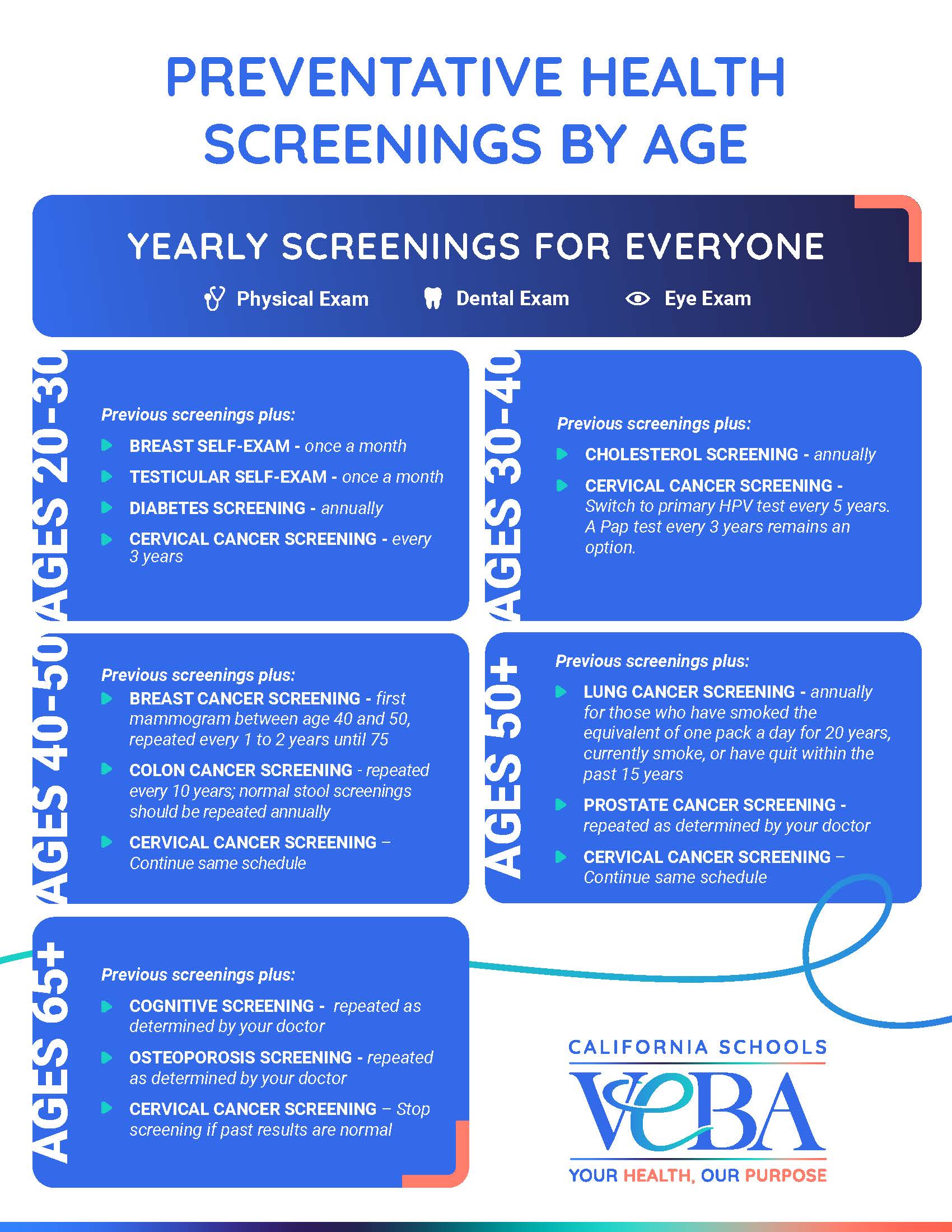
Screening tests help detect certain diseases before symptoms appear. Early diagnosis often leads to better outcomes and can prevent or delay complications. Use the infographic below to see which screenings may be recommended for your age group.

Preventative Health Screenings by Age, CalVEBA Infographic

Disclaimer:

This is a general guide for average-risk individuals. Higher risk may require more frequent screening. Consult with your health care provider.

Appointment Scheduling Tips

Preventive care appointments are usually covered at no cost with in-network providers. Check your plan documents to confirm coverage and costs.

Make the most of your doctor’s appointments by being well-prepared and organized using our Appointment Ready: Your Doctor’s Visit Prep Guide.

Here are some tips to help you get started:

Before Your Appointment:

  • Make a List: Bring a list of medications and jot down questions or concerns.
  • Bring Your Insurance Card: Download and save to your mobile wallet for easy access.

During Your Appointment:

  • Arrive Early: Arrive 10-15 minutes early to complete any paperwork. 
  • Dress Comfortably: Wear a shirt or loose-fitting sleeves for your blood pressure check. 
  • Use Your List: Review your list with your doctor. 
  • Speak Your Mind: Your time and health are valuable! 

After Your Appointment:

  • Follow Through: Take prescribed medications as directed and schedule any recommended follow-ups or screening. 
  • Speak Up: Report new symptoms or concerns promptly.  
  • Get a Second Opinion: If you’re unsure about a diagnosis or treatment plan, CalVEBA members can access second opinions from world-renowned specialists at no cost through our partnership with Teladoc Medical Experts. 

Preventive care can help you stay ahead of health issues and maintain overall well-being.

Download our Appointment Ready: Your Doctor’s Visit Prep Guide today and start planning for your next preventive care visit!


Thank you to our content partners at Sharp HealthCare and Healthwise.

Need help to schedule an appointment or have questions about your medical coverage? Contact the California Schools VEBA Advocacy Team here or call 888-276-0250.

Sleep and Your Mental Health

Dalai Lama

“Sleep is the best meditation.”

Getting a good night’s sleep isn’t just about feeling rested—it’s central to your mental and overall well-being. The National Sleep Foundation reports that over 90% of American adults with good sleep health experience minimal depressive symptoms.*

Healthy sleep enhances mood, regulates emotions, and improves concentration for better well-being. This post offers simple strategies to prioritize sleep so you can feel and function your best, starting tonight!

Getting your zzz’s

Why Sleep Matters

Even one night of poor sleep can reduce resilience and impair cognitive function. Quality sleep reduces stress and anxiety, improves focus, and increases empathy. If you have insomnia, the risks are even greater for developing serious mental health conditions. People experiencing sleep issues — including insomnia, hypersomnia (excessive sleepiness), and nightmares — have an increased risk of depression, suicidal ideations, and death by suicide.

Dreaming of Better Sleep?

Creating good sleep habits starts at home. Your daily routine, from the moment you wake up to what you eat and how you move, all contribute to better sleep.

Six Tips for Better Sleep

Take Control of Your Nights

1. Stick to a Schedule

Go to bed and wake up at the same time every day, even on weekends, to regulate your body’s internal clock (circadian rhythm).

2. Watch Your Intake

Steer clear of nicotine, caffeine, alcohol, and heavy meals close to bedtime.

3. Soak Up the Sun

Aim for 30 minutes of natural light in the morning to help set your sleep-wake cycle.

4. Stay Active

Exercise daily, but wrap up your workout a couple of hours before bed to allow your body to cool down and prepare for sleep.

5. Create Comfort

Keep your bedroom cool, dark, and quiet. Consider using a white noise machine or fan, use room-darkening-curtains, and maintain a temperature between 60 and 67 degrees.

6. Put Down the Devices

Reduce screen time at least one hour before bed. Studies show exposure to your phone’s blue light suppresses melatonin production (the hormone that regulates sleep).

Drift into Sleep: Meditation App & Classes

Apps like Calm and Headspace offer daily mindfulness and meditations to relax, release stress, and sleep better.

Check out our calendar and sign up for an upcoming meditation class at the VEBA Resource Center (VRC) or visit the on-demand video library for classes such as Yoga Nidra (Yoga for Sleep)

Sweet dreams! Here’s to better sleep, brighter days, and restful nights that support your mental health and enhance your well-being.

Bonus tip:

Wind down by bathing, reading, or listening to this 2-minute Simple Meditation.

*Source: National Sleep Foundation (2023, March 9). The Link Between Our Sleep Health and Mental Health. Sleep in America® Poll 2023. 

What’s In and What’s Out When It Comes to Your Health

Your small, daily habits add up to larger lifestyle choices that influence your health. It’s important to take stock of your daily habits and evaluate where you have room to grow. We’ve compiled a “what’s in and out” list to help you think through areas where it’s common to struggle with unhealthy behaviors. Check out these simple yet effective ways to replace these habits with healthier alternatives.

In: Good sleep 
Out: Stress and sleep deprivation 

Sleep plays a pivotal role in so many aspects of our health, from keeping our minds strong to warding off illness and disease. Unfortunately, many people fail to get the sleep they need, and an estimated 50 to 70 million people in the U.S. have a sleep disorder. Adults should get between seven and nine hours of sleep each night — and the quality of that sleep is crucial. Here are three relaxation techniques to help you fall asleep! 

In: Pleasure Reading 
Out: Binge-watching and doom-scrolling 

In a sea of streaming video and ever-present screens, doom-scrolling and binge-watching are often the entertainment of choice above the more old-school option of reading a book. But research says reading can provide a healthy distraction from life’s day-to-day worries and pressures while also making us smarter, happier, and even more empathetic toward others. Audiobooks are an excellent way to read while engaging in physical activities like walking or exercising. There are free audiobook resources available, such as Librivox, OverDrive, and Audible‘s free trial, which offer a wide range of titles to choose from without any cost.

In: Homemade meals 
Out: Eating out and ordering in 

People are looking for fast and tasty foods to fit busy lifestyles. But whether you’re eating carryout or sit-down restaurant cuisine, researchers say you’ll consume about 200 more calories a day and more saturated fat, cholesterol, and sodium than if you made your meals. Cooking at home, however, helps you avoid these pitfalls and is an opportunity for creativity, togetherness, and cost-cutting. 

Looking to improve your cooking skills? Need recipe ideas that are not only healthy but also affordable and simple to make? The VEBA Resource Center offers free in-person and virtual cooking classes to learn how to cook meals from our extensive recipe library.  

In: Saying no 
Out: Always hustling 

Sometimes, your body, mind, or heart sends a message that it needs time off. It’s important to heed that call, especially if it’s coming from all three at once. Occasionally saying no to an invite, request or assignment is a true form of self-care, which can lead to reduced stress; improved mood, immunity, and self-esteem; and a variety of other physical, mental, and emotional health benefits. 

In: Sober curiosity 
Out: Regularly drinking 

According to the U.S. Department of Health and Human Services, drinking can take a serious toll on your body. Limiting how much you drink or taking a complete break from drinking, what some refer to as being “sober curious,” can help boost your immunity, limit your risk of disease, lead to weight loss, and improve your sleep, concentration, energy, performance, skin health, and even your relationships. 

In: Hygge 
Out: FOMO 

Everyone occasionally experiences FOMO, or the fear of missing out, but going to every social event can be exhausting and expensive and can lead to overindulgence in food and alcohol. Instead, consider enjoying more “hygge,” a concept originating in Denmark and Norway, which means to take time away from the daily rush to be together with people you care about — or even by yourself — to relax and enjoy life’s quieter pleasures.” 

California Schools VEBA’s Self-Regulation Toolkit is a great starting point with daily 5-minute activities that will help you use your time more mindfully!  

In: Digital detox 
Out: Endless screen time 

On average, Americans spend more than seven hours looking at a screen. And most use their smartphones for over three and a half hours every day — not counting when they’re talking to someone. All this screen time can have negative effects on your health, both physical and mental, which is why experts recommend no more than two hours of screen time per day. Here are some tips to regulate phone use more healthily. 

In: Authentic friendships 
Out: Accumulating social media “friends” 

Friendship is good for your health. When you’re with friends, your body releases the hormone oxytocin, which combats stress and creates calm. And the more time spent with friends, the less likely you are to develop health issues and dementia. But creating and sustaining friendships takes commitment far beyond “liking” the occasional post. One study found it takes hundreds of hours — all worth it — to become true friends. 

In: Movement every day 
Out: Overexercising 

The CDC recommends adults get at least two and a half hours of moderate-intensity activity each week. However, you don’t need to spend hours in the gym to meet this goal. Thirty minutes a day, just five days a week will do the trick. Pushing your limits can lead to poor performance and health problems, including overuse and stress injuries, too much weight loss, and decreased immune performance. 

VEBA members can sign up for live classes, in-person and virtually, available seven days a week! There’s also a video library of on-demand classes you can access anytime, anywhere. 

In: Water 
Out: Caffeine-laden energy drinks 

Water is an ideal choice for hydration. While some people prefer sports drinks over water because of the taste and added electrolytes, the standard sports drink contains 140 calories, 34 grams of added sugar, and 270 milligrams of sodium. Additionally, excess caffeine can be harmful, causing changes in heart rate, increased blood pressure, anxiety, sleep and digestive issues, headaches, and dehydration. 


Embracing changes like these will have a profound and positive impact on your overall well-being in the long term. Now, what’s on your list? If you’re unsure where to start, California Schools VEBA has developed a library of downloadable resources to equip you with the support you need to navigate your health and well-being journey. As they say, out with the old, in with the new!

Thank you to our content partners at Sharp HealthCare.

Making Lifestyle Changes to Help Prevent Cancer

According to the World Health Organization, between 30–50% of all cancer cases are preventable. Certain unhealthy daily behaviors can increase our risk of developing cancer. Major lifestyle changes may not happen overnight, but working toward healthier habits can significantly reduce the likelihood of cancer. Practices like making time each day for physical activity, choosing healthier food options, and prioritizing regular checkups and screenings can all contribute to cancer prevention.

Here are some steps you can take that may help prevent cancer and pave the way for a long and healthy life:

Quit smoking.

When you quit smoking, you lower your risk of many types of cancer. These include cancers of the lung, bladder, kidneys, pancreas, cervix, mouth, esophagus, and throat.

Make healthy food choices.
Your diet should include:

  • Plenty of vegetables, fruits, beans, other legumes, fish, poultry, and whole grains.
  • Less red meat (such as beef, lamb, and pork).
  • Less processed meat (like bacon, hot dogs, sausage, and some deli meats).
  • Less food made from refined grains.
  • Less sweets and added sugars.

Find inspiration from our recipe library!

Maintain a healthy weight.
Being very overweight increases the risk of some forms of cancer. People whose extra body fat sits in the waist area may be at higher risk than people whose extra fat is in their hips or thighs.

Stay active.
Being active every day may prevent several cancers. And regular activity can help you get to and stay at a healthy weight. Being active and getting enough sleep may work together to lower cancer risk even more than activity alone, especially for women.

You can join free movement classes, in-person or virtually, on our class calendar! Or visit our video library for on-demand classes to take whenever and wherever you wish!

Protect your skin.
Most skin cancer is caused by too much sun. To protect yourself from damaging UV rays:

  • Seek shade from 10 a.m. to 4 p.m.
  • Cover up outdoors with a wide-brimmed hat and tightly woven clothing.
  • Apply broad-spectrum sunscreen on any exposed skin, even when it’s cloudy. Use SPF 30 or higher. Reapply if you’re in the sun for more than a few hours.
  • Wear UV-blocking sunglasses.
  • Avoid tanning booths and sunlamps.

Be wise with alcohol.
Drinking alcohol may increase your risk of some types of cancer. Any amount of alcohol may increase that risk. If you drink alcohol, try to limit the amount you drink.

Practice safer sex.
Safer sex includes using condoms and talking to every potential sex partner about their sexual history. Practicing safer sex helps prevent HPV, a sexually transmitted infection that can cause cervical cancer.

Get regular checkups and screenings.
Your doctor can schedule regular screenings for various types of cancer, such as mammograms for breast cancer and stool tests for colon cancer. Most screenings and checkups are to find cancer early, when it’s easier to treat and may even be curable.

Read this blog and download a free infographic for screening recommendations based on age.

Consider vaccinations.
Females ages nine to 26 can get the HPV vaccine to protect against the virus that can cause cervical cancer. Males ages nine through 26 may also get the HPV vaccine, which may prevent anal cancer and oral cancer. If you are age 27 to 45 and have not been vaccinated for HPV, ask your doctor if getting the vaccine is right for you.

Avoid toxins at work and at home.
Stay away from harmful chemicals and other things that can increase your chances of getting cancer. These things include asbestos, benzene, radon, and polluted drinking water. Take care when you use cleaning products, paints, solvents, and pesticides.


Making healthier life choices and sticking to them can be challenging, but you don’t have to do it alone. At the VEBA Resource Center, our Care Navigators are here to support and guide you toward becoming your best self. Together, you’ll create a tailored health plan for you based on your unique story, values, and experiences.

Start Your Personalized Wellness Journey

5 Tips for Managing Blood Pressure at Home

There’s a good reason why every doctor’s appointment starts with a blood pressure check: Blood pressure is an important indicator of heart health.

According to the American Heart Association, nearly half of American adults have high blood pressure, when the force of blood flowing through their blood vessels is consistently too high. When left untreated, high blood pressure can lead to heart attack, stroke, and other health concerns.

However, with proper treatment and management, you can control your blood pressure to help you live a long and healthy life. Here are five ways everyone, especially those with high blood pressure, can keep their blood pressure in check:

1. Monitor your blood pressure on a regular basis.

If you don’t have a blood pressure monitor at home, that’s okay! It’s important to schedule your routine check-ups with your physician or doctor in combination with these healthy heart lifestyle tips. If you do have a blood pressure monitor at home, you should check your numbers daily with these tips:

  • Be still. Avoid smoking, caffeine, or exercise 30 minutes before measuring. Take at least five to 10 minutes of quiet rest before measurements.
  • Sit correctly. Sit with your back straight on a chair, feet flat on the floor, legs uncrossed, and support your arm on a flat surface at heart level.
  • Roll up your sleeves. Always be sure to put the cuff on a bare arm and not over clothing.
  • Be consistent. Take your blood pressure reading at the same time every day.
  • Record your results. Track your numbers using a printable or online tracker.

Dr. Todd Hitchcock, a cardiologist from ScrippsClinic, shares additional tips and techniques for checking your own blood pressure.

2. Know your risk.

A normal blood pressure reading is less than 120/80. If your first reading is 140/90 or greater, do the following:

  • Take your blood pressure again, two to three more times. Write down and compare all the readings, and if you are concerned about your numbers, consult with your doctor.
  • If your blood pressure exceeds 180/120, wait five minutes and test again. If your readings are still unusually high, contact your doctor immediately. You could be experiencing a medical emergency.
  • If your blood pressure is higher than 180/120 and you are experiencing chest pain, shortness of breath, back pain, numbness, weakness, change in vision, or difficulty speaking, call 911 immediately.

3. Take your prescribed medications.

Always take blood pressure medicines as prescribed. Never skip a dose or abruptly stop taking medicines.

4. Form healthy habits.

Whether you’re dealing with high blood pressure or concerned about your heart health, embracing an active lifestyle and adopting a heart-healthy, well-balanced diet with minimal salt can make a significant difference. Try including nutrient-rich foods like fruits, vegetables, whole grains, and lean proteins such as skinless poultry and fish, along with nuts and legumes into your daily meals. Regular aerobic activity, such as walking, bicycling, or swimming, can also help lower your blood pressure and strengthen your heart.

5. Manage stress.

Did you know untreated stress can increase blood pressure? Taking steps to reduce your stress can improve your heart health. Some stress-reducing tips include meditating, listening to music, trying aromatherapy, and taking a nap.


For more self-care tips to help you manage stress, download our free self-care toolkit.

The VEBA Resource Center offers many free virtual and in-person classes, from cooking and meditation to cardio and yoga. Check out our calendar to sign up for an upcoming class.

Making New Year’s Health and Fitness Goals Stick

From Sharp Health News, a publication of Sharp HealthCare

As a new year approaches, it’s time to start thinking about New Year’s resolutions. However, sometimes when setting health and wellness goals, we tend to be overambitious.

We set a goal to lift a certain amount of weight or lose a certain number of pounds, only to step into the gym once and never return. How can we prevent ourselves from burning out and losing track of our goals?

Try these tips:

  1. Understand your “why.”
    The key to setting goals is making sure they are SMART — specific, measurable, achievable, relevant and time-based. To find a goal that fits this criteria, it’s important to know your “why.” Identify your goal and then ask yourself why you’ve chosen that goal until you get to the root of your motivation — your “why.” Understanding why your goals matter can help keep you focused and make broad goals more specific and achievable.
  2. Don’t just focus on numbers.
    Designing your goals around specific numbers, such as your ideal weight, can be too rigid. This could cause you to get easily frustrated when the results do not show right away. Instead, center your goal on behavior changes that can help you become healthier in the long run.
  3. Break it down.
    Break down your goal into small, easy steps or mini goals. For example, if you’re aiming to walk 10,000 steps a day, start with 5,000 and work your way up from there.
  4. Have an accountability partner.
    Share your progress with a friend to help keep you motivated. This can also make working out a fun social activity, rather than something you feel like you have to do.

Sticking to goals is challenging for everyone. So it’s important not to feel discouraged if you fall behind. Above all, it’s vital not to beat yourself up if you get off track.


For more on this topic, check out:

Why You Should Change Up Your Workout Routine

From Sharp Health News, a publication of Sharp HealthCare

Many of us do the same regular fitness workout, sticking with what we know — and what is comfortable.

But while consistency and routine are important to any fitness program, mixing up your workout can provide additional benefits to your mind and body.

Reduce risk of injury

It’s OK to do the same workout routine daily if the intensity is not too extreme. Frequency can be a good thing if it’s done safely.

However, varying your workouts can decrease overuse and optimize physical benefits. By mixing up your activities, you give your muscles and joints a chance to rest and recover before working them again.

Break through a weight-loss plateau

If you’ve settled into your fitness routine, you’ll probably notice you’re not making as much progress in improved fitness as you used to. Our bodies adapt to repetition with greater efficiency.

When you vary your workout routine, you use different muscle groups. This introduces a new challenge to specific muscles and allows groups of muscles to work together differently. Muscles require energy and can help you burn more calories.

A varied workout schedule that balances strength and cardio may look like:

  • Monday: Run
  • Tuesday: Strength train and swim
  • Wednesday: Run
  • Thursday: Strength train and swim
  • Friday: Run
  • Saturday: Strength train and swim
  • Sunday: Rest

Stay motivated

Changing your workout routine challenges your mind. It keeps your body guessing and prevents boredom. Incorporating new exercises can also keep you motivated.

Instead of moving through the same workout routine you’ve been doing for months, try adding new movements and activities, or try different equipment at the gym. Often, the change can be refreshing and rewarding.


The VEBA Resource Center offers Beginner Strength Training with Resistance Bands classes. Join us for this beginner/all levels class that incorporates low-impact movements and light cardio training to build muscle and burn fat safely using resistance bands. This class allows for gentle progression and modifications. Check out our calendar to sign up for an upcoming class.