
Invest in Your Future Self: Proactive Mental Wellness Strategies

I am strong and resilient, capable of overcoming any challenge.

Yes, you are, and we are here to help! 

Mental well-being matters. We all experience stress, but you don’t have to feel overwhelmed. This post provides practical strategies and resources to help you proactively manage your mental wellness and build resilience for a happier, healthier future. 

The Power of Proactive Mental Wellness 

According to data from the Centers for Disease Control and Prevention, 12.5% of adults 18 and over experience regular feelings of worry, nervousness, or anxiety. 

When you’re stressed, your energy, emotions, and behaviors can feel off balance or scattered, leading to a state of dysregulation. Self-regulation, a cornerstone of mental well-being, lays the foundation for healthy behaviors and relationships. Self-regulation can help alleviate these symptoms, as well as help improve your sleep, self-esteem, relationships, and reduce your risk of medical issues like heart disease and high blood pressure. 

Ignoring your mental well-being can negatively impact your health, relationships, and overall quality of life. Being proactive, on the other hand, equips you to navigate challenges, build stronger relationships, and live a more fulfilling life. It’s all about investing in your future self. 

Let’s explore easy things you can do to re-regulate your brain, which in turn will help improve your mental health and well-being. 

Your Mental Well-being Toolkit: 5 Minutes to a Calmer You 

Ready to take charge? Even small steps can make a big difference. Our Mental Well-being Toolkit offers practical tools you can use in just five minutes a day to regulate your emotions and manage stress: 

  • Daily Self-Regulation Calendar: Filled with daily ideas to help you cultivate mental wellness. We’ve included a blank one so you can personalize your own.  
  • Affirmation List: Positive affirmations to boost self-confidence and maintain a positive mindset.  
  • Journal Prompts: Thought-provoking prompts to guide your self-reflection and integrate self-regulation into your routine.  
Download your free Mental Well-being Toolkit today!

Strategies for Stress Management & Mindfulness

Stress can disrupt your balance, affecting your energy, emotions, and behaviors. Self-regulation is key to navigating these challenges. Here are some additional strategies: 

Investing in Your Well-being

Mental and physical health are interconnected, which is why it’s so important to get your recommended screenings and health care visits. Screenings can vary by age, so we’ve put together an Infographic to help you keep track of what you need done and when. In addition, use the Doctor’s Visit Prep Guide to make the most of your appointment with your health care provider.

  • Yearly Screenings for All Ages: Stay on top of your health screenings with regular check-ins. Download Infographic. 
  • Doctor’s Visit Prep Guide: Be prepared before, during and after your visit with this helpful guide. Download the Prep Guide.

Professional Support: We’re Here to Help 

Feeling overwhelmed and looking for someone to talk to? We have programs to provide you with caring support and guidance for everything from how to handle emotional challenges to setting and achieving balanced goals aligned with your strengths, values, and identity. These resources are available to California Schools VEBA (CalVEBA) members and their dependents (aged 18+).

  • Optum Emotional Wellbeing Solutions (EWS): Available 24/7, experienced guides offer strategies and confidential support at no cost to you. Receive assistance (via phone or virtual appointments) for issues like stress management for you and your dependents. Call 888-625-4809 or visit www.liveandworkwell.com to get started. 
  • Whole Health Coaching: Get help identifying goals, strengths, and values to create a tailored health and wellness plan just for you. For more information on this six-session program, visit: Whole Health Coaching.

Explore More Resources

  • Classes: From meditation to sound healing, find classes to help you relax and refocus.  
  • Mental Health Blog: Practical strategies and insights for supporting your mental well-being. 
  • Videos: Guided meditations and self-regulation activities.  
  • Book & App Recommendations: Explore our curated list of resources for relaxation, stress management, and focus.
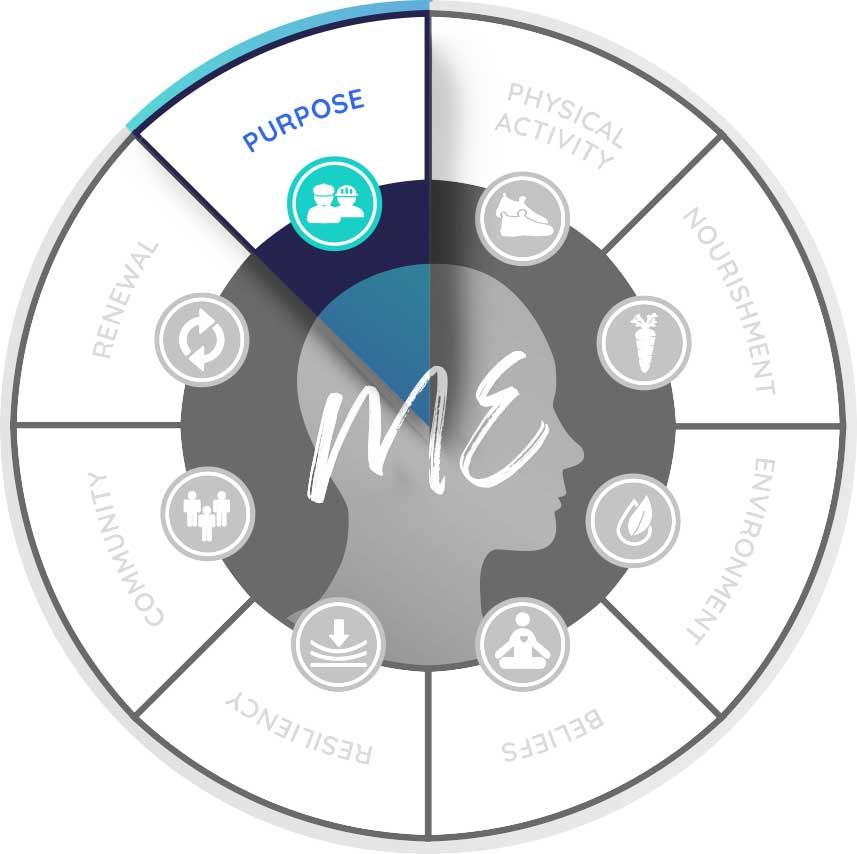
Eight Dimensions – Purpose 

Eight Dimensions Chart focused on Purpose

Many people see health as only physical, but health is so much more than that.

A key indicator of someone’s overall well-being is a sense of purpose. It can even impact your mental and physical health.

Growing research has shown that having a sense of purpose in life can help reduce the risk of developing chronic conditions and even premature mortality. Finding purpose in your everyday life is essential to living a happier, healthier life.

It can seem difficult if it’s not something you already have, but anyone can find a sense of purpose with some self-reflection and actionable steps.

What is purpose?

Your life purpose is the reason that you get up in the morning. When you have a sense of purpose, your life has meaning, you have direction, and you can start to build your life around that purpose.  

Having a sense of purpose gives you fulfillment and satisfaction, no matter where it stems from. Purpose can often be connected to someone’s work or career, but not always. 

One of the most beautiful things about purpose is that it’s different for everyone and you get to decide what gives you purpose, not anyone else. Having a sense of purpose isn’t just important for life satisfaction, it’s also important for your overall health. People may find their purpose through different avenues, but it’s something that anyone and everyone can do. 

Purpose and mental health

Your mental health is one of the main components of your overall health. Finding purpose can greatly impact your mental health for the better. 

It’s normal to occasionally feel overwhelmed or anxious, especially with everything you have on your plate. But constant stress can wreak havoc on your mental and physical health. Connecting with your sense of purpose gives you an anchor to keep uncomfortable feelings at bay. 

Researchers have found that people with a sense of purpose had significantly lower levels of depression and anxiety. Life purpose may also help people develop greater resilience after experiencing a negative event. This has been found across different ages, educational levels, ethnicities, and demographics. 

When you have purpose, you have something that motivates you outside of needing to check things off of a to-do list. Purpose can transform life from mundane to meaningful. Focusing on purpose helps you to cultivate positive emotions which help support your overall health and well-being.   

Purpose and physical health 

It’s not just your mental health, purpose also affects your physical health. The reduced stress levels help support your mental and physical health. Reducing your stress levels through things that bring you purpose can help reduce the risk of many health problems like high blood pressure, heart disease, stroke, obesity, and diabetes. 

That’s not to say that finding purpose will completely heal underlying health issues or that you can’t have purpose if you don’t feel “healthy”. Purpose is for everyone and anyone can find it, no matter the state of their physical health.  

Researchers have also found that people with a sense of purpose are more likely to make healthier life choices that help support their physical health. They discovered that people with a sense of purpose were more likely to stay physically active, have better quality sleep, and are less likely to smoke cigarettes or have heavy alcohol use. All of these lifestyle choices tie back to better physical health outcomes.  

How to find purpose

It’s common to believe that purpose has to be this formal calling you’re constantly striving for, but that’s not always true. Purpose can be found in the little moments in life. These “little moments” add up over time to create an overarching sense of purpose in your daily life. 

The more you practice things that bring you fulfillment and feel meaningful, the easier it will be to find a sense of purpose.  

Reflect on what matters to you

One of the biggest ways to discover your purpose is to reflect on what matters most. What is most valuable to you in life?  

Take a moment and think about what “lights you up.” Some of the most common values people hold are around: 

  • Personal connections – family, friends, partners 
  • Giving back or supporting a cause that holds meaning to you 
  • Joy and fun: reflect on the last time you felt joy. The source of that joy may be connected to something that gives you purpose 

Some people may find purpose in traveling the world while others may find it in tending to the garden in their backyard. Remembering what fulfills you is a shortcut to finding your purpose. 

Purpose in everyday life 

It’s easy to fall into a rut when you’re just going about your daily life. Between work, chores, and errands, sometimes it’s difficult to remember your purpose in life. 

Purpose doesn’t have to be a big goal or something outside yourself that you’re constantly striving for. Purpose can also be found in the little moments of your everyday life.  

These are some ways to remember your purpose in your daily life: 

  • Practice moments of gratitude 
  • Focus on connecting with yourself and those around you 
  • Take one small step each day that feels in line with your purpose 

It can be discouraging to “find your purpose” if it’s a new concept, but remember each little moment counts.  

Find hobbies 

Hobbies are something that you do just for the sake of doing something. You don’t need to make a career out of it or feel like you constantly need to achieve something or advance. 

Hobbies help bring you a sense of purpose by finding joy and activating parts of yourself that you might not otherwise. Sometimes this means being creative or doing physical activities that don’t just focus on exercise.

These are just a few of the many hobbies that can help bring you purpose:

  • Join an adult sports team 
  • Learn to play an instrument 
  • Practice a visual art like painting 
  • Volunteering for a cause you care about 

Many hobbies can also help connect you with a community where you can find a deeper purpose.

Fostering meaningful connections

Humans are incredibly social creatures and often serve as mirrors for one another. Taking time to foster and nurture your social connections is essential to finding purpose in your life. 

Any type of connection can be meaningful, that can include: 

  • Family members 
  • Friends and “chosen family” 
  • Coworkers 
  • Your spouse or partner 
  • Random connections 

It helps to think about who is already in your life and how you can actively connect with them on a deeper level. You can start by sending a random message to tell someone you’re thinking about them when they pop into your head or by organizing group meals or activities. 

Purpose and well-being 

There is no one right way to find your purpose and know that it will look different for everyone. Purpose is not a destination, instead, it’s a continuous journey of finding what makes life meaningful to you. 

Finding a sense of purpose is key to helping support your physical and mental health. You can start by finding purpose in your everyday life, picking up a new hobby, and connecting with community. 

If you would like a better understanding of your purpose, reflect on what’s meaningful to you and what action steps you can take to help you feel connected to your purpose. Purpose is an integral part of your wellbeing, you can find yours too! 

References:

  1. Sense of Purpose in Life and Five Health Behaviors in Older Adults – PMC  
  1. The relationship between purpose in life and depression and anxiety: A meta‐analysis – Boreham – 2023 – Journal of Clinical Psychology – Wiley Online Library  
  1. ​​Stress symptoms: Effects on your body and behavior – Mayo Clinic  
  1. Sense of Purpose in Life and Five Health Behaviors in Older Adults – PMC  

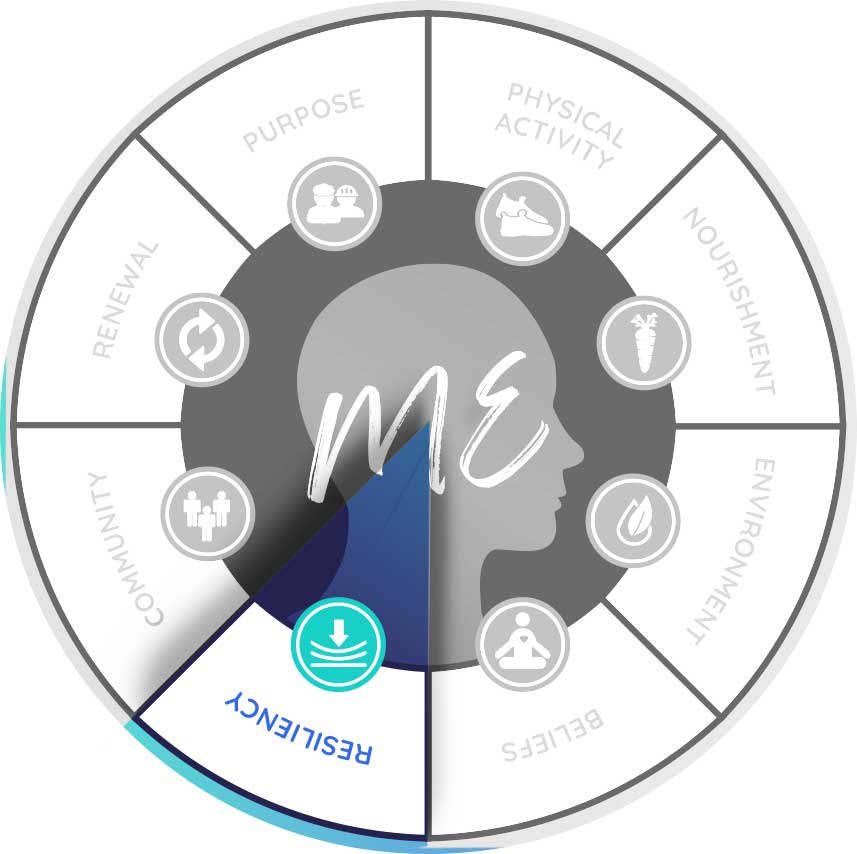
Eight Dimensions – Resiliency 

Eight Dimensions Chart focused on Resiliency

Everyone goes through tough times in life, that’s part of being human. Your ability to make it through these tough times is your resilience.  

Different people face different types of challenges and adversities. Certain groups of people like those in marginalized communities or who have different socioeconomic backgrounds may face more challenges and adversities from the outside world.  

While everyone faces different challenges, every individual has the potential to increase their resilience and their overall well-being.

What is resilience? 

Resilience is someone’s ability to adapt to stressors or “bounce back” after a difficult situation. Life has its ups and downs, everyone will face some types of stress and crises.  

Having resilience allows you to maintain your psychological well-being despite what happens and know what tools you need to overcome difficult situations.  

When you learn to cultivate more resilience, you feel more grounded and can confidently overcome life’s challenges, both big and small. Resilience plays a large role in your overall health and ability to live a balanced life.

Types of resilience

When you think of resilience, you may think of huge life challenges like losing a job, experiencing a loss in your family, or dealing with health challenges. It’s important to have resilience in these situations, but resilience also shows up in your daily life.  

Think about a day when you’ve had frustrating things or challenges arise. You might not have gotten enough sleep, are running late to work or school, or disagree with someone. These things happen, it’s part of life, but having the skills, tools, and perspective to bounce back and not have these hiccups ruin your day or week is important. 

Resiliency is a daily practice, but it all adds up. The more you develop resilience in your daily life, the easier it will be to have it when something big happens.  

Resilience and psychological health

Resilience and psychological health have a direct connection. Developing resilience can help support your psychological health and vice versa, having positive mental and psychological health can help you have more resilience.   

Often more resilient people have learned how to manage their stress. This can happen as you get older and learn new skills, as well as by being proactive about developing these skills over time.  

Being resilient doesn’t mean you don’t get stressed, but when you do you manage that stress. This includes coping mechanisms like if you’re irritated with someone taking some time to yourself to calm down versus reacting and saying something that you regret. Positive coping mechanisms help you regulate your emotions to handle obstacles better when they arise.  

Being adaptable is also a sign of resilience. When things don’t go as planned, can you adapt to the changes without feeling dysregulated? Can you problem-solve to find different solutions to situations that arise? These are all ways your psychological health can increase your resilience.  

Resilience and physical health 

Resilience may also help support your physical health. Stress is one of the biggest risk factors for many chronic health concerns like cardiovascular diseases, high blood pressure, obesity, and diabetes.  

When you can better navigate stress thanks to resilience your mind and body can adapt better. It can also decrease your risk of developing or worsening stress-related health conditions. Stress can also impact your immune system, impacting your body’s ability to fight viruses and infections. 

Developing resilience can also increase your overall quality of life. One aspect of resilience is your ability to see the bigger picture, maintain a positive perspective, and stay optimistic. Research has even found a link between being and having a longer lifespan!

How to increase resilience

Some people may be born with more resilience than others, but it is a learned skill. Anyone can learn new tools and techniques to help increase their resiliency to better deal with the hurdles they face in life.

Here are some of the top ways you can help build resilience: 

Find your support system 

No matter how resilient you are, everyone needs a support system around them to help make life easier to navigate. Your support system may include your family, friends, coworkers, or anyone else you can lean on for emotional support and advice.  

You can help build your support system by thinking about the people you trust most, reaching out to them when you need it, as well as offering support to them when they need it. 

Practice self-compassion

Everyone makes mistakes, but that doesn’t make you a bad person. Understanding your role in a situation can help you take personal responsibility for your actions and reactions and give compassion to yourself and those around you.  

Self-compassion is important in situations where you may have made a mistake and in situations where you may be facing adversity that was not your fault. Balancing personal responsibility and self-compassion helps you build resilience in uncomfortable or difficult situations. 

Physical activity

A surprising way you can increase your resilience is by engaging in physical activity. Physical activity helps regulate stress levels so you can be less reactive in stressful situations. 

It can also help you in another way. Challenging yourself, even by exercising or trying a new type of physical activity, helps build resilience in other areas of your life. 

Take action

It’s normal to feel “stuck” when triggered or faced with a challenge. Overcoming this feeling of being stuck or overwhelmed and instead taking action can help you become more resilient. 

Practicing solving problems, even in difficult moments, shows your brain that you can take action when you need to. It shows you have the skills and abilities to face and overcome challenges. 

Mental health support

If you have faced challenges or adversities that have affected your mental health, know that it’s not your fault. These challenges can affect your mental health and may affect your resiliency or belief in yourself. 

Getting mental health support can help get you to a place where you feel better equipped to deal with life’s challenges. A mental health practitioner or coach can help give you the tools you need to become more resilient and support your mental health. 

Practice self-care 

Being resilient isn’t just about being tough and taking action when needed. It’s also about nurturing yourself and practicing self-care when you need it. 

Self-care includes getting enough sleep, journaling, spending time with loved ones, and doing other things you enjoy. It can help to have a list of tools you turn to when you need help regulating your emotions. You can put simple tasks on this list like walking or taking a few deep breaths. Being able to regulate your emotions is an important part of self-care. 

Resilience for your well-being

You might not be able to change what life throws at you, but you can change how you react. Resilience is a key part of your overall well-being. Building resilience can help you better navigate life and the obstacles that come with it.  

Remember that no one is perfect, everyone gets overwhelmed or feels frustrated sometimes. But the more you practice resilience, the easier it will be to bounce back in the most difficult moments. 

References: 

  1. What is Resilience?  
  1. Chronic stress puts your health at risk – Mayo Clinic  
  1. How Does Stress Affect the Immune System? – UMMS Health  
  1. Optimism linked to longevity and well-being in two recent studies | National Institute on Aging