
The Power of Prevention: Reduce Your Risk for Common Cancers

The National Cancer Institute estimated that in 2025, roughly 2 million people were diagnosed with cancer in the United States. Based on this research, breast, lung, prostate, and colorectal cancers account for almost 50% of all new cancer cases in the US.

With cancer affecting so many people each year, adopting preventive measures has become more important than ever. By focusing on lifestyle modifications and early detection, you and your loved ones can significantly reduce your chances of developing cancer and live long, healthy lives.

Learn about prevention, screenings, and lifestyle tips that can help protect you and your loved ones against these common cancers.

Skin Cancer

Did you know: Skin cancer is the most common type of cancer. It often appears on areas of the body exposed to the sun, such as the head, face, neck, back, chest, or shoulders.

Colon Cancer

Did you know: The American Cancer Society estimates that over 152,000 people in the U.S. will be diagnosed with colorectal cancer in 2026. However, the number of people diagnosed has steadily declined since the mid-1980s due to increased screening and changing lifestyles.

Lung Cancer

Did you know: According to the Lung Cancer Research Foundation, about 20% of lung cancer diagnoses occur in people who have never smoked, which is why awareness and screening recommendations are important for many adults.

Breast Cancer

Did you know: According to the American Cancer Society, the average risk of a woman in the United States developing breast cancer sometime in her life is about 13% and the median age at the time of breast cancer diagnosis is 62.

Prostate Cancer

Did you know: According to the American Cancer Society, about six in 10 prostate cancers are diagnosed in men who are 65 or older, and it is rare in men under 40. The average age of men when they are first diagnosed is about 67.


Don’t delay. Schedule your routine screenings and take proactive steps towards preventing cancer, as prevention truly is the best medicine. Download this infographic to see what other screenings you may need based on your age, and for appointment tips to get the most out of your visit. For more lifestyle tips that help with cancer prevention, read this blog.

Have you received a diagnosis or treatment plan and want to get a second opinion? As part of our CalVEBA medical plans, members can get a free expert second opinion through our partnership with Teladoc Medical Experts. This is a no-cost service that provides you with access to world-renowned doctors and specialists so you can have confidence before making major medical decisions.

Learn more at Teladoc.com/Medical-Experts or call 800-835-2362
The Importance of Preventive Care

Don’t wait until you’re sick to see your doctor. Preventive care isn’t just about avoiding illness—it’s about building a foundation for lifelong health.

What is Preventive Care?

Typically, you visit the doctor when you’re sick or something just doesn’t feel quite right. While you should always seek help in those instances, preventive care means taking proactive steps—like regular check-ups, screenings, and immunizations—to protect your health before problems arise.

These visits support early detection and give you and your doctor the opportunity to work together toward your personal health and wellness goals. During a preventive care appointment, your doctor will determine which tests or screenings are appropriate based on your age, gender, health status, and family history.

What’s Typically Covered?

Physical Exams

During a physical exam, your doctor will observe, listen, and gently examine your body to help identify symptoms, assess underlying conditions, and determine if further testing is needed. You’ll also have the chance to discuss any concerns, review your medical history, and review current medications.

Immunizations

Immunizations (or vaccinations) are one of the most effective ways to protect yourself from infectious diseases. They help your body build antibodies that recognize and fight illness if you’re exposed later.

Common immunizations include flu and tetanus shots, the measles, mumps, and rubella (MMR) vaccine, and hepatitis A and B vaccines.

Screenings

Member Moment

Meet Ginger
“It’s very hard to look your kids in the eye and tell them that you have cancer. When they told me I was cancer free, I felt like I could breathe for the first time. I had great insurance, and I know our members do too, so I hope this is encouraging them to get their yearly checkups.” – Ginger, Member since 2013

Watch Ginger’s full member moment here.

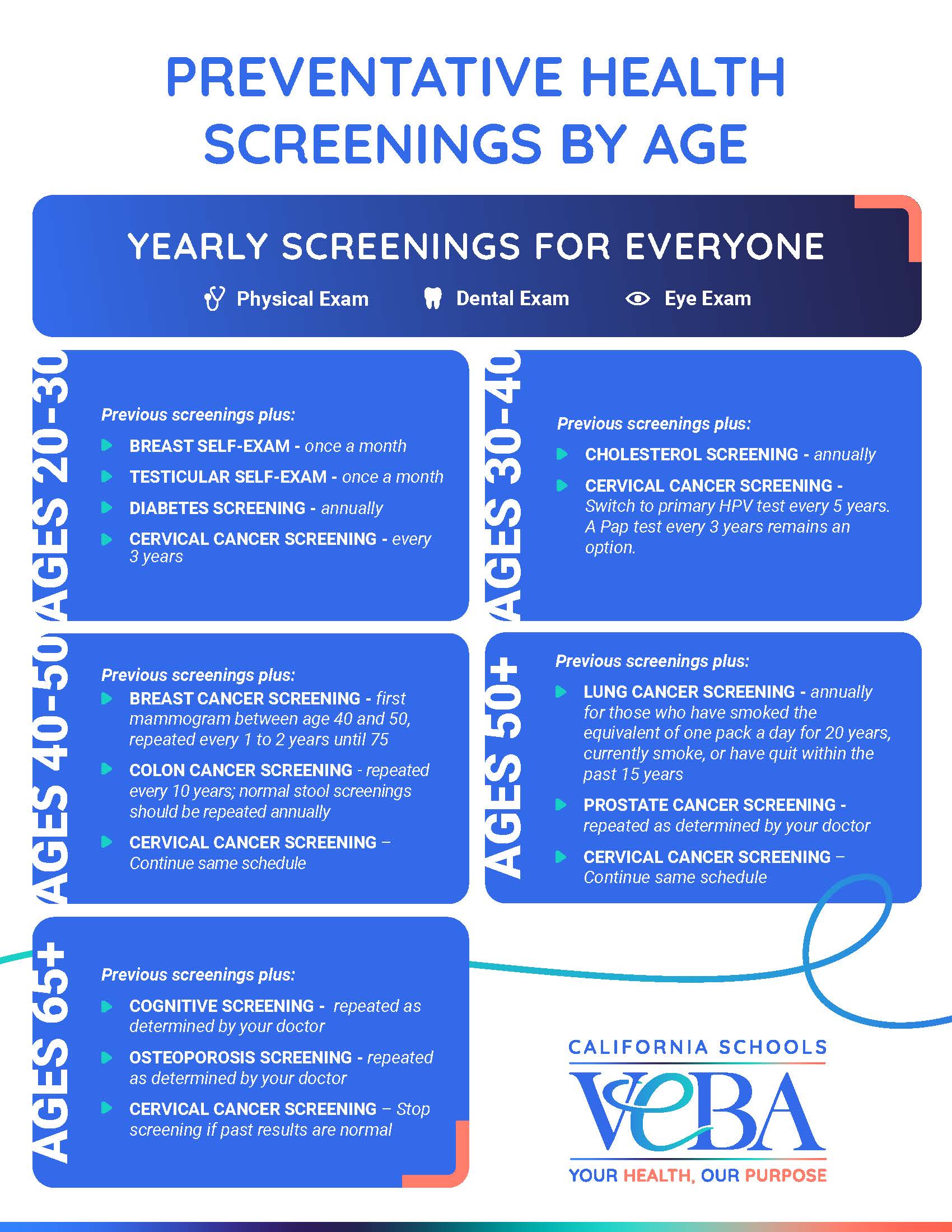
Screening tests help detect certain diseases before symptoms appear. Early diagnosis often leads to better outcomes and can prevent or delay complications. Use the infographic below to see which screenings may be recommended for your age group.

Preventative Health Screenings by Age, CalVEBA Infographic

Disclaimer:

This is a general guide for average-risk individuals. Higher risk may require more frequent screening. Consult with your health care provider.

Appointment Scheduling Tips

Preventive care appointments are usually covered at no cost with in-network providers. Check your plan documents to confirm coverage and costs.

Make the most of your doctor’s appointments by being well-prepared and organized using our Appointment Ready: Your Doctor’s Visit Prep Guide.

Here are some tips to help you get started:

Before Your Appointment:

  • Make a List: Bring a list of medications and jot down questions or concerns.
  • Bring Your Insurance Card: Download and save to your mobile wallet for easy access.

During Your Appointment:

  • Arrive Early: Arrive 10-15 minutes early to complete any paperwork. 
  • Dress Comfortably: Wear a shirt or loose-fitting sleeves for your blood pressure check. 
  • Use Your List: Review your list with your doctor. 
  • Speak Your Mind: Your time and health are valuable! 

After Your Appointment:

  • Follow Through: Take prescribed medications as directed and schedule any recommended follow-ups or screening. 
  • Speak Up: Report new symptoms or concerns promptly.  
  • Get a Second Opinion: If you’re unsure about a diagnosis or treatment plan, CalVEBA members can access second opinions from world-renowned specialists at no cost through our partnership with Teladoc Medical Experts. 

Preventive care can help you stay ahead of health issues and maintain overall well-being.

Download our Appointment Ready: Your Doctor’s Visit Prep Guide today and start planning for your next preventive care visit!


Thank you to our content partners at Sharp HealthCare and Healthwise.

Need help to schedule an appointment or have questions about your medical coverage? Contact the California Schools VEBA Advocacy Team here or call 888-276-0250.

Making Lifestyle Changes to Help Prevent Cancer

According to the World Health Organization, between 30–50% of all cancer cases are preventable. Certain unhealthy daily behaviors can increase our risk of developing cancer. Major lifestyle changes may not happen overnight, but working toward healthier habits can significantly reduce the likelihood of cancer. Practices like making time each day for physical activity, choosing healthier food options, and prioritizing regular checkups and screenings can all contribute to cancer prevention.

Here are some steps you can take that may help prevent cancer and pave the way for a long and healthy life:

Quit smoking.

When you quit smoking, you lower your risk of many types of cancer. These include cancers of the lung, bladder, kidneys, pancreas, cervix, mouth, esophagus, and throat.

Make healthy food choices.
Your diet should include:

  • Plenty of vegetables, fruits, beans, other legumes, fish, poultry, and whole grains.
  • Less red meat (such as beef, lamb, and pork).
  • Less processed meat (like bacon, hot dogs, sausage, and some deli meats).
  • Less food made from refined grains.
  • Less sweets and added sugars.

Find inspiration from our recipe library!

Maintain a healthy weight.
Being very overweight increases the risk of some forms of cancer. People whose extra body fat sits in the waist area may be at higher risk than people whose extra fat is in their hips or thighs.

Stay active.
Being active every day may prevent several cancers. And regular activity can help you get to and stay at a healthy weight. Being active and getting enough sleep may work together to lower cancer risk even more than activity alone, especially for women.

You can join free movement classes, in-person or virtually, on our class calendar! Or visit our video library for on-demand classes to take whenever and wherever you wish!

Protect your skin.
Most skin cancer is caused by too much sun. To protect yourself from damaging UV rays:

  • Seek shade from 10 a.m. to 4 p.m.
  • Cover up outdoors with a wide-brimmed hat and tightly woven clothing.
  • Apply broad-spectrum sunscreen on any exposed skin, even when it’s cloudy. Use SPF 30 or higher. Reapply if you’re in the sun for more than a few hours.
  • Wear UV-blocking sunglasses.
  • Avoid tanning booths and sunlamps.

Be wise with alcohol.
Drinking alcohol may increase your risk of some types of cancer. Any amount of alcohol may increase that risk. If you drink alcohol, try to limit the amount you drink.

Practice safer sex.
Safer sex includes using condoms and talking to every potential sex partner about their sexual history. Practicing safer sex helps prevent HPV, a sexually transmitted infection that can cause cervical cancer.

Get regular checkups and screenings.
Your doctor can schedule regular screenings for various types of cancer, such as mammograms for breast cancer and stool tests for colon cancer. Most screenings and checkups are to find cancer early, when it’s easier to treat and may even be curable.

Read this blog and download a free infographic for screening recommendations based on age.

Consider vaccinations.
Females ages nine to 26 can get the HPV vaccine to protect against the virus that can cause cervical cancer. Males ages nine through 26 may also get the HPV vaccine, which may prevent anal cancer and oral cancer. If you are age 27 to 45 and have not been vaccinated for HPV, ask your doctor if getting the vaccine is right for you.

Avoid toxins at work and at home.
Stay away from harmful chemicals and other things that can increase your chances of getting cancer. These things include asbestos, benzene, radon, and polluted drinking water. Take care when you use cleaning products, paints, solvents, and pesticides.


Making healthier life choices and sticking to them can be challenging, but you don’t have to do it alone. At the VEBA Resource Center, our Care Navigators are here to support and guide you toward becoming your best self. Together, you’ll create a tailored health plan for you based on your unique story, values, and experiences.

Start Your Personalized Wellness Journey

What Can You Do to Reduce the Risk of Breast Cancer?

Your risk for breast cancer increases as you get older. There is no known way to prevent breast cancer, but with some cancers, finding them early can increase your chances of successful treatment.

Here are some steps you can take to help reduce your risk:

  • Get familiar with the look and feel of your breasts. This will help you notice any changes. Call your doctor if you notice a change.
  • Have regular breast exams by your doctor or nurse. Ask your doctor how often you should get them.
  • Have regular mammograms. A mammogram is a picture of your breast tissue. It can find changes in your breast before you can feel them. Talk to your doctor about when to get this test.

You can also help take care of yourself and reduce your risk of cancer if you:

  • Stay at a healthy weight.
  • Eat a healthy, low-fat diet.
  • Get some exercise every day. If you don’t usually exercise, walking is a good way to start.
  • Don’t smoke. If you need help quitting, talk to your doctor about stop-smoking programs and medicines. These can increase your chances of quitting for good.
  • If you drink alcohol, limit how much you drink. Any amount of alcohol may increase your risk for some types of cancer.
  • Breastfeed. There is some evidence that breastfeeding may lower the risk of breast cancer. The benefit seems to be greatest in those who have breastfed for longer than 12 months or who breastfed several children.

BRCA gene changes

People who do a gene test and find out that they have a BRCA gene change have some options to manage their cancer risk.

  • For female breast cancer: If you haven’t yet had cancer, you may want to think about starting breast cancer screening at a younger age, taking medicine, and having preventive surgery.
  • For male breast cancer: You may want to think about doing breast self-exams and having clinical breast exams. (And it’s a good idea to have prostate cancer screenings too.)

If you have a BRCA gene change, talk with your doctor about how you can manage your cancer risk.

LGBTQ+ Health: What do you need to know about health screenings?

What screening tests you take depend on what body parts you have, your personal and family history, your age, and your sexual activity. Screening for certain cancers may depend if you take hormones. Talk to your doctor about what screenings you need.

Experts recommend cervical cancer screenings for anyone ages 21 to 65 who has a cervix. This may mean having a Pap test or a human papillomavirus (HPV) test, or both. How often you need these tests will depend on your age and health history. HPV can be passed among partners of any gender. And HPV increases your risk of getting cervical cancer.

Sexually transmitted infections (STIs) are a concern for everyone who is sexually active. If you give your doctor a full picture of your past and present sexual practices, it can help you know which STIs you might need to be tested for and when. You may also discuss options for safer sex.

Depression is more common in the LGBTQ+ community. So it’s a good idea to check in with your doctor if you’re feeling down. Treatment for depression can help people feel better each day. And it can help people take better care of themselves so that they lead the healthiest lives possible.

Your doctor can help you figure out what other screenings you may need. These may include screenings for cholesterol, diabetes, or certain cancers, like breast, prostate, and colorectal cancer.

Along with getting screenings, you and your doctor can also discuss ways to do more of the things that help keep you healthy in general. These include things like being active, eating healthy foods, and spending time with others.

Human Immunodeficiency Virus (HIV):

Human immunodeficiency virus, or HIV, is a virus that attacks your immune system. This makes it hard for your body to fight infection and disease. HIV is the virus that causes AIDS (acquired immunodeficiency syndrome). But having HIV does not mean that you have AIDS. Treatment of HIV may prevent or delay HIV from developing into AIDS.

HIV often causes flu-like symptoms soon after a person gets infected. These early symptoms go away in a few weeks. After that, you may not have signs of illness for many years. But as the virus multiplies in your body, symptoms reappear and then remain. Fatigue, weight loss, fever, night sweats, diarrhea, and other symptoms are common. If HIV is not treated and progresses to AIDS, your symptoms get worse and your body is less and less able to fight infections like pneumonia and tuberculosis.

You can get HIV testing done in most doctors’ offices, public health clinics, hospitals, and Planned Parenthood clinics. You can also buy a home HIV test kit in a drugstore or by mail order. If a home test is positive, you’ll need to see a doctor.

What increases your risk of HIV?

You’re at greater risk of getting infected with HIV if you:

  • Have unprotected vaginal, anal, or oral sex. (You don’t use condoms or don’t use them correctly).
  • Are a man who has sex with other men. (If you or your partner[s] don’t identify with the sex you were assigned at birth, talk to your doctor about your risk.)
  • Have more than one sex partner.
  • Have a high-risk partner. This is someone who has more than one sex partner, has HIV or another sexually transmitted infection (STI), or injects drugs.
  • Have (or recently had) an STI, such as syphilis or active herpes.
  • Inject drugs or steroids. This is especially true if you share needles, syringes, or other equipment used to inject drugs.

Being born to a mother who has HIV increases the risk of infection. Most children younger than 13 years who have HIV were infected before or during birth or during breastfeeding.

LGBTQ+ Health: Finding Support

Having a strong support network can help people live longer, more satisfying lives. Connecting with other LGBTQ+ people can provide a level of support and acceptance that can make you feel more connected and empowered.

Here are some ways you might find support.

  • Try sports or activity clubs organized for LGBTQ+ people.
  • Join a support group.
  • Visit places of worship that are LGBTQ+ friendly.
  • Find groups specific to LGBTQ+ people for quitting smoking, alcohol, or drugs.
  • Get professional counseling.
    • The websites www.samhsa.gov and www.glma.org can be great resources to find mental health services.
    • If you’re being emotionally, verbally, or physically abused, you can also call the National Domestic Violence Hotline at www.ndvh.org or 1-800-799-SAFE (1-800-799-7233). It’s a free hotline that’s available 24 hours every day in English and other languages.

If you’re not sure about reaching out in one of these ways, remember that lots of people have felt the same way. Sometimes, taking the first step is the hardest part.

Check out the VEBA Resource Center Community Resource Page for more local and national resources.

Salud en personas LGBTQ+

¿Qué es LGBTQ+?

LGBTQ+ es la abreviación de “Lesbiana, Gay, Bisexual, Transgénero, Queer o que se cuestiona”. El signo + significa todas las demás orientaciones sexuales e identidades de género que no son heterosexuales ni cisgénero (la identidad de género coincide con el sexo asignado al nacer).

Salud en personas LGBTQ+: ¿Qué necesita saber sobre pruebas de detección médica?

Las pruebas de detección médica que le realicen dependerán de las partes del cuerpo que tenga, sus antecedentes personales y familiares, su edad y su actividad sexual. Y las pruebas de detección de determinados cánceres pueden depender de si toma hormonas. Hable con el médico sobre qué pruebas de detección necesita.

Los expertos recomiendan pruebas de detección de cáncer de cuello uterino para todas las personas de 21 a 65 años que tienen cuello uterino. Esto podría significar hacerse una prueba de Papanicolaou o una prueba del virus del papiloma humano (VPH), o ambas. La frecuencia con la que necesita hacerse estas pruebas dependerá de su edad y antecedentes de salud. El VPH puede transmitirse entre parejas de cualquier género. Y el VPH aumenta el riesgo de que llegue a tener cáncer de cuello uterino.

Las infecciones de transmisión sexual (ITS) son una preocupación para todas las personas sexualmente activas. Si usted le da a su médico un panorama general de sus prácticas sexuales pasadas y actuales, esto puede ayudarle a saber de qué ITS podría tener que hacerse pruebas y en qué momento. También podría hablar de opciones para tener relaciones sexuales más seguras.

La depresión es más común en la comunidad LGBTQ+. Por lo tanto, es una buena idea que consulte con el médico si se siente desanimado. El tratamiento para la depresión puede ayudar a las personas a sentirse mejor cada día. Y puede ayudar a las personas a ocuparse mejor de sí mismas para que puedan llevar una vida lo más saludable posible.

Su médico puede ayudarle a determinar qué otras pruebas de detección podría necesitar. Estas pueden incluir pruebas de colesterol, pruebas de detección de la diabetes o de ciertos tipos de cáncer, como el cáncer de seno (mama), próstata y colorrectal.

Además de hacerse pruebas de detección, también puede hablar con su médico sobre cómo hacer más de las cosas que le ayudan a mantenerse saludable en general. Estas incluyen cosas como hacer actividad, comer alimentos saludables y pasar tiempo con otras personas.

VIH: Generalidades

El virus de la inmunodeficiencia humana, o VIH, es un virus que ataca a su sistema inmunitario. Esto dificulta que su organismo combata infecciones y enfermedades. El VIH es el virus que causa el SIDA (síndrome de inmunodeficiencia adquirida). Pero tener VIH no significa tener SIDA. El tratamiento del VIH podría prevenir o retrasar que el VIH se convierta en SIDA.

El VIH suele causar síntomas parecidos a la gripe poco después de que la persona se contagia. Estos síntomas iniciales desaparecen en pocas semanas. Después de eso, podría no tener señales de la enfermedad durante muchos años. Pero conforme se multiplica el virus en el cuerpo, los síntomas reaparecen y entonces permanecen. La fatiga, la pérdida de peso, la fiebre, los sudores nocturnos, la diarrea y otros síntomas son comunes. Si no se trata el VIH y avanza hacia el SIDA, los síntomas empeoran y el cuerpo cada vez es menos capaz de combatir infecciones como la neumonía y la tuberculosis.

Puede hacerse la prueba del VIH en la mayoría de los consultorios médicos, clínicas de salud públicas, hospitales y clínicas de Planned Parenthood. También puede comprar un kit de prueba de VIH para el hogar en una farmacia o por correo. Si una prueba casera es positiva, deberá ver a un médico.

¿Qué aumenta su riesgo de VIH?

Usted tiene un riesgo más elevado de infectarse con VIH si usted:

  • Tiene relaciones sexuales vaginales, anales u orales sin protección. (No usa condones o no los usa correctamente).
  • Es un hombre (o se le asignó sexo masculino al momento de nacer) que tiene relaciones sexuales con otros hombres (o personas a quienes se les asignó sexo masculino al nacer).
  • Tiene más de una pareja sexual.
  • Tiene una pareja de alto riesgo. Esta es alguien que tiene más de una pareja sexual, tiene VIH u otra infección de transmisión sexual (STI, por sus siglas en inglés) o se inyecta drogas.
  • Tiene (o ha tenido recientemente) una STI, como sífilis o herpes activo.
  • Se inyecta drogas o esteroides. Esto es especialmente cierto si comparte agujas, jeringas u otros equipos para inyectarse drogas.

Haber nacido de una madre que tiene VIH aumenta el riesgo de infección. La mayoría de los niños menores de 13 años que tienen VIH contrajeron la infección antes o en el momento del parto o durante la lactancia.

Salud en personas LGBTQ+: Cómo encontrar apoyo

Contar con una fuerte red de apoyo puede ayudar a las personas a vivir una vida más satisfactoria y prolongada. Relacionarse con otras personas LGBTQ+ puede brindarle un nivel de apoyo y aceptación que puede hacer que se sienta más conectado y fortalecido.

Estas son algunas de las posibles maneras de encontrar apoyo.

  • Pruebe clubes de deportes o actividades organizados para personas LGBTQ+.
  • Únase a un grupo de apoyo.
  • Visite lugares de culto donde las personas LGBTQ+ sean bien recibidas.
  • Encuentre grupos específicos para personas LGBTQ+ para dejar de fumar, beber alcohol o consumir drogas.
  • Consiga asesoría profesional.
    • Los sitios web www.samhsa.gov y www.glma.org pueden ser excelentes recursos para encontrar servicios de salud mental.
    • Está sufriendo abuso emocional, verbal o físico, también puede contactar a la línea nacional directa contra la violencia doméstica (National Domestic Violence Hotline) en www.ndvh.org o al 1-800-799-SAFE (1-800-799-7233). Es una línea directa gratuita que está disponible las 24 horas todos los días en inglés y otros idiomas.

Si duda en comunicarse de una de estas maneras, recuerde que muchas personas se han sentido igual que usted. A veces, dar el primer paso es la parte más difícil.

Consulte la página de recursos comunitarios del VEBA Resource Center para obtener más recursos locales y nacionales.