
Five Tips to Support Your Mental Health During the Holiday Season 

The holidays can be a time of togetherness, joy, and fun. It can also be a time of stress, loneliness, and anxiety that can take a significant toll on your mental health. If you find yourself stressed before or during this time of year, you’re not alone.

A recent ​American Heart Association (AHA) survey​ found that most people take weeks to de-stress after the holidays. Almost all respondents reported that they regretted not making time to rest or enjoy the season. Knowing the challenges during this time of year, you can proactively put in guardrails to protect your mental health. Let’s review some tools and skills that can help.

1. Set Realistic Expectations

From dishes to events to outfits to gifts, there are a lot of expectations for this time of year. Often, we set unachievable goals and, therefore, set ourselves up for the disappointment that comes when those goals are not met.

It’s important to step back and ask if our expectations for ourselves and others are too high. Recipes may not turn out as they looked on Pinterest, children may not use their manners when grandparents are over, your house may not be immaculate, and you may be late to an event.

If you expect perfection, even small hiccups can feel like disasters. Setting realistic expectations is a game changer. It helps ease anticipation, reduces stress, and creates space to enjoy the season.

If you’re feeling pressure to meet every expectation, remember that CalVEBA offers mental health support to help you navigate life’s challenges. Learn more here.

2. Draw and Hold Boundaries – It’s Ok to Say No

Putting in place frameworks for what is ok and not ok for you is an essential to-do over the holidays. Boundaries help us maintain who we are, stop others from taking advantage of us, invigorate our relationships, give us space to respectfully speak our minds, and open us to empathize with others. Healthy boundaries over the holidays could look like​ this​:

  • Not answering emails or work calls after hours or on your scheduled time off.
  • Saying no to invites when you want a quiet night at home.
  • Expressing discomfort to a relative who wants to talk about politics.
  • Politely asking others to respect your physical personal space. 

When our boundaries aren’t respected, we often feel unsettled. Many people ignore that discomfort to avoid conflict. This year, challenge yourself to let others manage their own reactions. Respectfully expressing and maintaining your boundaries is essential to your mental well-being.

3. Balance Your Schedule

Calendars fill up quickly during the holidays — often overflowing. It may seem impossible to manage and curate your schedule. More than half of the people surveyed in the AHA study reported that they had trouble making time for healthy eating, exercising, and getting adequate sleep this time of year. But finding balance in your day and week can keep you on your holiday schedule while ​keeping​ your stress in check.  

As you make a list of must-dos, be sure to include nutritious meals, exercise, sleep needs, and decompression time. Draw healthy boundaries around your time, knowing that you must show up for yourself before you can for others over the holidays. Block time on your calendar for self-care. Treat it like any other important commitment. You may not be able to make a 60-minute yoga class, but stretching at home for 15 minutes can be just as impactful. Five minutes of peace alone — wherever you can find it — can make a huge difference in your day.

Try CalVEBA’s virtual yoga, nutrition, and movement classes from wherever you are to help you recharge on your own schedule. Get started here.

4. Practice Mindfulness Regularly

Stress can sneak up on us. It might start with a few quick breaths and a clenched jaw, then escalate quickly. Tuning into your body throughout the day is an important step in managing your stress over the holidays. Meditation, yoga, journaling, ​and ​walking​​ are ​all ​great ways to cultivate awareness of what’s going on with you. From that knowledge, you can practice breathing techniques, use a self-soothe kit, or other coping techniques to regulate yourself. Then, you can start to address what’s causing the stress.  

5. Lean on Support

Help can be asking a coworker to assist with a project, a parent to watch your child for a few hours, or a friend to pick something up for you when they’re running errands. It can also be asking for someone to listen to you as you talk through something, company as you go for a walk, or someone simply holding space with you. Over the holidays this year, look to your family, friends, and coworkers for support and don’t forget to check in on others as well. Checking in with others can be a meaningful way to connect and support each other. You can also lean on the Resource Center. We offer programs and resources to help you live your healthiest life. 

Looking for More Support?

The holidays can be a time of joy but also stress and anxiety. Prioritizing your mental health is essential to navigating this season with resilience.

As a CalVEBA member, you have access to:

  • Mental health care through CalVEBA and your medical plan
  • Virtual wellness classes including yoga, fitness, and meditation
  • Self-care toolkits focused on mental well-being, nutrition, and on-demand videos

Visit calveba.org/Resources/ to explore programs that support your total well-being. 
Five Steps for Building Healthy Boundaries: Your Guide to Balance & Better Relationships

“I feel stressed when my family expects me to attend every event, when I need personal time.”

“I’m always working late because I’m asked to take on extra tasks outside of my role.”

“I feel exhausted when I attend too many social events.”

Do any of the statements above sound familiar?

If so, you’re not alone! Many people struggle with balancing personal, professional, and social boundaries. This post will help you identify, set, and maintain healthy boundaries to improve your overall well-being.

Step 1: Awareness: Know your Boundaries

Personal boundaries are limits we set in relationships to maintain health and well-being through clear communication, self-awareness, and assertiveness. Feelings of discomfort, stress, or resentment are a sign that you need to set clearer boundaries, whether due to others overstepping or your own overcommitment.

Step 2: Clarity: What Boundary Setting Sounds Like

Be clear about your needs. Preserving your peace is power. You’re allowed to say “no.” Try writing out a few boundaries using clear, assertive language that communicates your needs without blaming or shaming others. Having these ready will help when situations arise.

Examples: 

“I’m not available at that time.”
“Please don’t do that.”
“Thank you for inviting me, but I need some time for myself.”
“That doesn’t work for me.”
“Not at this time.”
“I’m not comfortable with this.”

Step 3: Communicate: What to Do and Say

Communicate your boundaries clearly and confidently. Consider who you need to talk to, the best time and method, and how to express your boundary kindly and firmly.

Example: “I’ve decided that I need to focus on my personal well-being, so I won’t be able to attend every family event this year. I hope you understand and support my decision.“

Tips to Try

Use confident body language

Face the person, make eye contact, and use a steady, appropriate volume and tone of voice

Be respectful

Be firm but avoid yelling, put-downs, or the silent treatment.

Plan Ahead

Before a difficult discussion, know what you want to say and how to say it.

Compromise

Consider the other person’s needs when appropriate. While not always necessary, compromise is part of healthy relationships.

Step 4: Stick to Your Boundaries

Uphold your boundaries with these strategies: 

Check in with yourself
Periodically ask: “Am I honoring my own boundaries? 

Be Consistent
Maintain boundaries, allowing rare and intentional exceptions. 

Be prepared for pushback
Have a plan for handling resistance without giving in 

Questions for maintaining health boundaries 
What will I do if someone challenges or violates my boundary? 
How can I remind myself that it’s okay to set boundaries for my own well-being? 
What support do I need from others to maintain my boundaries? 

Step 5: Reflect & Revise

Reflect on how your boundaries are working and whether they need modification.  

Is this boundary still serving me? 
Have I noticed positive changes since setting this boundary? 
Do I need to communicate any new or updated boundaries?

Remember 

Boundaries protect your emotional well-being and help you navigate relationships and obligations with clarity and confidence. Be kind to yourself as you practice setting and maintaining them.

Looking for additional guidance on boundaries?

Consider Care Navigation

Meet with a Care Navigator (virtual or in person) to develop a personalized plan for a healthy mind, body, and spirit. Your plan will be uniquely crafted to reflect your personal story, values, and experiences. By collaborating with your Care Navigator, you’ll create a customized strategy to help you become the best version of yourself.

Schedule an Appointment

Sleep and Your Mental Health

Dalai Lama

“Sleep is the best meditation.”

Getting a good night’s sleep isn’t just about feeling rested—it’s central to your mental and overall well-being. The National Sleep Foundation reports that over 90% of American adults with good sleep health experience minimal depressive symptoms.*

Healthy sleep enhances mood, regulates emotions, and improves concentration for better well-being. This post offers simple strategies to prioritize sleep so you can feel and function your best, starting tonight!

Getting your zzz’s

Why Sleep Matters

Even one night of poor sleep can reduce resilience and impair cognitive function. Quality sleep reduces stress and anxiety, improves focus, and increases empathy. If you have insomnia, the risks are even greater for developing serious mental health conditions. People experiencing sleep issues — including insomnia, hypersomnia (excessive sleepiness), and nightmares — have an increased risk of depression, suicidal ideations, and death by suicide.

Dreaming of Better Sleep?

Creating good sleep habits starts at home. Your daily routine, from the moment you wake up to what you eat and how you move, all contribute to better sleep.

Six Tips for Better Sleep

Take Control of Your Nights

1. Stick to a Schedule

Go to bed and wake up at the same time every day, even on weekends, to regulate your body’s internal clock (circadian rhythm).

2. Watch Your Intake

Steer clear of nicotine, caffeine, alcohol, and heavy meals close to bedtime.

3. Soak Up the Sun

Aim for 30 minutes of natural light in the morning to help set your sleep-wake cycle.

4. Stay Active

Exercise daily, but wrap up your workout a couple of hours before bed to allow your body to cool down and prepare for sleep.

5. Create Comfort

Keep your bedroom cool, dark, and quiet. Consider using a white noise machine or fan, use room-darkening-curtains, and maintain a temperature between 60 and 67 degrees.

6. Put Down the Devices

Reduce screen time at least one hour before bed. Studies show exposure to your phone’s blue light suppresses melatonin production (the hormone that regulates sleep).

Drift into Sleep: Meditation App & Classes

Apps like Calm and Headspace offer daily mindfulness and meditations to relax, release stress, and sleep better.

Check out our calendar and sign up for an upcoming meditation class at the VEBA Resource Center (VRC) or visit the on-demand video library for classes such as Yoga Nidra (Yoga for Sleep)

Sweet dreams! Here’s to better sleep, brighter days, and restful nights that support your mental health and enhance your well-being.

Bonus tip:

Wind down by bathing, reading, or listening to this 2-minute Simple Meditation.

*Source: National Sleep Foundation (2023, March 9). The Link Between Our Sleep Health and Mental Health. Sleep in America® Poll 2023. 

Easy Acupressure Techniques for Stress Management

Peter G. Hanson, M.D.

“Stress is simply the adaptation of our bodies and minds to change.”

Whether it’s the daily pressures of work, personal challenges, or simply the fast-paced nature of modern life, stress can take a toll on our well-being. Fortunately, there are simple, effective ways to find relief and restore balance. This blog will guide you through easy acupressure and self-massage techniques you can use on-the-go to manage stress and cultivate a sense of calm whenever needed.

Techniques & Benefits

These techniques combine the benefits of acupressure and self-massage to calm your nervous system, release tension, and manage stress effectively.

Hand Pressure Point for Tired, Achy Hands

  • Benefits: Relieves hand fatigue and pain.
  • Location: Web of muscle between the thumb and index finger.
  • Technique: Press your thumb and index finger into the web of the muscle between the thumb and index finger of the other hand. Press and wiggle through the muscle tissue toward the edge of skin. Repeat as desired.  

Yin Tang Acupressure (Third Eye Point)

  • Benefits: Calms the mind and reduces anxiety.
  • Location: The point between your eyebrows.
  • Technique: Gently apply pressure with your index finger for 1-2 minutes, focusing on deep, slow breaths. 

Heart 7 Acupressure (Shenmen)

  • Benefits: Soothes the mind and alleviates anxiety.
  • Location: On the wrist crease, aligned with your little finger.
  • Technique: Apply firm, steady pressure with your thumb for 1-2 minutes. 

Pericardium 6 Acupressure (Neiguan)

  • Benefits: Reduces anxiety and nausea.
  • Location: On the inner forearm, about three finger-widths below the wrist crease, between the two tendons.
  • Technique: Apply gentle, circular pressure with your thumb for 1-2 minutes. 

Neck Relief for Headaches and Soreness

  • Benefits: Relieves headaches and neck tension.
  • Location: Base of the skull where it meets the spine.
  • Technique: Take the palm of your hand and center it at the back of the head. With medium pressure, squeeze and grasp the back of the neck by drawing the fingers toward the center. Release and repeat 4 times with the right hand, then 4 times with the left hand. 

Temple Massage for Tension Headaches and Tired Eyes:

  • Benefits: Alleviates tension headaches and eye strain.
  • Location: Temples, just beside the eyes.
  • Technique: Place your index and middle fingertips at the temple. With light pressure, make 6 to 8 clockwise circular movements, then 6 to 8 counterclockwise circular movements. Repeat as desired.

Essential Oils and Aromatherapy

The use of essential oils and aromatherapy can also help amplify some of these techniques.

Key Essential Oils & Benefits:

  • Lavender: Promotes relaxation, reduces anxiety  
  • Chamomile: Calms the nervous system, promotes relaxation  
  • Bergamot: Reduces anxiety, uplifts mood  
  • Ylang Ylang: Reduces anxiety, promotes relaxation  

Usage: Diffuse, inhale directly, or apply diluted to the skin 

Thank you to our content partners at Sharp HealthCare. 

Need Additional Well-Being Support?

While acupressure and self-massage techniques can be powerful tools for stress management, sometimes we need additional support. California Schools VEBA (CalVEBA) offers a range of resources to help you navigate life’s challenges and daily stress.

Optum Wellbeing Solutions (EWS)

  • 24/7 Support: For immediate assistance with stress, relationship conflicts, work-life balance, communication strategies, and more, contact Optum EWS.  
  • Dedicated Workplace Support Consultants: CalVEBA members and their dependents (18+) in California can access no-cost counseling visits virtually or in-person at the VEBA Resource Centers (Kearny Mesa and Carlsbad).  
    • Available: Monday – Friday, 10 am – 7 pm.
    • To Book: Visit https://bit.ly/optumvrc, create an account, enter the verification code, and select “Onsite service” to choose your appointment type (in-person, video, or telephone). 

Therapy Resources:

  • California Schools VEBA (CalVEBA) Therapy:
    • Short-term mental health support is available. Schedule a consultation with a CalVEBA Care Navigator—a critical care and holistic Registered Nurse. 
    • To schedule a Care Navigation appointment, call 619-398-4220 or book an appointment here. The Care Navigator will assist you with scheduling your therapy appointment and connect you with the resources you need for long-term support and care. 
  • Health Plan Network Therapists:
    • Kaiser Members: For mental health care, call Kaiser Permanente directly.  
      • Call: 833-579-4848 (8 am – 5:30 pm, Monday – Friday). 
    • UnitedHealthcare Members: Sign in to your member account or call the number on your member ID card. For more information regarding wellness resources visit.

Questions about your mental health benefits or need help finding an in-network provider? Contact the California Schools VEBA Advocacy Team for assistance with benefits eligibility, enrollment questions, or finding a therapist within your network.

Thank you to our content partners at Sharp HealthCare.

How to Quiet the Mind and Calm the Body 

In today’s fast-paced world, it can be easy to feel overwhelmed by constant distractions and a noisy mind. This mental clutter can lead to stress, anxiety, and even physical health issues.

Fortunately, mindfulness practices offer a powerful way to cultivate inner peace and improve overall well-being. The American Psychological Association highlights that mindfulness can significantly reduce stress, anxiety, and depression, aid in pain management and addiction recovery, and potentially boost the immune system.

Quiet Your Mind

Try these seven simple mindfulness practices to quiet your mind and calm your body:  

1. Stop To Rest

Notice what you see, hear, and feel in the moment you pause in stillness. Listen to this mindful moment meditation to soak in the beauty around you.

2. Relax with Your Breath

Take a deep breath and focus on your exhalation, feeling yourself letting go as you breathe out. Follow along with this 7-11 breathing practice.

3. Visual Awareness

Focus on something interesting or beautiful you see nearby and take a moment to notice its details. Follow along with this grounding meditation that engages your 5 senses.

4. Listen to Your Surroundings

Bring your attention to the sounds you hear and pause to listen carefully, focusing on each sound separately. Watch this guided meditation to tune into your surroundings and notice the sounds around you.

5. Check-In with Your Body

Bring your attention into your body and feel the sensations in each area. Release any tension or tightness and let relaxation spread. Watch this 10-minute guided chair yoga sequence to invigorate energy into the body.

6. Keep the Good Things in Mind

Imagine someone or something you love and feel the joy and serenity it brings to your life. Check out this journal prompt to help you reflect on moments of joy.

7. Focus on Gratitude

Think about someone or something you’re grateful for and reflect on how it enriches your life. Start your mornings with a virtual Gratitude Meditation class.

Calm Your Body

Incorporating these mindfulness practices into your daily routine can significantly enhance your ability to navigate life’s challenges with clarity and resilience. Embrace mindfulness and experience the transformative power of inner peace.

Thank you to our content partners at Sharp HealthCare.

California Schools VEBA (CalVEBA) Mindfulness Resources

Explore a variety of mindfulness classes, both virtual and in-person, by visiting our calendar. Access on-demand mindfulness and meditation videos anytime in our video library.

To watch more videos on mindfulness and ways to manage stress, check out our YouTube Channel.

Invest in Your Future Self: Proactive Mental Wellness Strategies

I am strong and resilient, capable of overcoming any challenge.

Yes, you are, and we are here to help! 

Mental well-being matters. We all experience stress, but you don’t have to feel overwhelmed. This post provides practical strategies and resources to help you proactively manage your mental wellness and build resilience for a happier, healthier future. 

The Power of Proactive Mental Wellness 

According to data from the Centers for Disease Control and Prevention, 12.5% of adults 18 and over experience regular feelings of worry, nervousness, or anxiety. 

When you’re stressed, your energy, emotions, and behaviors can feel off balance or scattered, leading to a state of dysregulation. Self-regulation, a cornerstone of mental well-being, lays the foundation for healthy behaviors and relationships. Self-regulation can help alleviate these symptoms, as well as help improve your sleep, self-esteem, relationships, and reduce your risk of medical issues like heart disease and high blood pressure. 

Ignoring your mental well-being can negatively impact your health, relationships, and overall quality of life. Being proactive, on the other hand, equips you to navigate challenges, build stronger relationships, and live a more fulfilling life. It’s all about investing in your future self. 

Let’s explore easy things you can do to re-regulate your brain, which in turn will help improve your mental health and well-being. 

Your Mental Well-being Toolkit: 5 Minutes to a Calmer You 

Ready to take charge? Even small steps can make a big difference. Our Mental Well-being Toolkit offers practical tools you can use in just five minutes a day to regulate your emotions and manage stress: 

  • Daily Self-Regulation Calendar: Filled with daily ideas to help you cultivate mental wellness. We’ve included a blank one so you can personalize your own.  
  • Affirmation List: Positive affirmations to boost self-confidence and maintain a positive mindset.  
  • Journal Prompts: Thought-provoking prompts to guide your self-reflection and integrate self-regulation into your routine.  
Download your free Mental Well-being Toolkit today!

Strategies for Stress Management & Mindfulness

Stress can disrupt your balance, affecting your energy, emotions, and behaviors. Self-regulation is key to navigating these challenges. Here are some additional strategies: 

Investing in Your Well-being

Mental and physical health are interconnected, which is why it’s so important to get your recommended screenings and health care visits. Screenings can vary by age, so we’ve put together an Infographic to help you keep track of what you need done and when. In addition, use the Doctor’s Visit Prep Guide to make the most of your appointment with your health care provider.

  • Yearly Screenings for All Ages: Stay on top of your health screenings with regular check-ins. Download Infographic. 
  • Doctor’s Visit Prep Guide: Be prepared before, during and after your visit with this helpful guide. Download the Prep Guide.

Professional Support: We’re Here to Help 

Feeling overwhelmed and looking for someone to talk to? We have programs to provide you with caring support and guidance for everything from how to handle emotional challenges to setting and achieving balanced goals aligned with your strengths, values, and identity. These resources are available to California Schools VEBA (CalVEBA) members and their dependents (aged 18+).

  • Optum Emotional Wellbeing Solutions (EWS): Available 24/7, experienced guides offer strategies and confidential support at no cost to you. Receive assistance (via phone or virtual appointments) for issues like stress management for you and your dependents. Call 888-625-4809 or visit www.liveandworkwell.com to get started. 
  • Whole Health Coaching: Get help identifying goals, strengths, and values to create a tailored health and wellness plan just for you. For more information on this six-session program, visit: Whole Health Coaching.

Explore More Resources

  • Classes: From meditation to sound healing, find classes to help you relax and refocus.  
  • Mental Health Blog: Practical strategies and insights for supporting your mental well-being. 
  • Videos: Guided meditations and self-regulation activities.  
  • Book & App Recommendations: Explore our curated list of resources for relaxation, stress management, and focus.

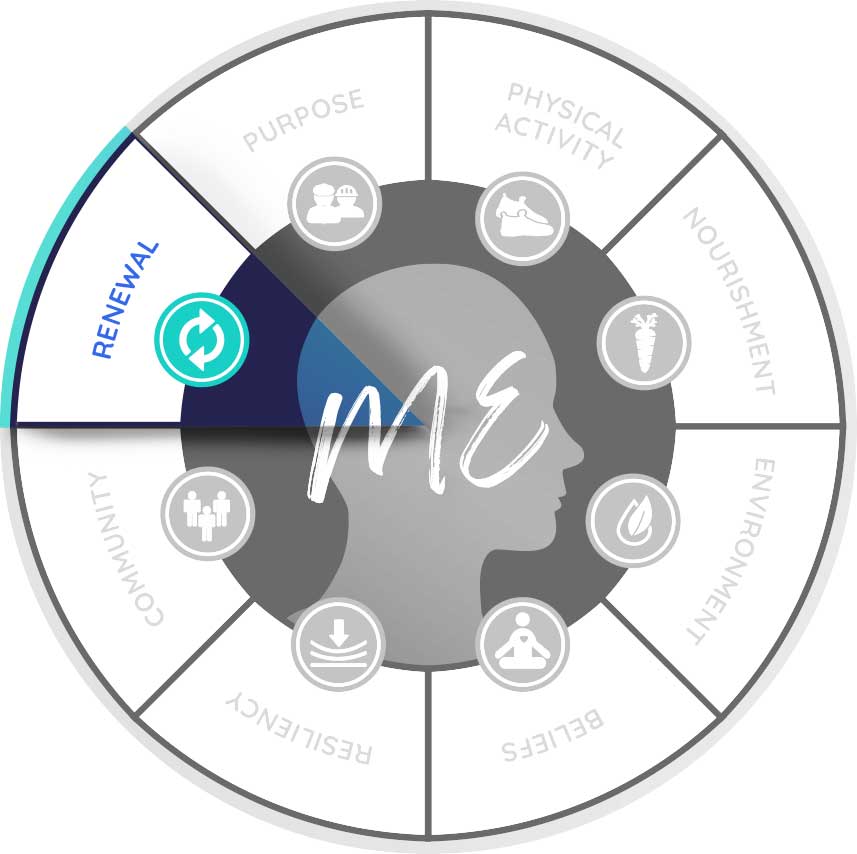
Eight Dimensions – Renewal

Eight Dimensions Chart focused on Renewal

Life can get busy, whether with work or school or taking care of your kids or family. With so much happening, finding time to care for yourself can be difficult.  

When you don’t take care of yourself, you may start to get a build-up of stress or anxiety. You may even notice your physical health being affected. You’re not a machine, you need rest and nourishment to feel your best. Practicing renewal is vital for supporting your overall health and well-being.

Renewal is the idea of starting again or feeling refreshed, as you do after taking a shower or bath – which are great forms of self-care. You can find renewal by doing things that help you feel better physically and mentally. Self-care is another term for renewal. Learn about some of the many benefits of self-care and tips on how to practice it.

Holistic self-care

You may feel like you don’t have time to practice self-care. But you do know that you don’t currently feel your best.

Self-care involves a holistic approach, meaning caring for every part of yourself. It helps to look at self-care through three main pillars – mind, body, and spirit. Caring for one of these areas ripples over into other areas of your life. For example, caring for your body helps to support your mind and vice versa. 

Practicing self-care is crucial to supporting your long-term health, physically and mentally. The most common chronic diseases in the U.S. can be prevented through lifestyle changes. 

An estimated 40% of cancer diagnoses may be prevented through physical activity, eating healthy, and avoiding tobacco products. The same is true for at least 80% of cases of stroke, type 2 diabetes, and premature heart disease. If you have one of these conditions, that doesn’t mean you’ve done anything wrong. Let this be a reminder of how important it is to practice self-care. You have to start somewhere! 

Practicing self-care involves taking time to focus on yourself. You need time to rest, reflect, replenish, and renew to feel your best mentally and physically. This looks different for everyone, but here’s a checklist to get you started: 

  • What do you need to feel your best? Time with friends? Alone time? Walks outside?  
  • What goals are you working towards and what do you need to achieve them? 
  • What areas of your health would you like to change and how will you do that? 
  • What have you already accomplished that you can be proud of? 

To feel your best, you need to reflect on how to nourish and nurture every part of yourself! 

Reach your goals 

It’s important to have goals in life. Whether about your career, personal, or anything else you’d like to achieve. But it can be difficult to achieve those goals if you’re not feeling your best or you’re stressed and overwhelmed.  

When you feel better in your mind and body, you can more easily achieve the things you’ve been working towards. Think about a goal you have, any type of goal. Now what’s holding you back from achieving it? Do you not have enough energy to work on it? Do you feel overwhelmed by other things in your life? Maybe you have a difficult time concentrating on it.  

It may feel like practicing self-care is a distraction from what you’d like to accomplish, but it’s the opposite. Taking care of yourself gives you the energy, clarity, and confidence to work on the things that are most important to you.  

Practicing self-care can not only give you more energy but also help you have more focus and creativity. You can think of self-care like charging your battery. If your battery is low, you don’t have any energy to achieve your goals. When you recharge your battery, then you can finally achieve all the goals on your mind.

Enjoy your life more

While goals are important, there is more to life than achieving things. Your life is meant to be enjoyed. It’s important to have fun, connect with your loved ones, and experience pleasure and joy in the little moments.  

It’s easier to enjoy your life when you feel better in your mind and body. Think about a time when you weren’t feeling well physically or mentally, that may be now. Were you able to enjoy yourself? Probably not as much as you would if you felt better. 

You deserve to experience joy, it’s a beautiful part of being human. When you practice self-care, you give yourself the energy and space to experience more joy. Self-care in itself is also enjoyable. Even when times are hard, you can still find ways to experience small amounts of joy by taking care of yourself.  

Ways to practice self-care

Self-care doesn’t need to be complicated. All you need is a few things that make you feel good, that you can commit to doing regularly. There are a lot of different forms of self-care, all of which are important.  

Here’s a simple guide to help get you started: 

Move your body 

Physical activity is one of the best ways to practice self-care and prevent chronic health issues. It also helps you feel more comfortable and energized every day.  

Moving your body helps support your sleep, improve your immune system, reduce stress levels, and many other benefits. It doesn’t need to be complicated either!  

Start by meeting yourself where you’re at. What is your body comfortable with now? Can you start by taking a twenty-minute walk after dinner? Is there an exercise class you can take in person or online? Do you enjoy activities like yoga, team sports, or dancing? These are all great ways to practice self-care by moving your body. 

Process your emotions 

What sort of emotions do you feel now? Your emotions constantly tell you ways you can help support yourself or things you need to deal with. But to do that, you need space to process them. 

Sometimes emotions will resolve on their own, but often you need to process them to feel better. This is a form of self-care. Processing emotions can feel like a lot if you’re used to hiding from them. But you can start small with ways that feel comfortable for you. 

Here are some ways you can start to process your emotions: 

  • Journal and write down whatever is on your mind, or ask yourself questions like “How am I feeling today?” 
  • Talk to a loved one about how you’re feeling, or find a mental health practitioner like a therapist.  
  • Try a creative outlet like drawing or painting – you’d be surprised how therapeutic this can be! 

The more you start to process your emotions, the easier it becomes. Remember that self-care involves taking care of your body and your mind. 

Get rest

Self-care isn’t just about doing more and more. A big part of self-care is giving yourself time to rest. Your mind and body need time to recalibrate after being busy.  

Sleep is an important part of rest, but it’s not the only one. You need quality sleep to feel your best, but you also need other types of rest. Rest is anything that helps you wind down and feel your body and mind relax.  

Think about what’s restful for you. Many people rest by taking a bath, reading at the end of the day, or gently stretching your body. What’s restful for you may be different than it is for others, so explore and find something that helps you relax and unwind.  

Make it your own

What’s great about self-care is that it’s different for everyone. You get to decide what makes you feel good and create habits accordingly. Your self-care plan can change depending on your needs, the time available, and other things happening in your life. This is your body and mind, so you decide what it needs to feel renewed.

References: 

Chronic Diseases  

What’s In and What’s Out When It Comes to Your Health

Your small, daily habits add up to larger lifestyle choices that influence your health. It’s important to take stock of your daily habits and evaluate where you have room to grow. We’ve compiled a “what’s in and out” list to help you think through areas where it’s common to struggle with unhealthy behaviors. Check out these simple yet effective ways to replace these habits with healthier alternatives.

In: Good sleep 
Out: Stress and sleep deprivation 

Sleep plays a pivotal role in so many aspects of our health, from keeping our minds strong to warding off illness and disease. Unfortunately, many people fail to get the sleep they need, and an estimated 50 to 70 million people in the U.S. have a sleep disorder. Adults should get between seven and nine hours of sleep each night — and the quality of that sleep is crucial. Here are three relaxation techniques to help you fall asleep! 

In: Pleasure Reading 
Out: Binge-watching and doom-scrolling 

In a sea of streaming video and ever-present screens, doom-scrolling and binge-watching are often the entertainment of choice above the more old-school option of reading a book. But research says reading can provide a healthy distraction from life’s day-to-day worries and pressures while also making us smarter, happier, and even more empathetic toward others. Audiobooks are an excellent way to read while engaging in physical activities like walking or exercising. There are free audiobook resources available, such as Librivox, OverDrive, and Audible‘s free trial, which offer a wide range of titles to choose from without any cost.

In: Homemade meals 
Out: Eating out and ordering in 

People are looking for fast and tasty foods to fit busy lifestyles. But whether you’re eating carryout or sit-down restaurant cuisine, researchers say you’ll consume about 200 more calories a day and more saturated fat, cholesterol, and sodium than if you made your meals. Cooking at home, however, helps you avoid these pitfalls and is an opportunity for creativity, togetherness, and cost-cutting. 

Looking to improve your cooking skills? Need recipe ideas that are not only healthy but also affordable and simple to make? The VEBA Resource Center offers free in-person and virtual cooking classes to learn how to cook meals from our extensive recipe library.  

In: Saying no 
Out: Always hustling 

Sometimes, your body, mind, or heart sends a message that it needs time off. It’s important to heed that call, especially if it’s coming from all three at once. Occasionally saying no to an invite, request or assignment is a true form of self-care, which can lead to reduced stress; improved mood, immunity, and self-esteem; and a variety of other physical, mental, and emotional health benefits. 

In: Sober curiosity 
Out: Regularly drinking 

According to the U.S. Department of Health and Human Services, drinking can take a serious toll on your body. Limiting how much you drink or taking a complete break from drinking, what some refer to as being “sober curious,” can help boost your immunity, limit your risk of disease, lead to weight loss, and improve your sleep, concentration, energy, performance, skin health, and even your relationships. 

In: Hygge 
Out: FOMO 

Everyone occasionally experiences FOMO, or the fear of missing out, but going to every social event can be exhausting and expensive and can lead to overindulgence in food and alcohol. Instead, consider enjoying more “hygge,” a concept originating in Denmark and Norway, which means to take time away from the daily rush to be together with people you care about — or even by yourself — to relax and enjoy life’s quieter pleasures.” 

California Schools VEBA’s Self-Regulation Toolkit is a great starting point with daily 5-minute activities that will help you use your time more mindfully!  

In: Digital detox 
Out: Endless screen time 

On average, Americans spend more than seven hours looking at a screen. And most use their smartphones for over three and a half hours every day — not counting when they’re talking to someone. All this screen time can have negative effects on your health, both physical and mental, which is why experts recommend no more than two hours of screen time per day. Here are some tips to regulate phone use more healthily. 

In: Authentic friendships 
Out: Accumulating social media “friends” 

Friendship is good for your health. When you’re with friends, your body releases the hormone oxytocin, which combats stress and creates calm. And the more time spent with friends, the less likely you are to develop health issues and dementia. But creating and sustaining friendships takes commitment far beyond “liking” the occasional post. One study found it takes hundreds of hours — all worth it — to become true friends. 

In: Movement every day 
Out: Overexercising 

The CDC recommends adults get at least two and a half hours of moderate-intensity activity each week. However, you don’t need to spend hours in the gym to meet this goal. Thirty minutes a day, just five days a week will do the trick. Pushing your limits can lead to poor performance and health problems, including overuse and stress injuries, too much weight loss, and decreased immune performance. 

VEBA members can sign up for live classes, in-person and virtually, available seven days a week! There’s also a video library of on-demand classes you can access anytime, anywhere. 

In: Water 
Out: Caffeine-laden energy drinks 

Water is an ideal choice for hydration. While some people prefer sports drinks over water because of the taste and added electrolytes, the standard sports drink contains 140 calories, 34 grams of added sugar, and 270 milligrams of sodium. Additionally, excess caffeine can be harmful, causing changes in heart rate, increased blood pressure, anxiety, sleep and digestive issues, headaches, and dehydration. 


Embracing changes like these will have a profound and positive impact on your overall well-being in the long term. Now, what’s on your list? If you’re unsure where to start, California Schools VEBA has developed a library of downloadable resources to equip you with the support you need to navigate your health and well-being journey. As they say, out with the old, in with the new!

Thank you to our content partners at Sharp HealthCare.

The Heart-Healing Power of Self-Care

We all experience stress in one way or another, and while short-term stress poses minimal risk to our health, chronic stress impacts our hearts more than you might think.

Prolonged stress is linked to high blood pressure, which significantly increases the risk of coronary artery disease, heart attack, and heart failure. Beyond just the physical toll, stress impacts emotional health by affecting your thoughts, actions, and feelings. This may cause you to feel frustration, fatigue, or have difficulty focusing, potentially impacting your work performance.

Learning to manage and lower your stress through self-care practices is one way to live a heart-healthy lifestyle. Self-care means taking the time to do things just for you to improve both your physical health and mental well-being. Even small acts of self-care in your daily life can have a big impact.

Love your heart by loving yourself! Below are some tips for embracing self-care to reduce stress and lower your blood pressure.

Make Time for Yourself

Self-care can help you manage stress, lower your risk of illness, and increase your energy. Not sure where to start on your self-care journey? Download this FREE self-care toolkit! Included are an assessment to help you identify your current self-care routine, an action plan for you to start implementing more self-care in your life, and a self-care bingo game to challenge yourself to try new self-care activities.

Daily Challenge: Elevate Your Day with Breathwork!

Take a moment today to practice mindful breathing. Inhale deeply for a count of four, hold for four, and exhale for four. Want to practice more mindful breathing? Check out our full video for a calming and invigorating breathwork session with our VRC Care Navigator, Michelle McNiff.

Get a Good Night’s Sleep

Your well-being isn’t limited to daylight hours alone.

It’s recommended that adults get at least seven or more hours of sleep per day. A 2023 study conducted by researchers at the University of Arizona found that even just a few poor nights of sleep could cause a sudden spike in blood pressure. Taking steps to achieve quality sleep can notably decrease your vulnerability to obesity, heart and kidney disease, diabetes, and even stroke.

Do your worries or what you need to do the next day keep you awake at night? Before bedtime write down the most pressing worries of the day. Also, make a to-do list for the next day and prioritize the top 2-3 items. This way you can file your worries and priorities away for the next day, so they don’t take up any mental bandwidth in your mind at night. For more tips on how to set yourself up for a good night’s sleep, read this blog!

Set Boundaries

Setting boundaries is an act of self-love. By establishing your limits, you not only safeguard your well-being but also communicate your values, beliefs, and priorities to others. It demonstrates that you deserve to be treated well and ensures supportive and respectful relationships.

But while everyone can have boundaries, the hard part is enforcing them. Here are some tips:

  1. Listen to your gut. If something doesn’t feel right, say or do something about it.
  2. Think realistically. Ask yourself if you’re asking for too much, or if the person is truly capable of making this change.
  3. Set the bottom line and hold it. Be clear when communicating your limits, and be strong in enforcing them.
  4. Let others set boundaries, too. When you communicate your limits, respect the person’s point of view, resist the temptation to get defensive, and consider what they need from you.
  5. Anticipate change. Setting boundaries can alter your relationship, so be prepared and offer the person time and space to process this new way of interacting.
  6. Ask someone else to hold you accountable. Holding the line can be difficult, so find someone to back you up and keep you in check.

Want Help Setting Boundaries?

As a VEBA member, you have access to Optum Dedicated Consultants through the VEBA Resource Center. This Optum partnership allows you to receive assistance quickly for a variety of issues — from stress and relationship issues to communication strategies and beyond. This is a no-cost service to VEBA beneficiaries only.

Appointments are available:

  • In-person at the VRC – Kearny Mesa location
  • Virtually by phone or video consultation

To schedule a consultation, click here.

Through Optum, you and your dependents can also schedule consultations through Emotional Wellbeing Solutions. Please note: you may experience longer wait times with this option. To schedule an appointment through Optum directly, call 888-625-4809 or visit liveandworkwell.com (Access Code: VEBA).


Thank you to our content partners at Sharp HealthCare and Healthwise.

How to Prevent Burnout When Caring for a Loved One

From Sharp Health News, a publication of Sharp HealthCare

Caring for a loved one can be challenging. It takes courage, patience, and persistence. But most of all, it takes the unwavering support of family, friends, and the community.

While it’s common to experience burnout when caregiving, it’s important to remember you’re not alone. Many resources available to help maintain a balanced, healthy life while taking care of others.

Identify your support system

When caring for a loved one, be mindful of your own health and well-being first. Lean on your support system. If that support system is limited, get connected in whatever way you can.

Look for area caregiver support groups for connection with other caregivers in the community. Participants benefit from shared tips and resources, as well as from support and validation of their experiences.

Make time for self-care

It’s also key to practice self-compassion. Give yourself some grace and remember that rest and personal time result in a more effective caregiver.

To prioritize your own well-being while caring for others, consider the following tips:

  • Make sleep a priority. Getting enough sleep is fundamental for your health and well-being.
  • Stay active and eat healthy. Exercising for at least 30 minutes a day and fueling your body with nutritional foods can have a significant impact on mood and help reduce stress and anxiety.
  • Maintain your hobbies. Continue engaging in activities you enjoy to support a sense of identity and purpose beyond being a caregiver.
  • Celebrate small achievements. Acknowledge and celebrate your accomplishments, no matter how small they may seem.

Download the VRC’s FREE Self-Care toolkit here.

Find local resources

Free time is cherished and rare, especially when caring for yourself and a loved one. Consider using adult day care centers, hiring home care providers, and getting help with meals to alleviate the burden of caring for someone around the clock.

Several local organizations provide resources for caregivers, including:

Know that it’s common to feel overwhelmed, but finding the right balance between caring for your loved one and yourself can make all the difference.