
Five Tips to Support Your Mental Health During the Holiday Season 

The holidays can be a time of togetherness, joy, and fun. It can also be a time of stress, loneliness, and anxiety that can take a significant toll on your mental health. If you find yourself stressed before or during this time of year, you’re not alone.

A recent ​American Heart Association (AHA) survey​ found that most people take weeks to de-stress after the holidays. Almost all respondents reported that they regretted not making time to rest or enjoy the season. Knowing the challenges during this time of year, you can proactively put in guardrails to protect your mental health. Let’s review some tools and skills that can help.

1. Set Realistic Expectations

From dishes to events to outfits to gifts, there are a lot of expectations for this time of year. Often, we set unachievable goals and, therefore, set ourselves up for the disappointment that comes when those goals are not met.

It’s important to step back and ask if our expectations for ourselves and others are too high. Recipes may not turn out as they looked on Pinterest, children may not use their manners when grandparents are over, your house may not be immaculate, and you may be late to an event.

If you expect perfection, even small hiccups can feel like disasters. Setting realistic expectations is a game changer. It helps ease anticipation, reduces stress, and creates space to enjoy the season.

If you’re feeling pressure to meet every expectation, remember that CalVEBA offers mental health support to help you navigate life’s challenges. Learn more here.

2. Draw and Hold Boundaries – It’s Ok to Say No

Putting in place frameworks for what is ok and not ok for you is an essential to-do over the holidays. Boundaries help us maintain who we are, stop others from taking advantage of us, invigorate our relationships, give us space to respectfully speak our minds, and open us to empathize with others. Healthy boundaries over the holidays could look like​ this​:

  • Not answering emails or work calls after hours or on your scheduled time off.
  • Saying no to invites when you want a quiet night at home.
  • Expressing discomfort to a relative who wants to talk about politics.
  • Politely asking others to respect your physical personal space. 

When our boundaries aren’t respected, we often feel unsettled. Many people ignore that discomfort to avoid conflict. This year, challenge yourself to let others manage their own reactions. Respectfully expressing and maintaining your boundaries is essential to your mental well-being.

3. Balance Your Schedule

Calendars fill up quickly during the holidays — often overflowing. It may seem impossible to manage and curate your schedule. More than half of the people surveyed in the AHA study reported that they had trouble making time for healthy eating, exercising, and getting adequate sleep this time of year. But finding balance in your day and week can keep you on your holiday schedule while ​keeping​ your stress in check.  

As you make a list of must-dos, be sure to include nutritious meals, exercise, sleep needs, and decompression time. Draw healthy boundaries around your time, knowing that you must show up for yourself before you can for others over the holidays. Block time on your calendar for self-care. Treat it like any other important commitment. You may not be able to make a 60-minute yoga class, but stretching at home for 15 minutes can be just as impactful. Five minutes of peace alone — wherever you can find it — can make a huge difference in your day.

Try CalVEBA’s virtual yoga, nutrition, and movement classes from wherever you are to help you recharge on your own schedule. Get started here.

4. Practice Mindfulness Regularly

Stress can sneak up on us. It might start with a few quick breaths and a clenched jaw, then escalate quickly. Tuning into your body throughout the day is an important step in managing your stress over the holidays. Meditation, yoga, journaling, ​and ​walking​​ are ​all ​great ways to cultivate awareness of what’s going on with you. From that knowledge, you can practice breathing techniques, use a self-soothe kit, or other coping techniques to regulate yourself. Then, you can start to address what’s causing the stress.  

5. Lean on Support

Help can be asking a coworker to assist with a project, a parent to watch your child for a few hours, or a friend to pick something up for you when they’re running errands. It can also be asking for someone to listen to you as you talk through something, company as you go for a walk, or someone simply holding space with you. Over the holidays this year, look to your family, friends, and coworkers for support and don’t forget to check in on others as well. Checking in with others can be a meaningful way to connect and support each other. You can also lean on the Resource Center. We offer programs and resources to help you live your healthiest life. 

Looking for More Support?

The holidays can be a time of joy but also stress and anxiety. Prioritizing your mental health is essential to navigating this season with resilience.

As a CalVEBA member, you have access to:

  • Mental health care through CalVEBA and your medical plan
  • Virtual wellness classes including yoga, fitness, and meditation
  • Self-care toolkits focused on mental well-being, nutrition, and on-demand videos

Visit calveba.org/Resources/ to explore programs that support your total well-being. 
Invest in Your Future Self: Proactive Mental Wellness Strategies

I am strong and resilient, capable of overcoming any challenge.

Yes, you are, and we are here to help! 

Mental well-being matters. We all experience stress, but you don’t have to feel overwhelmed. This post provides practical strategies and resources to help you proactively manage your mental wellness and build resilience for a happier, healthier future. 

The Power of Proactive Mental Wellness 

According to data from the Centers for Disease Control and Prevention, 12.5% of adults 18 and over experience regular feelings of worry, nervousness, or anxiety. 

When you’re stressed, your energy, emotions, and behaviors can feel off balance or scattered, leading to a state of dysregulation. Self-regulation, a cornerstone of mental well-being, lays the foundation for healthy behaviors and relationships. Self-regulation can help alleviate these symptoms, as well as help improve your sleep, self-esteem, relationships, and reduce your risk of medical issues like heart disease and high blood pressure. 

Ignoring your mental well-being can negatively impact your health, relationships, and overall quality of life. Being proactive, on the other hand, equips you to navigate challenges, build stronger relationships, and live a more fulfilling life. It’s all about investing in your future self. 

Let’s explore easy things you can do to re-regulate your brain, which in turn will help improve your mental health and well-being. 

Your Mental Well-being Toolkit: 5 Minutes to a Calmer You 

Ready to take charge? Even small steps can make a big difference. Our Mental Well-being Toolkit offers practical tools you can use in just five minutes a day to regulate your emotions and manage stress: 

  • Daily Self-Regulation Calendar: Filled with daily ideas to help you cultivate mental wellness. We’ve included a blank one so you can personalize your own.  
  • Affirmation List: Positive affirmations to boost self-confidence and maintain a positive mindset.  
  • Journal Prompts: Thought-provoking prompts to guide your self-reflection and integrate self-regulation into your routine.  
Download your free Mental Well-being Toolkit today!

Strategies for Stress Management & Mindfulness

Stress can disrupt your balance, affecting your energy, emotions, and behaviors. Self-regulation is key to navigating these challenges. Here are some additional strategies: 

Investing in Your Well-being

Mental and physical health are interconnected, which is why it’s so important to get your recommended screenings and health care visits. Screenings can vary by age, so we’ve put together an Infographic to help you keep track of what you need done and when. In addition, use the Doctor’s Visit Prep Guide to make the most of your appointment with your health care provider.

  • Yearly Screenings for All Ages: Stay on top of your health screenings with regular check-ins. Download Infographic. 
  • Doctor’s Visit Prep Guide: Be prepared before, during and after your visit with this helpful guide. Download the Prep Guide.

Professional Support: We’re Here to Help 

Feeling overwhelmed and looking for someone to talk to? We have programs to provide you with caring support and guidance for everything from how to handle emotional challenges to setting and achieving balanced goals aligned with your strengths, values, and identity. These resources are available to California Schools VEBA (CalVEBA) members and their dependents (aged 18+).

  • Optum Emotional Wellbeing Solutions (EWS): Available 24/7, experienced guides offer strategies and confidential support at no cost to you. Receive assistance (via phone or virtual appointments) for issues like stress management for you and your dependents. Call 888-625-4809 or visit www.liveandworkwell.com to get started. 
  • Whole Health Coaching: Get help identifying goals, strengths, and values to create a tailored health and wellness plan just for you. For more information on this six-session program, visit: Whole Health Coaching.

Explore More Resources

  • Classes: From meditation to sound healing, find classes to help you relax and refocus.  
  • Mental Health Blog: Practical strategies and insights for supporting your mental well-being. 
  • Videos: Guided meditations and self-regulation activities.  
  • Book & App Recommendations: Explore our curated list of resources for relaxation, stress management, and focus.

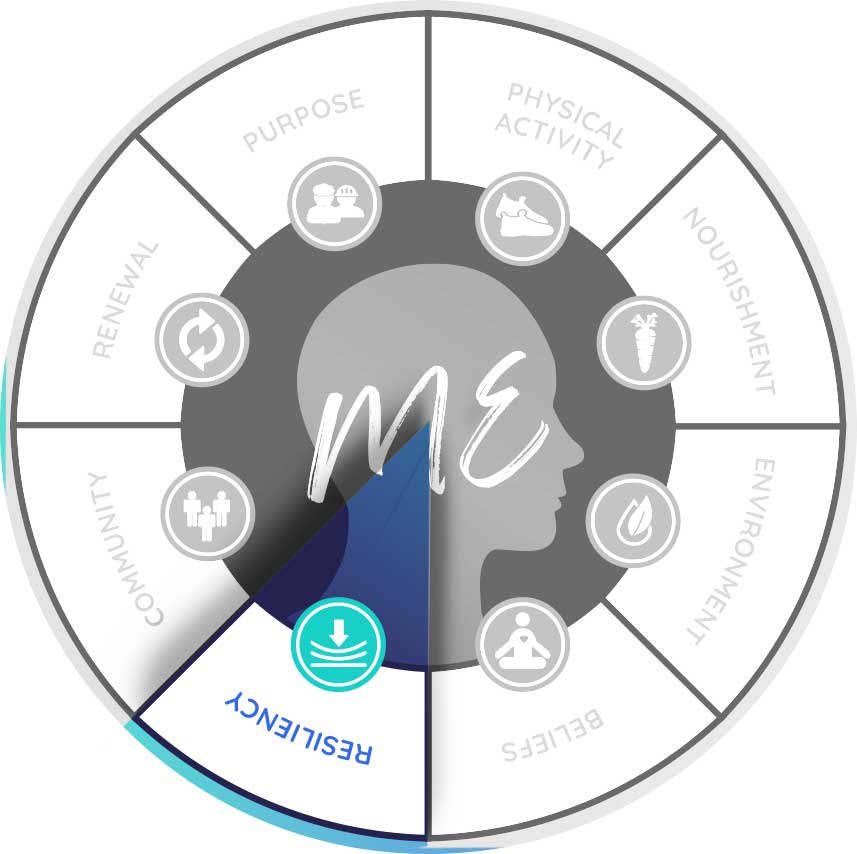
Eight Dimensions – Resiliency 

Eight Dimensions Chart focused on Resiliency

Everyone goes through tough times in life, that’s part of being human. Your ability to make it through these tough times is your resilience.  

Different people face different types of challenges and adversities. Certain groups of people like those in marginalized communities or who have different socioeconomic backgrounds may face more challenges and adversities from the outside world.  

While everyone faces different challenges, every individual has the potential to increase their resilience and their overall well-being.

What is resilience? 

Resilience is someone’s ability to adapt to stressors or “bounce back” after a difficult situation. Life has its ups and downs, everyone will face some types of stress and crises.  

Having resilience allows you to maintain your psychological well-being despite what happens and know what tools you need to overcome difficult situations.  

When you learn to cultivate more resilience, you feel more grounded and can confidently overcome life’s challenges, both big and small. Resilience plays a large role in your overall health and ability to live a balanced life.

Types of resilience

When you think of resilience, you may think of huge life challenges like losing a job, experiencing a loss in your family, or dealing with health challenges. It’s important to have resilience in these situations, but resilience also shows up in your daily life.  

Think about a day when you’ve had frustrating things or challenges arise. You might not have gotten enough sleep, are running late to work or school, or disagree with someone. These things happen, it’s part of life, but having the skills, tools, and perspective to bounce back and not have these hiccups ruin your day or week is important. 

Resiliency is a daily practice, but it all adds up. The more you develop resilience in your daily life, the easier it will be to have it when something big happens.  

Resilience and psychological health

Resilience and psychological health have a direct connection. Developing resilience can help support your psychological health and vice versa, having positive mental and psychological health can help you have more resilience.   

Often more resilient people have learned how to manage their stress. This can happen as you get older and learn new skills, as well as by being proactive about developing these skills over time.  

Being resilient doesn’t mean you don’t get stressed, but when you do you manage that stress. This includes coping mechanisms like if you’re irritated with someone taking some time to yourself to calm down versus reacting and saying something that you regret. Positive coping mechanisms help you regulate your emotions to handle obstacles better when they arise.  

Being adaptable is also a sign of resilience. When things don’t go as planned, can you adapt to the changes without feeling dysregulated? Can you problem-solve to find different solutions to situations that arise? These are all ways your psychological health can increase your resilience.  

Resilience and physical health 

Resilience may also help support your physical health. Stress is one of the biggest risk factors for many chronic health concerns like cardiovascular diseases, high blood pressure, obesity, and diabetes.  

When you can better navigate stress thanks to resilience your mind and body can adapt better. It can also decrease your risk of developing or worsening stress-related health conditions. Stress can also impact your immune system, impacting your body’s ability to fight viruses and infections. 

Developing resilience can also increase your overall quality of life. One aspect of resilience is your ability to see the bigger picture, maintain a positive perspective, and stay optimistic. Research has even found a link between being and having a longer lifespan!

How to increase resilience

Some people may be born with more resilience than others, but it is a learned skill. Anyone can learn new tools and techniques to help increase their resiliency to better deal with the hurdles they face in life.

Here are some of the top ways you can help build resilience: 

Find your support system 

No matter how resilient you are, everyone needs a support system around them to help make life easier to navigate. Your support system may include your family, friends, coworkers, or anyone else you can lean on for emotional support and advice.  

You can help build your support system by thinking about the people you trust most, reaching out to them when you need it, as well as offering support to them when they need it. 

Practice self-compassion

Everyone makes mistakes, but that doesn’t make you a bad person. Understanding your role in a situation can help you take personal responsibility for your actions and reactions and give compassion to yourself and those around you.  

Self-compassion is important in situations where you may have made a mistake and in situations where you may be facing adversity that was not your fault. Balancing personal responsibility and self-compassion helps you build resilience in uncomfortable or difficult situations. 

Physical activity

A surprising way you can increase your resilience is by engaging in physical activity. Physical activity helps regulate stress levels so you can be less reactive in stressful situations. 

It can also help you in another way. Challenging yourself, even by exercising or trying a new type of physical activity, helps build resilience in other areas of your life. 

Take action

It’s normal to feel “stuck” when triggered or faced with a challenge. Overcoming this feeling of being stuck or overwhelmed and instead taking action can help you become more resilient. 

Practicing solving problems, even in difficult moments, shows your brain that you can take action when you need to. It shows you have the skills and abilities to face and overcome challenges. 

Mental health support

If you have faced challenges or adversities that have affected your mental health, know that it’s not your fault. These challenges can affect your mental health and may affect your resiliency or belief in yourself. 

Getting mental health support can help get you to a place where you feel better equipped to deal with life’s challenges. A mental health practitioner or coach can help give you the tools you need to become more resilient and support your mental health. 

Practice self-care 

Being resilient isn’t just about being tough and taking action when needed. It’s also about nurturing yourself and practicing self-care when you need it. 

Self-care includes getting enough sleep, journaling, spending time with loved ones, and doing other things you enjoy. It can help to have a list of tools you turn to when you need help regulating your emotions. You can put simple tasks on this list like walking or taking a few deep breaths. Being able to regulate your emotions is an important part of self-care. 

Resilience for your well-being

You might not be able to change what life throws at you, but you can change how you react. Resilience is a key part of your overall well-being. Building resilience can help you better navigate life and the obstacles that come with it.  

Remember that no one is perfect, everyone gets overwhelmed or feels frustrated sometimes. But the more you practice resilience, the easier it will be to bounce back in the most difficult moments. 

References: 

  1. What is Resilience?  
  1. Chronic stress puts your health at risk – Mayo Clinic  
  1. How Does Stress Affect the Immune System? – UMMS Health  
  1. Optimism linked to longevity and well-being in two recent studies | National Institute on Aging  

An Act of Gratitude a Day Keeps the Doctor Away

The dawning of a new year is often when we think about the things we are grateful for. However, experts reveal actively practicing gratitude can improve our lives year-round.

What is Practicing Gratitude?

Practicing gratitude means saying “thanks” and appreciating everything important to you and good in your life.

Benefits of Practicing Gratitude

According to researchers at the University of California, Davis, gratitude can improve emotional and physical health and help to strengthen relationships. Those who practiced gratitude, they found, regularly reported they:

  • Felt generally positive about their lives and optimistic about the future
  • Exercised more regularly
  • Experienced fewer negative physical symptoms and illnesses
  • Were more likely to make progress toward reaching personal, academic, and professional goals
  • Felt more alert, energetic, enthusiastic, and attentive
  • Noticed improved moods, greater self-esteem, and higher levels of positive emotions
  • Had a better sense of feeling connected to others
  • Experienced better-quality sleep
  • Were more empathetic and more likely to help others
  • Experienced less negativity and improved resilience in trying times

Ways to Practice Gratitude

Gratitude can be practiced in a variety of ways, both small and large. Practicing gratitude means saying “thanks” and appreciating what’s important to you. Here are some tips that can help you get started.

  • Take time each day to reflect.
    • Spend a few minutes at the end of each day and think about, or write down, what you are grateful for that day. This could include people, events, or experiences.
    • Take note of the things and moments that bring you joy or make you feel grounded and refer to them in times of stress or anxiety.
  • Make time to thank people you know.
    • Call or email just to say “thank you.”
    • Write a letter to express your gratitude or appreciation.
    • Write thank-you notes and say “thank you” when you receive gifts or favors.
  • Thank people you don’t know.
    • Wave “thank you” when a person lets your car in during heavy traffic.
    • Write a letter to the editor of your local newspaper about something a stranger did for you.
  • Give thanks for the abilities you have.
    • Even if you are feeling burdened by your health, think about things that you are still able to do.
  • Start a family ritual of gratitude.
    • Give thanks before a meal.
    • Share what you are grateful for before going to bed.
  • Find creative ways to give thanks.
    • Plant a garden of gratitude.
    • Take pictures of things you are grateful for.

If we look at each day and all the little moments within it as a gift, our lives will improve in a variety of ways.


Thank you to our content partners at Sharp HealthCare and Healthwise.

The VEBA Resource Center offers Gratitude Meditation classes. You will be guided to focus on the positive in your life: as you open to soak in the good all around you, you naturally align with the state of receptivity and abundance. Great for beginner and advanced experience levels. Check out our calendar to sign up for an upcoming class.